We may earn a commission when you buy through links on this page, at no extra cost to you. How this works.
If you're raising backyard chickens and watching feed disappear faster than your flock can eat it, this guide is for you. Wasted feed isn't just an expense problem—it's an invitation to every mouse, rat, and wild bird in the neighborhood.
Traditional open feeders let chickens scratch and bill, scattering feed everywhere. That mess adds up quickly. You're buying more feed than you need, and you're creating a pest magnet right outside your door.
No-waste chicken feeders solve both problems. They use enclosed designs with feeding ports that only open when chickens eat. Feed stays contained, rodents stay away, and your budget stretches further.
Let's look at what makes a feeder truly waste-free, then explore four options that work for different coop setups and budgets.
Use the matching tool first
Start with Chicken Coop Space & Feed Calculator if you want to narrow the fit before checking current offers.
What to Look For in a No-Waste Chicken Feeder
The best no-waste chicken feeders share a few key features. Look for enclosed designs that prevent billing and scratching. Feeding ports should only allow access from above or through controlled openings.
Capacity matters for your routine. Larger feeders mean less frequent refilling, but they need to fit your coop space. Most backyard flocks do well with 10-30 pound capacities.
Weather resistance is essential for outdoor coops. Metal construction handles the elements better than plastic, though quality plastic can work in covered areas.
Adjustable height or hanging options let you position the feeder at proper chicken head height. This encourages natural feeding posture and further reduces spillage.
Finally, consider whether you want a ready-to-use system or a DIY kit you attach to your own bucket. Both approaches work—it depends on your time and existing supplies.
How to Train Your Flock to Use a New Feeder
Chickens adapt to new feeders quickly, but a little patience helps the transition. Start by placing the new feeder next to your old one for a day or two. Let your birds investigate it without pressure.
Gradually reduce feed in the old feeder while keeping the new one full. Chickens will naturally explore the new option when they're hungry. Most flocks figure it out within 24-48 hours.
You can encourage investigation by tapping the feeder ports or placing a few treats near the openings. Once one chicken learns, the others will follow through observation.
Don't remove the old feeder completely until you see all birds successfully using the new one. Some shy or lower-ranking hens may need extra time to build confidence.
Keep fresh water nearby during the transition. Chickens are more willing to try new things when their other needs are easily met.
Final Thoughts: Making the Best Choice for Your Homestead
The best no-waste chicken feeder for your coop depends on your flock size, budget, and how hands-on you want to be. DIY kits work beautifully if you enjoy projects and want to save money. Ready-to-use systems make sense when convenience matters more than initial cost.
All four options here will dramatically reduce feed waste compared to open feeders. You'll save money on feed, deter rodents, and spend less time cleaning up scattered grain.
Consider your flock size first. Smaller coops can get by with fewer ports and less capacity. Larger flocks need multiple access points and bigger hoppers to prevent competition.
Think about your climate too. Metal holds up better outdoors in harsh weather, while plastic works fine in covered or mild conditions.
Choose the system that fits your current needs, knowing you can always add a second feeder as your flock grows. Your chickens—and your feed budget—will thank you.
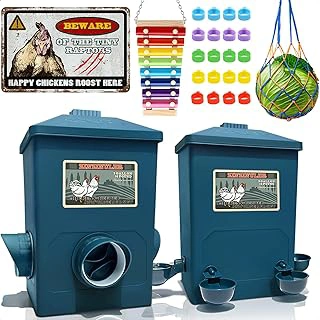
Automatic No-Waste Port Chicken Feeder and Waterer Set
This complete feeder and waterer set gives you everything in one package. The automatic feeding ports keep feed contained while allowing easy chicken access. The included waterer means you're solving two coop management tasks at once.
The port design works well for small to medium flocks. Chickens learn quickly to feed from the openings, and the enclosed system dramatically reduces spillage compared to open trays.
Setup is straightforward with no additional buckets or containers needed. Everything arrives ready to assemble and use. The combo approach makes this especially valuable if you're just starting your coop or upgrading multiple systems at once.
At this price point, you're getting both feeding and watering solutions. That's real value for new chicken keepers who want to get waste under control quickly.
- ✅ Complete feeder and waterer set in one purchase
- ✅ Automatic port design reduces feed waste
- ✅ Ready-to-use system with no extra containers needed
- ⚠️ May need more capacity for larger flocks
- ⚠️ Plastic construction less durable than metal options
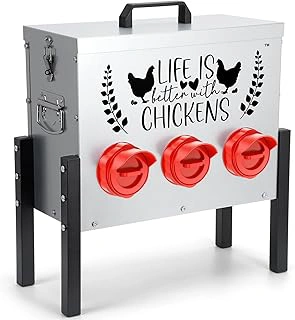
TGEYD 30 lb Outdoor Metal Chicken Feeder with 6 No-Waste Ports & Adjustable Height
This metal hanging feeder combines serious capacity with weather-resistant construction. The 30-pound hopper means less frequent refilling—ideal if you travel or simply want to spend less time on daily chores.
Six feeding ports accommodate multiple chickens at once without crowding. The adjustable height feature lets you position it perfectly as your birds grow or to suit different breed sizes.
Metal construction handles outdoor weather and resists chewing from rodents who might attempt to access the feed. The hanging design keeps it off the ground, further deterring pests and making coop cleaning easier.
This is a solid choice for established flocks where durability and reduced maintenance matter. The higher capacity and metal build justify the investment if you're committed to long-term chicken keeping.
- ✅ Large 30-pound capacity reduces refill frequency
- ✅ Durable metal construction for outdoor use
- ✅ Six ports allow multiple chickens to feed simultaneously
- ✅ Adjustable height adapts to different flock needs
- ⚠️ Higher initial cost than plastic alternatives
- ⚠️ Heavier weight when full may require sturdy hanging support
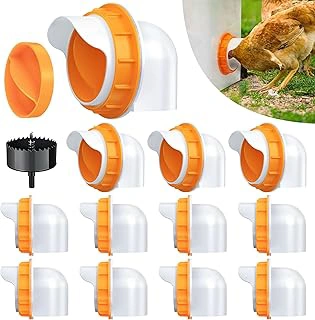
DSTANA 12-Port No Waste Automatic Chicken Feeder Kit
With 12 feeding ports, this kit handles larger flocks without creating competition at mealtime. More access points mean calmer feeding sessions and better distribution of your flock across the feeder.
The automatic design keeps feed flowing to the ports as chickens eat, maintaining consistent availability without manual intervention. The enclosed system prevents billing waste while keeping weather and pests out.
This kit offers excellent value given the port count and the strong customer rating. It's designed for those who've moved beyond just a few hens and need a system that can grow with their flock.
Installation is simple enough for beginners but provides the capacity and features that experienced chicken keepers appreciate. If you have 8-12 birds or plan to expand, the extra ports prevent future bottlenecks.
- ✅ 12 ports ideal for larger flocks
- ✅ High customer rating reflects reliable performance
- ✅ Automatic feed flow maintains consistent availability
- ✅ Good value for the port count and capacity
- ⚠️ Requires separate container for full setup
- ⚠️ More ports mean larger footprint in coop
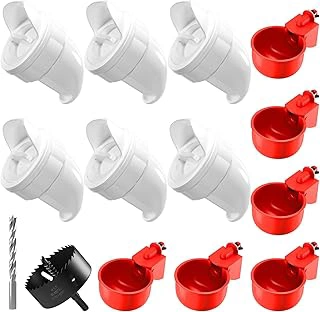
No Waste Automatic Chicken Feeder with Ports and Waterer DIY Kit
This DIY kit gives you the feeding ports and waterer components at a budget-friendly price point. You supply your own bucket or container, which many homesteaders already have on hand.
The DIY approach offers flexibility. Use a 3-gallon bucket for a small flock or a 5-gallon for more birds. You control the capacity based on what works for your setup and feeding schedule.
Installation involves drilling holes and attaching the ports—simple enough for most DIYers with basic tools. The included waterer components mean you're addressing both feed and water waste together.
This is perfect if you're budget-conscious, enjoy hands-on projects, or want to repurpose containers you already own. The lower price makes it easy to try no-waste feeding without a large upfront commitment.
- ✅ Budget-friendly entry into no-waste feeding
- ✅ Use your own containers for customized capacity
- ✅ Includes waterer components for complete solution
- ✅ Good DIY project for hands-on homesteaders
- ⚠️ Requires bucket and basic installation work
- ⚠️ Fewer ports than dedicated feeder systems