We may earn a commission when you buy through links on this page, at no extra cost to you. How this works.
Losing chickens to predators is one of the most frustrating - and preventable - setbacks for backyard flock owners. If you're new to keeping chickens or you've already had a close call with raccoons, foxes, or hawks, you know the worry that comes with every evening latch and morning head count. The good news is that predator-proofing your coop doesn't require an expensive rebuild or professional help.
This guide walks you through three layers of defense: reinforcing vulnerable openings with hardware cloth, upgrading doors and latches to stop prying paws, and adding simple deterrents that make your coop less attractive to nighttime visitors. Each upgrade is chosen for its effectiveness and low cost, and together they form a system that addresses the most common points of entry predators exploit.
You don't need to spend hundreds of dollars or tear apart your existing structure. With around $100, a few hand tools, and a weekend afternoon, you can dramatically reduce the risk of losing birds to raccoons, weasels, opossums, and other common threats. The steps ahead are practical, beginner-friendly, and focused on the vulnerabilities that matter most.
Use the matching tool first
Start with Chicken Coop Space & Feed Calculator if you want to narrow the fit before checking current offers.
Who This Guide Is For
This guide is for backyard chicken keepers who want to protect their flock without breaking the bank. If you've lost birds to raccoons, foxes, or hawks - or if you're setting up your first coop and want to avoid that heartbreak - these budget-friendly upgrades will help you build real security for under $100.
You don't need professional installation or expensive custom solutions. The methods here use hardware store materials and straightforward techniques that most homesteaders can tackle in a weekend. Whether you're reinforcing an existing coop or securing a new one, this guide walks you through the most effective, affordable fixes that address the most common predator entry points.
Beginners will appreciate the clear, step-by-step approach, while experienced keepers can use this as a checklist to close gaps they may have missed. The focus is on practical, proven upgrades that stop predators where they actually attack: digging under walls, prying at doors, and tearing through weak wire.
What Matters Most in Predator-Proofing
Predator-proofing a chicken coop comes down to addressing four critical vulnerability points: the floor, walls, doors, and nighttime access. Predators - especially raccoons, weasels, opossums, and foxes - are persistent, clever, and capable of exploiting even small gaps or weak materials. Understanding where your coop is most vulnerable helps you prioritize upgrades that actually stop intrusions without wasting money on cosmetic fixes.
The single most important material decision is switching from chicken wire to hardware cloth. Chicken wire is designed to keep chickens in, not predators out. Raccoons can tear through it with their daws, and weasels can squeeze through the wide openings. Hardware cloth - typically ½-inch or ¼-inch galvanized steel mesh - creates a barrier that resists tearing, digging, and reaching. It should cover all windows, vents, and any openings larger than half an inch, including gaps where walls meet the roof or floor.
Doors represent the next major weak point. A door left open after dusk, even for a few minutes, invites nocturnal predators inside. Manual latching works only if you're consistent every single night; a single lapse can result in loss. Secure latches - those that require two motions to open, such as a carabiner or barrel bolt with a padlock - prevent raccoons from lifting simple hooks. Automatic door closures that operate on timers or light sensors remove human error entirely, closing the coop reliably at dusk and opening at dawn.
The floor and perimeter require equal attention. Predators that dig - such as foxes, coyotes, and dogs - will tunnel under walls if the coop floor or skirt isn't protected. An apron of hardware cloth laid flat on the ground around the coop perimeter, extending 12 to 18 inches outward and secured with landscape staples, stops diggers without requiring deep burial. If your coop has a dirt floor, burying hardware cloth 6 to 12 inches deep along the wall line adds a subsurface barrier.
Deterrents for nocturnal predators add a secondary layer of defense. Motion-activated lights, solar-powered alarms, or reflective tape can startle animals that rely on darkness and stealth. These tools work best when combined with physical barriers - they buy you time and discourage repeat visits, but they won't stop a determined predator on their own. The key is layering: strong materials at entry points, secure closures on doors, and deterrents that make your coop less appealing than easier targets nearby.
Step-by-Step Installation Tips
Successful predator-proofing starts with accurate measurements - record the dimensions of every window, vent, and opening before purchasing materials to avoid waste or shortages. Use wire cutters or aviation snips to cut hardware cloth to size, wearing gloves to protect against sharp edges. When fastening the cloth to wooden frames, overlap edges by 4 to 6 inches at all seams to eliminate gaps that predators might exploit, and secure the overlaps with heavy-duty staples spaced every 2 to 3 inches or with ¼-inch screws and fender washers for maximum hold.
For ground-level protection, dig a trench at least 12 inches deep around the coop perimeter and bury the bottom edge of the hardware cloth vertically, backfilling the soil firmly. If digging is impractical due to frozen ground or rocky soil, bend the hardware cloth outward at a 90-degree angle to form an apron that extends 12 inches along the surface, then cover it with soil, gravel, or pavers to discourage digging predators. Check that all corners and transitions between walls and floors are fully covered, as these junctions are common entry points.
When installing doors, replace lightweight hooks with barrel bolts or slide latches that require thumbs to operate - raccoons can open simple hooks and twist-style closures. Mount latches high enough that a reaching paw cannot access them from the outside, and consider adding a second latch at the bottom of doors that swing outward. For motion-activated lights or sound deterrents, position them to cover the most vulnerable approaches - typically the side nearest woods or brush - and mount them 5 to 6 feet high to maximize detection range. Test all latches, lights, and buried barriers before considering the job complete, and walk the perimeter at dusk to spot any gaps or weak points you may have missed in daylight.
Common Mistakes to Avoid
Many backyard chicken keepers make a few common mistakes when trying to secure their coop on a budget, and knowing what to avoid can save both money and heartbreak. One of the most frequent errors is using chicken wire instead of hardware cloth - chicken wire keeps chickens in but doesn't keep predators out, as raccoons and other animals can tear through the thin wire or reach through the large openings to grab birds. Another common oversight is skipping the floor perimeter entirely, leaving gaps where predators can dig under walls and gain entry overnight. Even when hardware cloth is installed, failing to bury it at least 12 inches deep or bend it outward in an apron leaves the coop vulnerable to determined diggers like foxes and coyotes. Gaps around doors, vents, and windows are easy to miss during installation, but even a two-inch opening is enough for a weasel or rat to squeeze through. Finally, relying only on motion lights, sound deterrents, or scent repellents without adding physical barriers gives a false sense of security - these tools may help, but they're no substitute for solid, predator-resistant construction. The good news is that all of these mistakes are fixable with a careful walkthrough, a roll of quarter-inch hardware cloth, and an afternoon of work. Take the time to inspect every seam, test every latch, and double-check buried edges before calling the job done.
Final Takeaway
Predator-proofing a chicken coop for under $100 is completely achievable when you focus on the essentials: hardware cloth over all openings, secure latches on every door and access point, and a buried or skirted perimeter to block diggers. These core upgrades form the foundation of a safe coop, and most backyard setups can be covered with two rolls of hardware cloth, a handful of latches, and basic fasteners.
Motion lights, decoys, and scent deterrents add helpful layers of protection, but they work best when paired with strong physical barriers. A coyote won't be fooled by a fake owl if the coop door is held shut with a flimsy hook, and a raccoon can rip through chicken wire no matter how many lights you install. Start with the structure first, then add deterrents as your budget allows.
Regular inspections keep your system working over time. Walk the perimeter weekly to check for new dig attempts, loose staples, or gaps where hardware cloth meets wood. Look for signs of wear on latches and hinges, and reapply scent deterrents after heavy rain. Small problems are easy to fix when you catch them early, and a few minutes of routine maintenance can save you from waking up to an empty coop.
If your budget is tight, prioritize the most vulnerable areas first - ground-level openings, doors, and windows - and upgrade the rest as you're able. A secure coop is the foundation of a healthy, thriving flock, and even modest improvements make a measurable difference in keeping your chickens safe night after night.
Budget Allocation Checklist
- Hardware cloth for walls, windows, and floor perimeter: $50 - $90
- Automatic or manual secure door system: $40 - $60
- Deterrents (solar lights, motion activated options): $0 - $50
- Fasteners, staples, and installation tools (often already on hand)
Your Predator-Proofing Action Plan
- Measure all coop openings, windows, vents, and floor perimeter
- Purchase 1/2-inch hardware cloth and fasteners
- Install hardware cloth on all vulnerable areas, overlap edges, and bury or bend at ground level
- Add automatic or secure manual door system
- Optional: install solar deterrent lights around perimeter
- Test all closures and inspect for gaps weekly
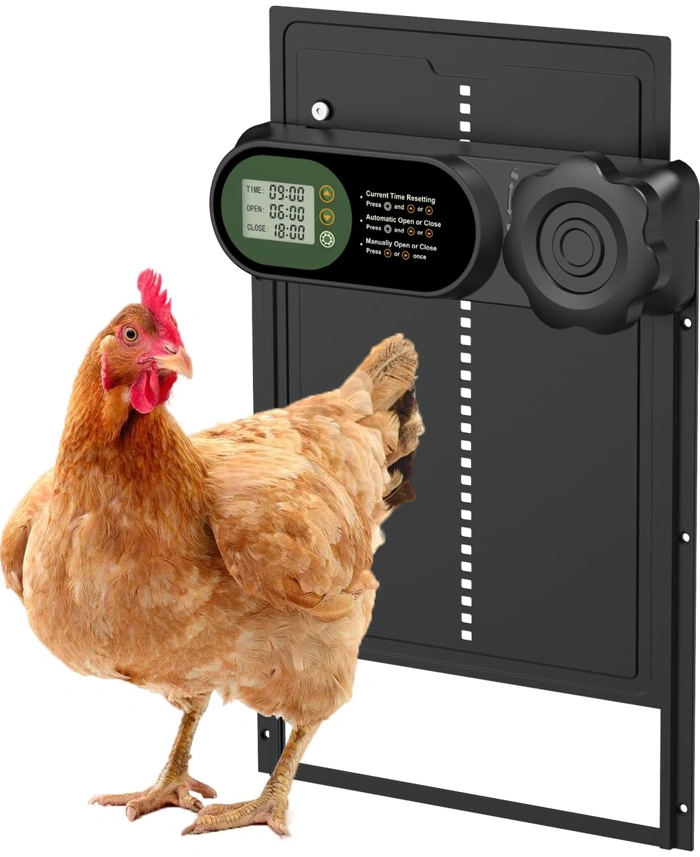
Budsom Automatic Aluminum Chicken Coop Door with LCD, Anti-Pinch Sensor & Timer
Closing the coop door manually every night can be challenging if you work late, travel, or simply forget, leaving your flock vulnerable to nighttime predators. The Budsom Automatic Aluminum Chicken Coop Door offers a budget-friendly solution at $39.99, using a built-in timer to open at dawn and close at dusk without human intervention.
The door features an LCD display that makes programming straightforward, and the anti-pinch sensor stops the door if it detects a chicken in the opening, reducing the risk of injury. The aluminum construction provides durability against weather and repeated use, while the automatic operation ensures your coop is secured even when you're not home.
At under multiple, this door fits comfortably within a multiple predator-proofing budget while addressing one of the most common security gaps: the open door at night. It works best when installed on a coop with a standard door opening and reliable power access for the motor. The timer function removes the guesswork and daily routine, making it a practical upgrade for those who need consistent coop security without manual effort.
Automatic doors work best for those who can't close the coop manually every night, providing reliable protection during the most vulnerable hours when nocturnal predators are active.
- ✅ Budget-friendly at $39.99
- ✅ Timer automates dawn and dusk operation
- ✅ Anti-pinch sensor protects chickens
- ✅ LCD display simplifies programming
- ✅ Aluminum construction for durability
- ⚠️ Requires power source for motor operation
- ⚠️ Must fit standard door opening dimensions
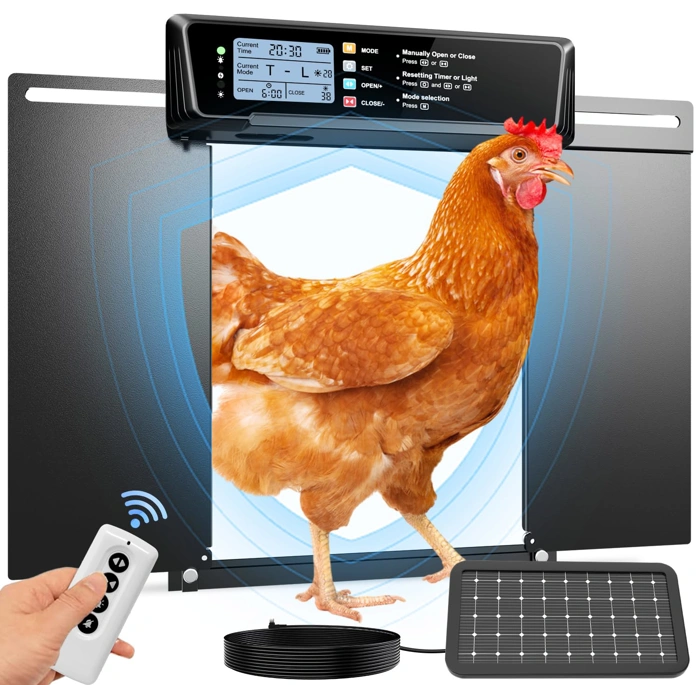
Extra Large Solar Automatic Chicken Coop Door with Anti-Pinch, Timer & Remote
Homesteaders working with larger coop openings or off-grid setups may find the Extra Large Solar Automatic Chicken Coop Door a practical fit. Priced at $58.99, this door runs on solar power, removing the need for external wiring or battery changes in locations where electricity is unavailable or inconvenient. The extra-large opening accommodates larger breeds or multiple birds moving in and out at once, which can reduce crowding during the morning rush.
The built-in timer and remote control let you adjust open and close schedules from a distance, useful when weather or predator activity changes your routine. The anti-pinch feature is designed to stop the door if it contacts a bird, adding a layer of safety during automatic operation. Because the unit relies on solar charging, placement matters - position the panel where it receives consistent sunlight, and monitor performance during cloudy stretches or shorter winter days when charge may deplete faster.
Compared to plug-in models, this solar option trades the reliability of constant power for freedom from outlets and cords. If your coop is far from a power source or you prefer a setup that operates independently, the solar design can simplify installation. If your region experiences long periods of low light, consider whether backup battery capacity or a supplemental charge method fits your management style. The door's 4.3/5 rating reflects generally positive user feedback, though as with any solar device, real-world performance depends on exposure and local climate.
This door suits off-grid homesteads, larger breed access, or anyone looking to avoid running electrical lines to a remote coop. The combination of timer flexibility, remote control, and solar independence makes it a functional upgrade when coop size and power availability align with the design.
- ✅ Solar-powered, no external wiring or battery changes needed
- ✅ Extra-large opening for larger breeds or multiple birds
- ✅ Timer and remote control for schedule adjustments
- ✅ Anti-pinch feature adds safety during automatic operation
- ⚠️ Performance depends on consistent sunlight exposure
- ⚠️ May struggle during cloudy periods or short winter days
- ⚠️ Lacks the constant power reliability of plug-in models
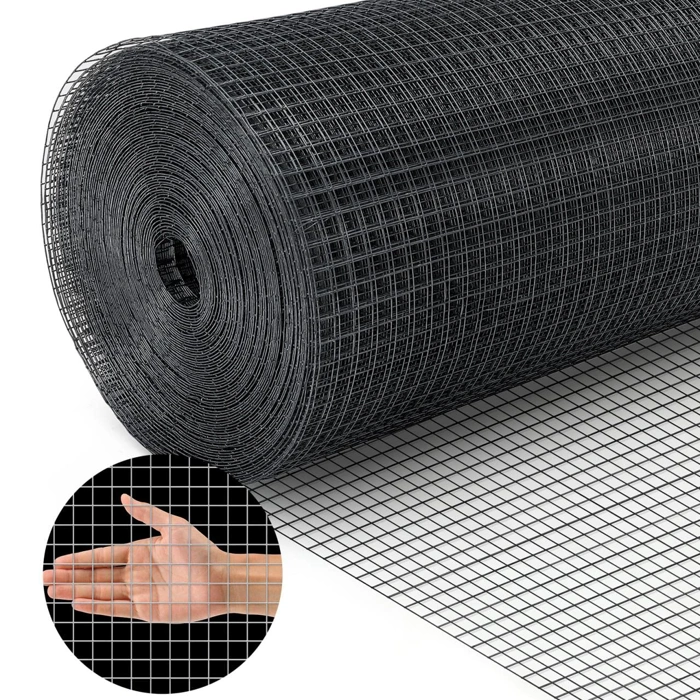
Land Guard 1/2in 19 Gauge PVC Coated Hardware Cloth Roll (48in x 100.1ft)
Half-inch hardware cloth is the gold standard for predator-proofing because it blocks raccoons, weasels, snakes, and other determined predators that easily tear through chicken wire. The Land Guard 1/2in 19 Gauge PVC Coated Hardware Cloth Roll delivers the listed size of width across more than the listed size of length, enough coverage to wrap windows, vents, and floor perimeters on most small to medium coops with a single roll.
The 19-gauge wire provides the strength needed to resist clawing and chewing, while the PVC coating adds rust resistance for years of outdoor exposure. At $89.99, this roll represents the single largest expense in a sub-$100 predator-proofing project, but it is also the most critical investment for long-term security. Thin or wide-gap materials leave vulnerabilities that predators will find; half-inch spacing closes those gaps reliably.
The 48-inch width works well for standard coop window frames and run skirts without excessive cutting waste. Measure your coop's vulnerable points - windows, vents, gaps under walls, and any openings larger than half an inch - before you buy, and map your cuts to use the roll efficiently. If your coop is compact or you're reinforcing only the most exposed areas, a single roll often covers the entire job. Larger coops or full-perimeter ground barriers may require a second roll, pushing the budget past $100, so plan your layout carefully to prioritize the highest-risk entry points first.
- ✅ 1/2-inch mesh blocks raccoons, weasels, and snakes effectively
- ✅ 19-gauge wire resists clawing and chewing
- ✅ PVC coating provides rust resistance for outdoor durability
- ✅ 48in x 100.1ft roll covers most small to medium coops in one purchase
- ⚠️ $89.99 price consumes most of a $100 budget
- ⚠️ Large coops or full-perimeter barriers may require a second roll
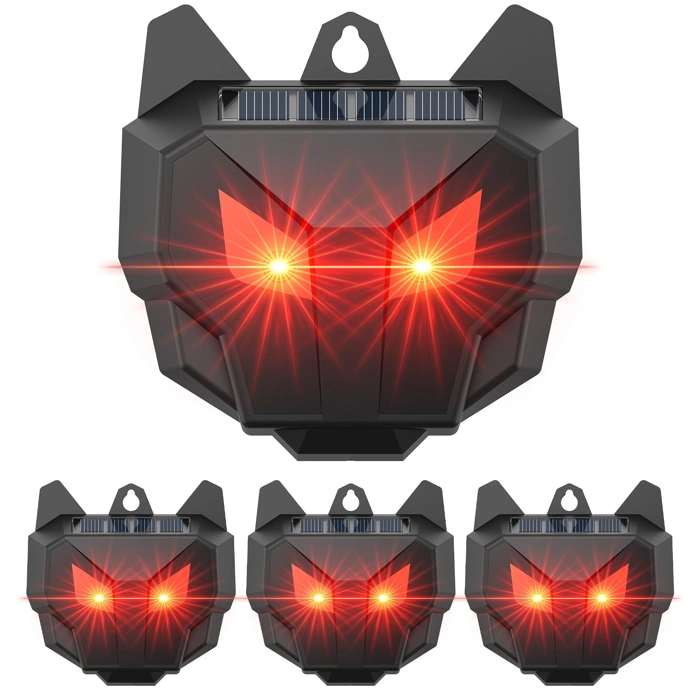
4 Pack Solar Nocturnal Animal Repeller with Dual Red LED Lights
Nocturnal predators like raccoons, foxes, and coyotes often approach chicken coops under cover of darkness, making deterrents that work at night an important part of layered protection. The 4 Pack Solar Nocturnal Animal Repeller with Dual Red LED Lights offers a supplemental defense strategy by mimicking the eye-shine of larger predators through dual red LED lights that flash throughout the night.
This solar-powered 4-pack retails for $50.99 and allows you to position units around the coop perimeter without running wiring or replacing batteries. Each repeller charges during the day and automatically activates at dusk, creating the visual appearance of predator eyes that may discourage opportunistic animals from approaching. The red LED wavelength simulates natural eye reflection, a visual cue many animals associate with territorial predators.
Because these deterrents rely on behavioral conditioning rather than physical barriers, they work best as a complement to hardware cloth, secure doors, and reinforced floors - not as a standalone solution. Predators that are highly motivated or habituated to human environments may eventually ignore light-based deterrents, so pairing them with strong physical barriers ensures your flock remains protected even if the deterrent effect diminishes over time.
The 4-pack format lets you cover multiple approach angles or space units the listed size apart along fence lines, gates, and vulnerable corners where predators are most likely to probe for entry. Solar operation means you can relocate units seasonally or adjust coverage as you observe predator activity patterns without concern for power supply.
Use these repellers as an added layer of nighttime discouragement, but always prioritize hardware cloth over windows and vents, predator-proof latches on doors, and buried or skirted perimeter barriers as your primary defense.
- ✅ Solar-powered operation requires no wiring or battery changes
- ✅ 4-pack covers multiple perimeter points for under $51
- ✅ Dual red LEDs mimic predator eyes to deter nocturnal animals
- ✅ Automatic dusk activation simplifies daily use
- ⚠️ Light-based deterrents may lose effectiveness with habituated predators
- ⚠️ Not a replacement for physical barriers like hardware cloth and secure latches
- ⚠️ Performance depends on adequate sunlight for charging