We may earn a commission when you buy through links on this page, at no extra cost to you. How this works.
I ordered my first batch of chicks before I had a proper coop. Big mistake. I spent three frantic weeks scrolling through hundreds of products, half of which looked like they'd blow over in a stiff breeze, the other half costing more than my first car.
Here's what I've learned after years of keeping chickens and talking to dozens of other backyard flock owners: for 4-6 hens, you don't need a sprawling mansion or the cheapest big-box disaster. You need something that balances durability, ease of cleaning, and reasonable cost.
The challenge? Most 'chicken coop kits' online are either particle board nightmares that rot within a year or require a PhD in carpentry to assemble. According to research from Backyard Poultry Magazine, inadequate housing is one of the top three reasons new chicken keepers quit within the first year. The University of California Cooperative Extension notes that proper coop design directly impacts flock health, egg production, and predator safety. And Mother Earth News has documented that cheap coops often cost more in the long run due to repairs and replacement.
This guide focuses on two coop kits that have earned their reputation among experienced homesteaders. I'm only including products I'd actually recommend to a friend starting out. No affiliate commission is worth your chickens' safety or your sanity.
Use the matching tool first
Start with Chicken Coop Space & Feed Calculator if you want to narrow the fit before checking current offers.
What Actually Matters in a Small Flock Coop
Before we dive into specific products, let's talk about what your 4-6 hens actually need. This isn't about Pinterest aesthetics. It's about functionality.
Space requirements: Each standard hen needs about 3-4 square feet of interior coop space, plus 8-10 square feet of run space. That's the baseline. More is better, especially if your birds will be confined during bad weather or if you live somewhere with harsh winters.
Ventilation without drafts: Chickens produce a surprising amount of moisture through respiration and droppings. Poor ventilation leads to respiratory issues and frostbite. You want airflow above the roost level, but no cold wind blowing directly on sleeping birds.
Predator protection: Raccoons have opposable thumbs. Seriously. They can open simple latches. Weasels can squeeze through a one-inch gap. Your coop needs to be Fort Knox, not a suggestion.
Cleaning access: If cleaning your coop requires contortionist skills, you won't do it regularly. Ammonia buildup from droppings causes respiratory disease. Easy cleaning isn't a luxury, it's a health requirement.
Weather resistance: Your coop will face rain, snow, summer heat, and UV exposure. Untreated wood rots. Cheap hardware rusts. Thin walls don't insulate. The structure needs to last years, not months.
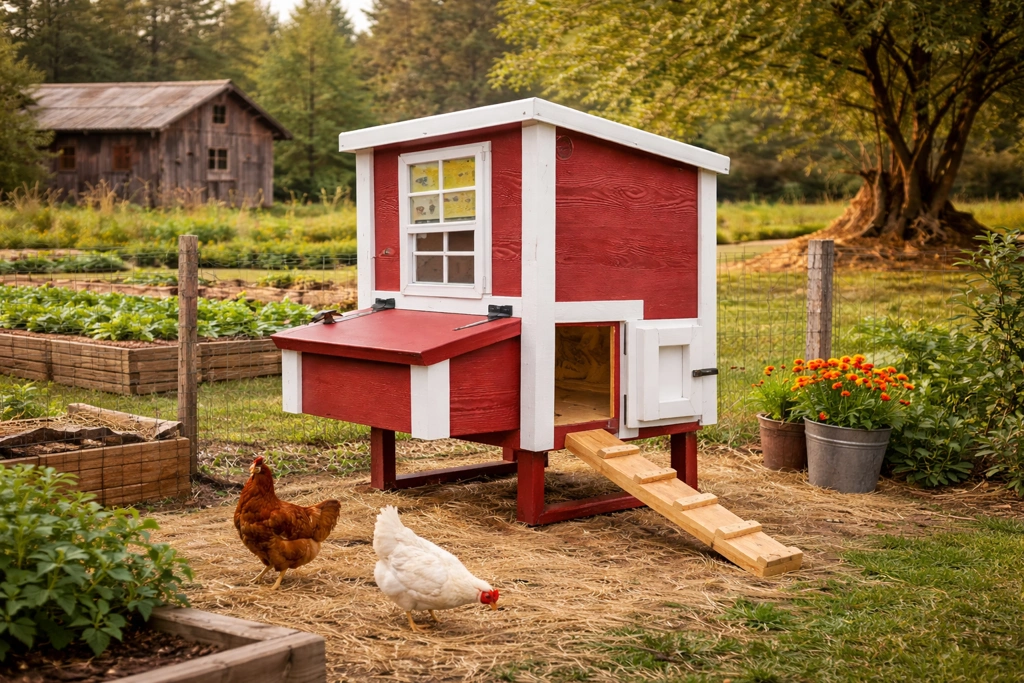
OverEZ Small Chicken Coop, EE-3030
This is the coop I wish I'd bought first. The OverEZ lives up to its name with genuinely simple assembly, taking less than 30 minutes with just a screwdriver. No joke. The secret is the pre-assembled panel system with resin-treated wood that slots together without the usual frustration of misaligned pre-drilled holes.
The 34 x 45 x 54 inch footprint comfortably houses up to 5 chickens with room for a proper roosting bar and nesting box setup. It includes two screened windows that actually open and close, giving you ventilation control. The raised design keeps the floor dry and adds a layer of predator deterrence.
What sets this apart is the waterproof floor and siding. You can literally hose it out. I've talked to owners who've had this coop for three years with zero rot issues, even in the Pacific Northwest. That resin treatment works.
The catch? No attached run. You'll need to either free-range your flock in a securely fenced yard or purchase a separate run. For some homesteaders, that's a dealbreaker. For others who already have a secure yard or plan to build a custom run, it's actually a benefit since you're not paying for a mediocre attached run you don't want.
At the $499-$519 price point, it's not the cheapest option out there, but it's reasonable for the quality. This is a 'buy once, cry once' situation. Those $200 coops from big-box stores? You'll replace them in two years.
- ✅ Assembles in less than 30 minutes with just a screwdriver, making it ideal for beginners who feel overwhelmed by complex projects.
- ✅ Built with solid, resin-treated wood panels which offer superior weather resistance and durability compared to standard untreated fir.
- ✅ The floor and siding are waterproof, allowing for simple and effective cleaning with a garden hose.
- ✅ Raised design helps keep the coop floor dry and provides chickens with an added layer of safety from ground-level predators.
- ⚠️ Does not include an attached run, which is a necessary additional purchase to provide chickens with safe outdoor space.
- ⚠️ It has a higher price point than other unassembled wooden coops of a similar size.
- ⚠️ This coop is best for those who plan to free-range their flock in a secure yard or are prepared to build or buy a separate, compatible run.
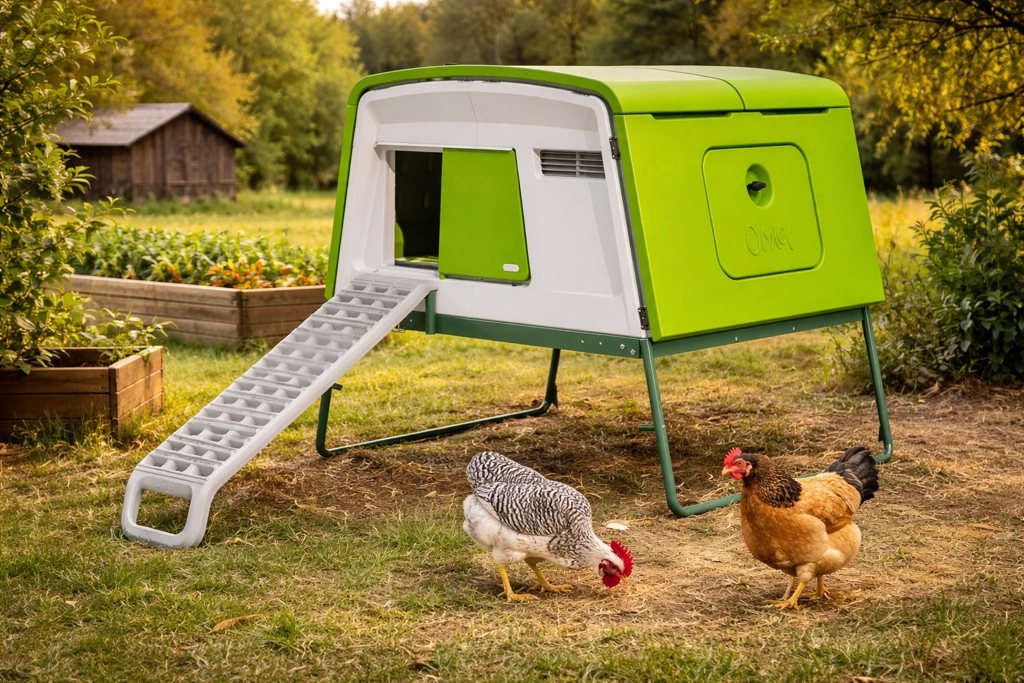
Eglu Cube Chicken Coop - Leaf Green
The Eglu Cube is what happens when actual engineers design a chicken coop instead of just slapping together some plywood. Made by Omlet, this twin-wall insulated plastic coop handles 6 large hens or 10 bantams and represents a completely different philosophy from traditional wooden coops.
Let's address the elephant in the room: yes, it's expensive. The $850-$1200 price range makes you gulp. But here's the thing-this coop solves problems that wooden coops simply can't.
Red mites are the bane of chicken keeping. These tiny parasites hide in wood cracks and can devastate a flock. The Eglu's non-porous plastic construction gives them nowhere to hide. Zero mite infestations. Ever. That alone has saved chicken keepers hundreds in treatment costs and countless hours of stress.
The cleaning situation borders on absurd. Slide out the droppings tray, pull the roosting rack, spray everything with a hose. Ten minutes, tops. I know people with wooden coops who spend an hour scraping and scrubbing. The smooth plastic wipes clean instantly.
The twin-wall insulation genuinely works. The coop stays cooler in summer and warmer in winter without supplemental heat in most climates. The steel frame and heavy-duty weld-mesh run create a predator barrier that's held up against raccoons, foxes, and even bears in some reported cases.
The aesthetic is polarizing. This looks like a modern piece of equipment, not a rustic barn accessory. If you're going for a vintage homestead vibe, the Eglu will clash. It's unabashedly contemporary.
Who should buy this? People who value time over money, anyone with a red mite problem in their region, homesteaders in extreme climates, and those who plan to keep chickens for many years. The upfront cost hurts, but the ten-year outlook makes it economical.
- ✅ Extremely easy to clean; the smooth plastic surfaces can be hosed or pressure washed in minutes, minimizing maintenance time.
- ✅ The twin-wall insulated design keeps the coop warmer in winter and cooler in summer, providing better comfort for your flock.
- ✅ Highly predator-resistant with a strong steel frame, heavy-duty weld-mesh run, and secure locking mechanisms.
- ✅ Non-porous plastic construction is impervious to rot and prevents red mite infestations, a common and serious problem in wooden coops.
- ⚠️ Represents a significant upfront investment, making it one of the most expensive options for a small flock.
- ⚠️ The modern, plastic aesthetic may not appeal to homesteaders seeking a traditional, rustic wooden coop.
- ⚠️ Best suited for chicken keepers who prioritize long-term durability, hygiene, and security over a low initial cost.
The Honest Truth About Budget Coops
I need to address the $150-$300 coops you see everywhere online. I get it. You're just starting out. You don't want to drop serious money on something you're not sure about yet.
But here's what happens: You buy the cheap coop. It arrives as a box of thin, untreated pine boards and a bag of questionable hardware. Assembly takes six hours instead of the promised two, and the pre-drilled holes don't line up. Three months later, the roof is sagging. Six months in, you're seeing rot on the floor. A year later, a raccoon tears through the chicken wire 'run' because it was stapled, not welded.
You end up buying a better coop anyway. Now you've spent $150 on something in your backyard that looks like a disaster, plus another $500+ on the coop you should have bought initially.
I'm not saying everyone needs to buy the most expensive option. I am saying that the cheapest option almost never works out. If budget is tight, consider building your own coop from quality materials. A well-built DIY coop from new lumber will cost $300-$400 and last a decade. That's a better investment than a prefab particle board kit.
Or start with fewer chickens and the OverEZ, then expand later when you're sure chicken keeping is for you.
Before You Buy: Important Considerations
- Check your local zoning laws and HOA rules about backyard chickens and coop placement
- Measure your available space and account for the run area, not just the coop footprint
- Consider your climate-extreme cold or heat may require specific features
- Think about your physical abilities for cleaning and maintenance access
- Budget for feeders, waterers, bedding, and feed beyond just the coop cost
- Plan your predator protection strategy, including what's common in your specific area
- Decide if you want mobility (wheels/portable) or a permanent installation
Which Coop is Right for You?
Choose the OverEZ Small Chicken Coop, EE-3030 if you want a traditional wooden aesthetic, have a secure yard for free-ranging, need something that assembles quickly without carpentry skills, and want solid quality at a mid-range price. It's the practical choice for most beginning homesteaders who plan to let their birds roam during the day.
Choose the Eglu Cube if you're willing to invest more upfront for long-term savings, live in an area with red mite problems, experience extreme weather, have limited time for coop maintenance, or prioritize maximum predator protection. It's the best choice for anyone who views their flock as a long-term commitment and values convenience.
Both coops will serve your 4-6 hen flock well for many years. Neither will fall apart after one season or require constant repairs. That's more than can be said for 90% of the chicken coop kits on the market.
The worst decision is no decision. Those spring chicks will arrive before you know it, and scrambling for last-minute housing leads to expensive mistakes. Pick the coop that fits your situation and budget, order it now, and you'll thank yourself when your pullets start laying their first eggs in your secure, functional coop.