We may earn a commission when you buy through links on this page, at no extra cost to you. How this works.
If you're building a chicken coop or reinforcing an existing run, the wire you choose determines whether your birds stay safe or become easy targets. Raccoons, weasels, foxes, and even determined rats can breach weak barriers in minutes, and chicken wire - despite its name - rarely stops them.
Hardware cloth and chicken wire look similar at first glance, but their construction, strength, and ability to keep predators out differ dramatically. Chicken wire uses thin, twisted strands with large hexagonal openings that tear easily under pressure. Hardware cloth is welded steel mesh with square or rectangular openings, typically ½ inch or ¼ inch, that resist cutting, biting, and prying.
The choice matters most at night when chickens are vulnerable and predators are most active. A raccoon can rip through chicken wire with its claws or reach through the gaps to grab a bird. Hardware cloth, when properly installed, blocks entry and prevents reach-through attacks.
This comparison breaks down how each material performs in real-world coop security, what each costs over time, and where one makes sense over the other. The right decision depends on your predator pressure, budget, and whether you're protecting a permanent structure or a temporary setup.
What is Chicken Wire (Hexagonal Poultry Netting)?
Chicken wire is a lightweight fencing made from thin, galvanized steel wire twisted together in a hexagonal pattern. The wire itself typically ranges from 19 to 22 gauge - much thinner than the steel used in hardware cloth - and the hexagonal openings usually measure one to two inches across. Originally designed to create inexpensive enclosures that keep chickens and other poultry contained within a defined area, chicken wire does that job well enough for day-to-day use.
The name causes confusion. Many first-time coop builders assume that material called "chicken wire" must protect chickens, but the product was never engineered for predator defense. The twisted wire construction bends easily under force, and the wide mesh openings allow determined animals to reach through, bite through, or tear the wire apart. A raccoon can pull the wire open with its hands, and smaller predators can chew through the thin gauge in minutes.
Chicken wire works as a visual barrier and a simple containment fence, but it won't stop a hungry predator. If your priority is keeping animals out rather than just keeping birds in, chicken wire alone leaves your flock vulnerable.
What is Hardware Cloth (Welded Wire Mesh)?
Hardware cloth is a welded wire mesh built from individual wires fused together at every intersection, creating a rigid, uniform grid that holds its shape under stress. Unlike twisted-wire products, each joint is welded, which means the mesh won't unravel or spread apart when an animal claws or bites at it.
The most common gauge for chicken coop applications is 19-gauge wire, which strikes a balance between strength and workability. You'll find hardware cloth sold in various opening sizes - 1/2-inch and 1/4-inch squares are the most popular for predator protection. The 1/2-inch option stops raccoons, opossums, and most climbing predators, while 1/4-inch mesh blocks smaller threats like weasels, rats, and even snakes.
Most hardware cloth comes galvanized after welding, which provides a zinc coating that resists rust for several years in outdoor conditions. Some versions are hot-dip galvanized or vinyl-coated for extended lifespan in wet climates. The material is stiffer than chicken wire and requires tin snips or wire cutters to shape, but that rigidity is exactly what keeps predators from bending or tearing through it.
When you handle hardware cloth, the difference is immediate: the grid stays square, the wire doesn't flex easily, and the welded joints feel solid. That structural integrity is the core reason it performs better as a barrier around coops, runs, and coop ventilation openings.
Key Differences: A Head-to-Head Comparison
The difference between hardware cloth and chicken wire comes down to how they're made and what those construction choices mean when a predator shows up at your coop. Hardware cloth uses welded intersections where each wire crosses, creating a rigid grid that holds its shape under pressure. Chicken wire relies on twisted wire knots that allow the entire structure to flex and deform when something pulls or pushes against it.
Wire thickness separates them further. Hardware cloth typically uses 23-gauge wire, while chicken wire often measures 20-gauge or thinner - a lower gauge number means thicker wire, so chicken wire's higher number indicates a weaker material. That difference becomes critical when a raccoon grabs the mesh or a dog pushes against it.
Opening size determines what can slip through or reach in. Hardware cloth with half-inch openings blocks claws, beaks, and small predators. Chicken wire's two-inch hexagonal holes let raccoons reach through to grab birds, and weasels or snakes can sometimes squeeze their bodies through entirely. The welded grid of hardware cloth won't widen under stress, but chicken wire's twisted knots can spread apart when pulled.
Tensile strength follows from construction: welded joints distribute force across the entire sheet, while twisted wire concentrates stress at each knot. In practice, this means hardware cloth resists tearing and holds secure even when a predator digs at the base or climbs the sides. Chicken wire bends, stretches, and eventually fails at the twisted connections.
Flexibility matters for installation but works against security. Chicken wire bends easily around curved surfaces and corner posts, making it faster to staple in place. Hardware cloth requires more careful handling and solid fastening because it won't conform as readily. That rigidity is exactly what keeps predators out.
Rust resistance depends on the coating. Galvanized hardware cloth lasts ten to fifteen years in typical outdoor conditions, while galvanized chicken wire may show rust and breakdown within three to five years due to thinner wire and stress at the twisted joints. Stainless steel hardware cloth extends lifespan further but raises cost significantly.
When you lay these materials side by side, hardware cloth costs more and takes longer to install, but it delivers the structural integrity chicken wire cannot match. Chicken wire saves money up front and bends to fit awkward spaces, but those same qualities make it a temporary barrier rather than a permanent defense.
Predator Resistance: Can a Raccoon Break Through?
Raccoons can grip, pull, and twist chicken wire until the thin gauge snaps or the welds separate. The larger openings - typically one to two inches - give them room to hook claws through and create leverage. Once a raccoon finds purchase, the 19- or 20-gauge wire bends and tears with persistent effort, often in a single night.
Hardware cloth resists these attacks because the wire itself is heavier and the mesh is welded at every intersection. A raccoon's claws cannot gain the same leverage through half-inch openings, and the 23-gauge wire holds its shape under pulling and twisting. Foxes and dogs face the same barrier: they lack the grip points needed to rip through tight, rigid mesh.
Weasels, minks, and young rats present a different challenge. Their bodies can slip through openings larger than one inch, so standard half-inch hardware cloth stops them while chicken wire does not. For known weasel or mink pressure, quarter-inch hardware cloth closes even that gap, though it adds cost and reduces airflow slightly.
Snakes hunting eggs or chicks move through any opening wider than their head. Half-inch mesh blocks most common coop predators, including black rat snakes and gopher snakes, but quarter-inch mesh offers an extra margin if snakes are a recurring problem in your area.
The difference comes down to material thickness and opening size. Chicken wire gives predators the mechanical advantage they need to force entry, while hardware cloth denies them grip, leverage, and access. That distinction matters most during the hours your flock is unsupervised.
Durability and Lifespan: Which Material Lasts Longer?
Galvanized hardware cloth outlasts chicken wire by a significant margin, often remaining structurally sound for ten to fifteen years or longer in typical coop environments. Chicken wire, by contrast, begins to degrade within two to four years, particularly in damp climates or areas with heavy weather exposure. Rust appears first along cut edges and connection points, then spreads across the wire, weakening the hexagonal twists until the mesh sags or tears under minimal pressure.
Hardware cloth's woven construction and thicker gauge wire provide inherent resistance to sagging. When properly tensioned during installation, the grid maintains its shape across seasons of rain, snow, and UV exposure. Galvanized coatings on quality hardware cloth protect the steel beneath, slowing oxidation even when scratches or cuts expose raw metal. PVC-coated hardware cloth adds another layer of corrosion resistance, extending useful life in coastal regions or areas with high humidity, though the coating itself may crack or peel after years of sun exposure.
Chicken wire fails mechanically before it fails visually. The thin wire stretches under load, and the twisted joints loosen as rust eats into the connection points. A section that looks intact from a distance may pull apart easily when a predator applies force. Repairs become frequent after the third or fourth year, and by year five, most chicken wire installations require full replacement to maintain even minimal security.
Installation quality directly impacts how long either material will last. Hardware cloth fastened with galvanized staples every four to six inches, backed by a wooden frame, resists movement and maintains tension. Loose installation allows the mesh to flex, accelerating fatigue at attachment points. Chicken wire installed with the same care will still rust and sag, but poor installation speeds the process. Overlapping seams by at least two inches and securing them with steel wire or hog rings prevents gaps from opening as the material shifts.
The upfront cost difference between hardware cloth and chicken wire narrows considerably when lifespan enters the calculation. Replacing chicken wire every three to four years means buying and installing the material multiple times over the period a single hardware cloth installation would serve. Labor, fasteners, and the disruption to your flock add hidden costs to the cheaper initial material choice.
Cost Analysis: Is Hardware Cloth Worth the Extra Investment?
Hardware cloth costs roughly two to three times more than chicken wire per square foot, which stops many coop builders before they finish pricing out materials. A 100-foot roll of 1/2-inch hardware cloth in 24-inch or 36-inch height runs between $120 and $200, while the same footage of chicken wire typically falls between $40 and $80. For a standard backyard coop requiring 150 square feet of coverage, that difference adds $120 to $240 to your upfront materials budget.
The real calculation starts after installation. Chicken wire bends under pressure from raccoons, tears when predators climb or dig, and rusts through in two to four years depending on climate and exposure. Each failure point means emergency repairs, replacement sections, and the risk of losing birds overnight. Hardware cloth holds its shape and tension for a decade or more in most conditions, and its rigidity prevents the kind of damage that requires patching or full replacement.
Flock loss changes the economics quickly. Replacing a mature laying hen costs $25 to $40, and losing multiple birds in a single breach erases any savings from cheaper wire within one incident. Repeat repairs add up in both materials and labor, especially if you're cutting and refastening wire multiple times over several seasons. A coop secured with hardware cloth from the start avoids that cycle entirely.
The practical middle ground is selective use: hardware cloth for ground-level perimeters, door frames, windows, and any area a predator can reach or dig under, with heavier-gauge welded wire or chicken wire reserved for upper sections or daytime runs where the threat profile is lower. This approach prioritizes the most vulnerable points without doubling your total wire budget. If your budget is truly fixed, install hardware cloth in phases and upgrade the weakest sections first rather than covering the entire structure in material that won't hold when it matters.
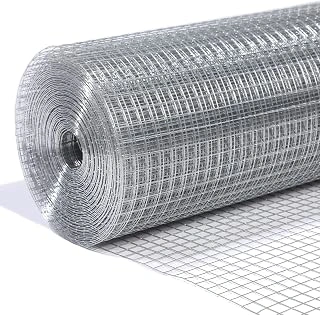
1/2-inch Galvanized Hardware Cloth 24" x 100' 19-Gauge Chicken Wire Roll
A roll of 1/2-inch galvanized hardware cloth measuring a larger amount wide and a larger amount long offers enough material to wrap a small coop or retrofit an existing run without splicing too many seams. The 19-gauge wire is stiff enough to resist bending when a raccoon leans against it, and the galvanized coating holds up through rain and snow better than bare steel.
The 1/2-inch grid spacing stops most backyard predators - raccoons cannot squeeze through, and foxes or dogs cannot force the mesh open with their snouts. This spacing does leave gaps large enough for weasels and snakes to slip through, so if you live in an area with mink or rat snakes, you will need 1/4-inch mesh for full coverage.
The 24-inch width works well for coop walls up to two feet tall or for wrapping the lower perimeter of a run where diggers tend to probe. You can cut the roll with aviation snips and overlap edges by an inch, then secure with hog rings or stainless screws. At a larger amount total, one roll covers roughly multiple square feet, enough for a 10-foot by 10-foot walk-in run with material left over for vent screens.
The 19-gauge wire is heavier than chicken wire but lighter than 1/4-inch hardware cloth made from multiple-gauge stock, so it is easier to handle when you are working alone and still stiff enough to hold shape without sagging. The price sits near multiple, which is less per linear foot than buying several short rolls from a hardware store.
This roll suits anyone building a new coop in a suburban or rural area where raccoons, opossums, and foxes are the main threats. It also works for replacing chicken wire on an older coop, since the 24-inch width matches the height of many prefab coop walls. If your site sees frequent weasel activity or if you keep bantam chicks that need tighter protection, plan to use 1/4-inch mesh instead.
- ✅ 19-gauge wire resists bending from raccoons and larger predators
- ✅ 100-foot length covers most small-to-medium coops in one roll
- ✅ Galvanized coating holds up through weather
- ✅ 24-inch width matches standard coop wall heights
- ⚠️ 1/2-inch spacing allows weasels and snakes through
- ⚠️ Heavier than chicken wire, requires snips or cutters
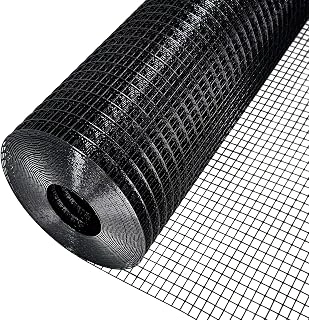
Black PVC Vinyl Coated Wire Mesh Hardware Cloth 1/2-inch 48”x50’ 19-Gauge
The Black PVC Vinyl Coated Wire Mesh Hardware Cloth delivers the same 1/2-inch, 19-gauge predator resistance as galvanized versions but wraps every strand in a protective vinyl layer that resists rust and corrosion far longer in wet or humid climates. If your coop sits in a foggy hollow, faces regular rain, or is positioned near automatic waterers that splash constantly, the PVC coating adds years to the install before you see any breakdown at the edges or joints.
At a larger amount wide and a larger amount long, this roll covers taller coop walls or run panels in fewer vertical seams, which means fewer weak points and a faster installation. The black finish also blends into wood framing and shadow better than bright galvanized silver, so it looks less industrial if your coop sits close to the house or garden beds you care about aesthetically.
The vinyl does add a small amount of bulk to each wire, so cutting requires sharp, heavy-duty snips and a bit more hand pressure than bare galvanized cloth. Once installed, though, the coating cushions the wire slightly, which can be easier on your hands during setup and gentler on chicken combs if a bird presses against it. The 4.7 rating and $59.39 price reflect solid durability and a modest premium over uncoated rolls of similar gauge and mesh size.
This cloth suits homesteaders in high-moisture regions who want to install once and not revisit rust repairs in three years, or anyone who values a finished look that doesn't announce "hardware store" from across the yard. If your climate is dry and budget is the priority, galvanized will perform just as well against predators at lower cost. But if longevity and appearance matter, the vinyl-coated option is worth the investment for maximum durability and a cleaner look that blends into your setup.
- ✅ PVC vinyl coating resists rust and corrosion in wet or humid climates
- ✅ 48-inch width reduces vertical seams on taller coop walls
- ✅ Black finish blends better with wood framing and natural surroundings
- ✅ Same 1/2-inch, 19-gauge predator protection as galvanized cloth
- ⚠️ Vinyl coating requires sharper snips and more cutting pressure
- ⚠️ Higher price than uncoated galvanized hardware cloth
The Verdict: Why Hardware Cloth is the Only Choice for Coop Security
Hardware cloth is the clear winner for predator-proof coop construction. Its welded wire structure and smaller mesh openings physically prevent raccoons, weasels, and other threats from reaching your birds, while chicken wire simply keeps chickens contained without stopping determined predators.
The strength difference matters in real-world scenarios. Raccoons can tear through chicken wire in minutes, and their dexterous paws easily reach through the wide hexagonal gaps to grab birds roosting near the walls. Hardware cloth with half-inch or quarter-inch spacing eliminates both vulnerabilities. The galvanized steel holds up against chewing, clawing, and repeated pressure that would compromise lighter wire.
Durability extends the value over time. Hardware cloth maintains tension and structure for years, even in wet climates or high-traffic areas like run floors. Chicken wire sags, rusts, and develops weak spots that create entry points. Replacing compromised fencing after a predator attack costs more than installing hardware cloth from the start, and that calculation doesn't account for losing birds.
The cost tradeoff is straightforward. Hardware cloth runs two to three times the price of chicken wire per roll, which adds up quickly when covering large runs or multiple coop openings. But a single lost hen represents both the replacement cost and months of lost egg production. For primary barriers where predators probe for access - ground-level walls, windows, ventilation gaps - hardware cloth is the only material that reliably does the job. Chicken wire may still serve for interior partitions or temporary above-ground enclosures where predation pressure is minimal, but it has no place in your first line of defense.
Best Uses for Each Material on the Homestead
Knowing when to use each material saves money without compromising flock safety. Chicken wire works fine for applications where predators aren't the concern - covering garden beds to keep chickens from scratching up seedlings, wrapping compost bins to contain material while allowing airflow, or creating temporary daytime partitions inside a protected barn. These low-risk scenarios don't justify the cost of hardware cloth.
Hardware cloth belongs anywhere a predator could gain access. Use it for all exterior coop walls, run perimeters, floor barriers against digging predators, window and vent covers, and any opening larger than half an inch. Even small gaps under doors or around feeders should get hardware cloth treatment if they face the outside. The price difference becomes irrelevant the first time a raccoon tests your defenses at 2 a.m.
Consider a hybrid approach for large runs: hardware cloth on the bottom three feet where predators dig and reach, with stronger welded wire or chain link above. This concentrates your budget where threats are highest. Chicken wire can handle interior pen dividers, keeping roosters separated or broody hens contained, since these barriers only manage chickens rather than exclude predators.
Garden fence tops are another smart chicken wire application - a three-foot barrier keeps hens out of your tomatoes without needing the strength to resist claws and teeth. The same logic applies to berry bush cages and young tree guards during the growing season. Save your hardware cloth investment for the structures where your birds sleep and spend unsupervised time.
How to Properly Install Hardware Cloth for Maximum Protection
- Bury hardware cloth 12-18 inches deep or bend outward in an L-shape to stop digging predators
- Overlap seams by at least 4 inches and secure with galvanized staples or screws every 6 inches
- Cover all ventilation openings larger than 1/2 inch, including roof vents and windows
- Staple hardware cloth to the inside of framing so predators can't pry edges loose
- Use 1/4-inch hardware cloth on any openings near ground level if weasels or snakes are a concern
- Inspect your installation twice a year and repair any loose edges or rust damage immediately