We may earn a commission when you buy through links on this page, at no extra cost to you. How this works.
Vego Garden 17" Tall 9-In-1 Modular Metal Raised Garden Bed
Comparing raised bed materials so you can stop second-guessing and start planting.
Use the matching tool first
Start with Compost Balance & Readiness Checker if you want to narrow the fit before checking current offers.
I've built more raised beds than I care to count. And every single time, before the first board goes down, the same question comes up: what should I actually build this thing out of?
It's not a trivial question. A good raised bed is an investment-in money, in time, and in the years of harvests you're hoping it'll support. Get it right, and you'll have a sturdy, productive bed that becomes the backbone of your garden. Get it wrong, and you're looking at a rotted, warped, or overheated mess that needs replacing before your tomatoes even fruit.
Wood, metal, and composite each have their champions. Wood feels traditional and warm. Metal promises decades of durability. Composite splits the difference with modern engineering. But which one actually makes sense for your homestead, your climate, and your budget?
I'm not here to sell you on one material as the 'best.' Because honestly, there isn't one universal winner. What I can do is walk you through the real-world pros and cons of each, share what I've seen work (and fail), and point you toward specific products that hold up to actual use. Let's dig in.
Why Material Choice Actually Matters
It's tempting to think a raised bed is just a box that holds dirt. But the material you choose affects nearly everything about how that bed performs.
First, there's longevity. Some materials give you five good years. Others last twenty or more. If you're planning a perennial bed for asparagus or a permanent garden layout, that difference is huge.
Then there's soil temperature. Metal heats up fast in summer sun, which can stress shallow roots. Wood insulates better. Composite falls somewhere in the middle. Your climate and what you're growing matter here.
And let's talk about safety. If you're committed to organic gardening-and I assume you are, or you wouldn't be reading this-you need to know what's leaching into your soil. Treated wood, certain paints, and even some plastics can introduce chemicals you don't want anywhere near your food.
Finally, there's the simple question of effort. Some beds snap together in twenty minutes. Others require an afternoon, a drill, and a lot of patience. If you're building six beds this spring, assembly time adds up fast.
Wood Raised Beds: The Classic Choice
Wood is what most of us picture when we think 'raised bed.' It's warm, natural-looking, and relatively easy to work with if you're building from scratch.
Cedar and redwood are the gold standards. Both contain natural oils that resist rot and insects without chemical treatment. Untreated cedar can last 10-15 years, sometimes more if conditions are right. It's also a good insulator, keeping soil cooler in summer and warmer in spring and fall.
But let's be honest about the downsides. Good cedar isn't cheap, and prices have been climbing. It will eventually rot, especially where it contacts soil. And if you're buying pre-made kits, quality varies wildly. I've seen beautiful cedar beds and I've seen flimsy ones that bowed after a single season.
Avoid pressure-treated lumber for vegetable beds. Older treatments used arsenic (a hard no), and while newer formulas are considered safer, they still contain copper and other preservatives. For a food garden, it's just not worth the risk.
Pine is cheaper, but it rots fast-often within 3-5 years. You can line it with plastic to extend its life, but then you're adding plastic to your 'natural' wood bed, which feels like a compromise.
Wood works best if: You want a traditional look, you're in a moderate climate, and you're okay with eventual replacement as part of garden maintenance.
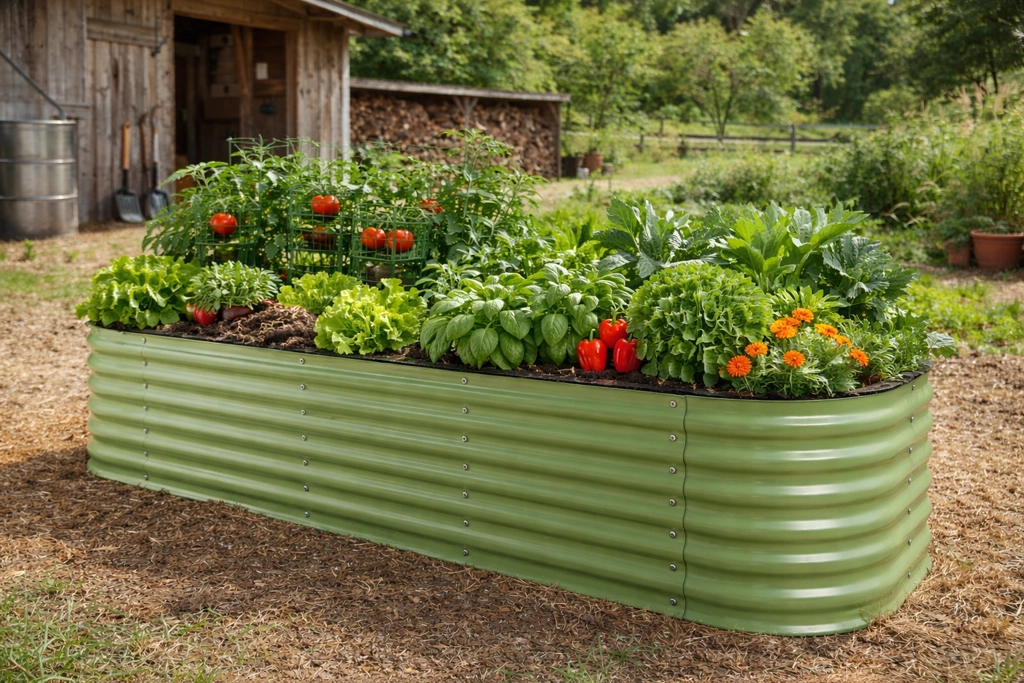
Vego Garden 17" Tall 9-In-1 Modular Metal Raised Garden Bed
Metal beds have surged in popularity, and the Vego Garden modular system is one of the reasons why. This isn't flimsy corrugated roofing-it's Aluzinc coated steel with a food-safe painted finish that's rated to last over twenty years.
What I really appreciate about this bed is the modularity. The 9-in-1 design means you can configure it into nine different shapes-most commonly a 6.5 ft x 3.5 ft rectangle, but you can adapt it to L-shapes, U-shapes, or whatever your yard demands. If you've got an awkward corner or a narrow side yard, that flexibility is genuinely useful.
The 17-inch height is also a standout feature. That's tall enough to significantly reduce bending, which makes a real difference if you're spending hours weeding or harvesting. It also gives you deep root space for crops like carrots, potatoes, or deep-rooted tomatoes.
Durability is the big sell here. Metal won't rot, won't splinter, and won't need replacing in five years. The Aluzinc coating and USDA-certified paint mean it's safe for food crops, and Vego has done a solid job addressing the 'will this rust?' question that used to plague metal beds.
The trade-off? Assembly is more involved. You're dealing with nuts, bolts, and washers-not difficult, but more tedious than a snap-together composite kit. And in very hot, sunny climates, dark metal can overheat soil along the edges. Mulching helps, but it's something to watch.
If you want a bed that outlasts you and you're comfortable with a bit of assembly, this is a smart investment.
- ✅ The modular design allows assembly in 9 different configurations to fit unique spaces, perfect for those with limited or awkward yard layouts.
- ✅ Its 17-inch height significantly reduces bending and stooping, making gardening more comfortable and accessible.
- ✅ Constructed from Aluzinc steel with a specialized paint, it is rated to last over 20 years, offering a highly durable and sustainable solution.
- ✅ The USDA-certified food-safe coating ensures no harmful chemicals leach into the soil, aligning with organic and pesticide-free gardening goals.
- ⚠️ Assembly requires using many nuts, bolts, and washers, which can be more tedious than tool-free wood or composite kits.
- ⚠️ Dark-colored metal can absorb significant heat in direct sun, potentially overheating the soil in very hot climates.
- ⚠️ The initial purchase price is higher than a comparably-sized, basic untreated cedar bed.
Metal Raised Beds: Built to Last
Metal beds have come a long way from the days of rusted livestock troughs. Modern options use galvanized or Aluzinc-coated steel with food-safe finishes, and they're engineered to last decades without rotting, warping, or requiring maintenance.
The durability argument is strong. A quality metal bed is genuinely a one-time purchase. You won't be rebuilding it in ten years. For homesteaders planning a long-term garden layout-especially if you're investing in soil building and perennials-that permanence is valuable.
Metal also tends to be pest-resistant. Termites, carpenter ants, and rodents that might chew through wood have no interest in steel. If you're in an area with heavy pest pressure, that's a real advantage.
But metal does have quirks. Heat absorption is the big one. In full sun, especially in southern climates, metal beds can get hot enough to stress roots near the edges. Mulching heavily and ensuring good watering helps, but it's a consideration.
There's also the aesthetic. Some people love the clean, modern look of metal. Others find it too industrial for a homestead garden. That's personal preference, but it's worth thinking about if garden aesthetics matter to you.
Metal works best if: You want a permanent, low-maintenance solution, you're willing to manage heat in hot climates, and you value durability over a traditional wood look.
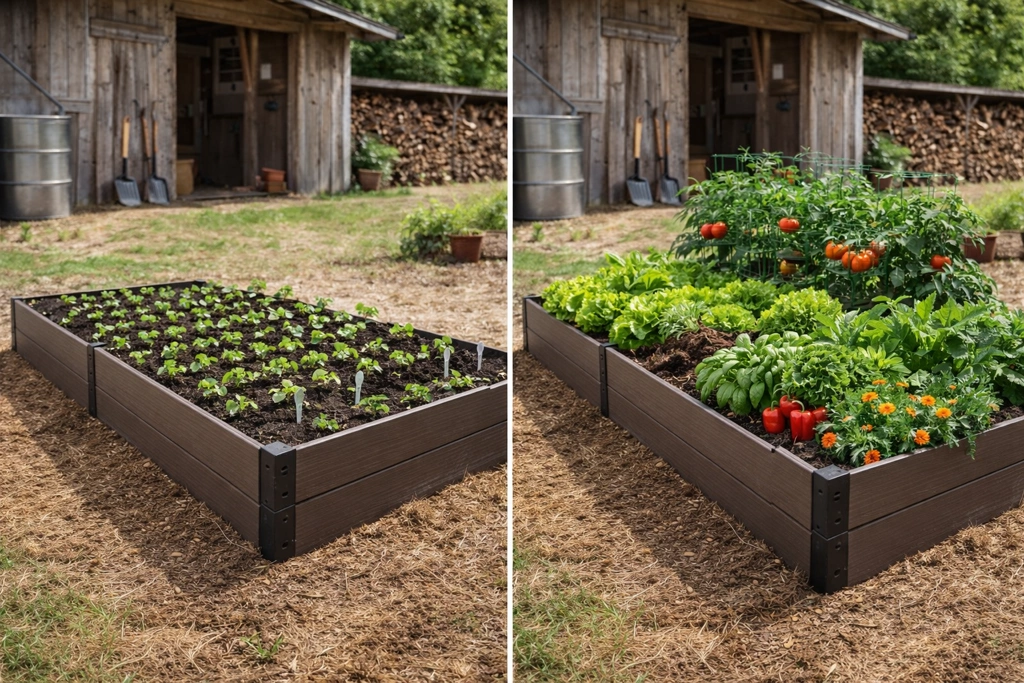
Frame It All 4ft. x 8ft. x 11in. Weathered Wood Composite Raised Garden Bed Kit, Two-Inch Series
Composite beds are the newer kid on the block, and the Frame It All kit is a solid example of what modern composite engineering can do. This bed is made from 38% post-consumer recycled plastic and 62% sustainably sourced hardwood fibers-so it's literally built from reclaimed materials.
The big appeal here is that composite won't rot, warp, splinter, or fade. It combines the look of wood (sort of) with the durability of synthetic materials. The 'weathered wood' finish is convincing enough from a distance, though up close it's clearly not real lumber. If that matters to you, it matters. If it doesn't, you get a bed that should outlast any untreated wood option.
Assembly is genuinely easy. The snap-lock bracket system is tool-free, and I've seen complete beginners put one of these together in under half an hour. If you're building multiple beds or you're not confident with power tools, that simplicity is a real benefit.
The hollow board construction also provides some insulation, which helps moderate soil temperature swings. That's useful in climates with hot days and cool nights, or early spring planting.
The downside? Cost. Composite is often the most expensive option per square foot. And while the materials are food-safe, some homesteaders are uncomfortable with any plastic in their garden, even recycled plastic. It's a personal call.
If you want maximum durability with minimal maintenance and you're okay with a synthetic component, this is a strong contender.
- ✅ Composite material will not rot, warp, splinter, or fade, offering a very low-maintenance and long-lasting gardening solution.
- ✅ The snap-lock bracket system allows for a simple, tool-free assembly that is easy for beginners.
- ✅ Made from a blend of recycled plastic and wood fibers, it provides a sustainable option by repurposing waste materials.
- ✅ Hollow board construction provides insulation to the soil, helping to protect plant roots from extreme temperature swings.
- ⚠️ This is often the most expensive option compared to similarly sized wood and metal beds.
- ⚠️ The 'weathered wood' appearance is simulated and may not satisfy homesteaders seeking the authentic look and feel of real wood.
- ⚠️ Individuals aiming for a completely plastic-free garden may want to avoid composite materials, despite being food-safe.
Composite Raised Beds: The Modern Compromise
Composite beds are engineered to give you the best of both worlds: the look of wood with the durability of synthetic materials. They're made from a mix of recycled plastics and wood fibers, molded into boards that resist rot, insects, and UV damage.
From a pure maintenance standpoint, composite wins. You're never replacing boards, never treating or sealing, never worrying about termites. It's as close to 'set it and forget it' as raised beds get.
The environmental story is mixed. On one hand, you're using recycled materials and avoiding the need to harvest new lumber. On the other hand, you're introducing plastic into your garden space, and some homesteaders are uncomfortable with that on principle-even though food-safe composites don't leach harmful chemicals.
Aesthetically, composite has gotten a lot better. Modern options mimic wood grain convincingly, especially the weathered or barnwood finishes. But it's still not real wood. If authenticity matters to you, composite will always feel like an imitation.
Price is the other sticking point. Composite is often the most expensive option upfront, though you can argue that lifetime cost is lower since you never replace it. Whether that math works for you depends on your budget and how you value durability.
Composite works best if: You want zero maintenance, you value sustainability through recycled materials, and you're comfortable with synthetic components in your garden.
Climate and Context: What Actually Matters for Your Homestead
Your climate and garden goals should heavily influence which material makes sense. There's no universal 'best'-only what's best for your specific situation.
If you're in a hot, arid climate, metal beds can overheat. Wood or composite insulates better and keeps roots cooler. If you're in a wet, humid region, wood rots faster and metal's rust-resistance becomes more valuable.
If you're building a permanent garden with perennials, fruit bushes, or asparagus, investing in metal or composite makes more sense than wood you'll replace in a decade. But if you're experimenting with garden layout or you plan to move in a few years, cheaper wood might be the smarter short-term choice.
And if you're building a lot of beds-say, a full market garden or a teaching garden-cost per bed adds up fast. Sometimes 'good enough' cedar beats 'perfect' composite simply because you can build twice as many beds for the same money.
Think about what matters most: durability, budget, aesthetics, or ease of assembly. Then pick the material that aligns with your priorities.
Questions to Ask Before You Buy
- How long do I plan to garden in this location?
- What's my realistic budget per bed, including soil?
- Do I have tools and skills for assembly, or do I need a simple kit?
- Is my climate very hot, very wet, or moderate?
- Am I committed to avoiding all synthetic materials, or am I open to food-safe composites?
- Do I want a traditional wood aesthetic, or am I okay with modern materials?
- Will I be building one bed or many?
What I'd Choose (and Why)
If you're asking me to pick, I'll tell you what I've actually done on my own homestead.
For my permanent vegetable beds-the ones I've spent years building soil in-I went with metal. Specifically, modular beds similar to the Vego system. I wanted something I wouldn't be replacing, and I valued the deep height for root crops. The initial cost stung, but three years in, they still look new, and I'm confident they'll outlast me.
For annual trial beds and areas where I'm still experimenting with layout, I've used untreated cedar. It's cheaper, it looks beautiful, and I'm okay replacing it in ten years if I need to. I treat it as semi-permanent infrastructure, not a forever investment.
I haven't personally used composite, mostly because I'm trying to minimize plastic on my homestead. But I've seen Frame It All beds in community gardens, and they hold up well. If I were building beds for an accessible garden where ease of assembly and splinter-free surfaces mattered-say, for kids or elderly gardeners-I'd seriously consider composite.
The point is, there's no one-size-fits-all answer. Match the material to the bed's purpose, your budget, and your long-term plans.