We may earn a commission when you buy through links on this page, at no extra cost to you. How this works.
Corona 54 in. L Wood Handle Extended Reach Action Hoe
Not all hoes are created equal-discover which type actually wins the battle against weeds.
Use the matching tool first
Start with Beginner Organic Garden Setup Checklist if you want to narrow the fit before checking current offers.
I spent three years fighting bindweed with a traditional draw hoe before someone finally told me I was using completely the wrong tool. That square-bladed thing I'd inherited from my grandfather? Perfect for hilling potatoes. Absolutely terrible for the shallow-rooted annual weeds taking over my lettuce bed.
Here's the thing nobody tells beginners: the word 'hoe' covers wildly different tools designed for entirely different jobs. A stirrup hoe (also called a scuffle hoe or loop hoe, because naming conventions in gardening are apparently optional) works nothing like a draw hoe. And if you're buying your first serious weeding tool or wondering why your current hoe feels like punishment, understanding these differences will save your back and your Saturday mornings.
Most garden centers stock all three types, but the labels rarely explain why you'd choose one over another. So let's fix that.
What Makes Stirrup and Scuffle Hoes Different (Spoiler: They're Basically the Same Thing)
Let's clear up the confusion right away. A stirrup hoe and a scuffle hoe are the same tool with different regional names. Some folks also call them loop hoes, shuffle hoes, or oscillating hoes when the head pivots slightly. The defining feature? A loop or stirrup-shaped blade that cuts on both the push and pull stroke.
This design is brilliant for shallow weeding. You work the blade just below the soil surface in a back-and-forth motion, slicing through weed stems without bringing up clumps of dirt or disturbing your carefully built soil structure. For organic gardeners especially, this matters-you're not constantly exposing new weed seeds to sunlight or disrupting the microbial layer.
The long handle lets you stand upright. If you've ever spent an hour hunched over a short-handled tool, you know exactly why this feature alone makes stirrup hoes worth every penny for larger garden beds.
These hoes excel at young, tender annual weeds-chickweed, lamb's quarters, purslane before it gets tough. They're the tool you grab for regular maintenance, not rescue missions. Think of them as the preventive medicine of weeding.
Draw Hoes: The Heavy-Duty Workhorses You Already Know
The classic draw hoe-that squared-off blade perpendicular to the handle-is probably what you picture when someone says 'garden hoe.' You pull it toward you (hence 'draw') in a chopping motion.
This design gives you serious leverage for tasks that require force. Breaking up compacted soil? Hilling potatoes or making furrows for planting? Chopping through thick-stemmed weeds that a stirrup hoe would just bounce off? The draw hoe handles it.
But here's the tradeoff: draw hoes are exhausting for everyday weeding. That chopping motion works your back, shoulders, and arms far harder than the light push-pull of a stirrup hoe. You're also moving more soil around, which can bury your seedlings or bring dormant weed seeds to the surface.
I still keep a draw hoe, don't get me wrong. When I need to edge a bed, knock down a patch of overgrown grass along the fence, or dig a quick trench, nothing else works as well. But for the weekly patrol through the vegetable garden? It stays in the shed.
Draw hoes also vary wildly in quality. The cheap ones with thin blades and wobbly connections to the handle will make you hate gardening. If you're investing in one, get something solid that won't flex or come apart mid-swing.
Which Hoe Should You Actually Buy?
If you're maintaining established garden beds and dealing mostly with annual weeds, get a stirrup hoe first. It's faster, easier on your body, and encourages you to weed more often because the task becomes less miserable.
If you're breaking new ground, working heavy clay soil, or dealing with mature perennial weeds with thick stems, you need a draw hoe. It's the only tool with enough oomph for those jobs.
Most experienced gardeners end up with both. I certainly did, though I reach for the stirrup hoe probably ten times more often. The draw hoe comes out for specific heavy-duty tasks, then goes right back on its hook.
Soil type matters here too. Loose, fluffy, well-amended soil? A stirrup hoe glides through it beautifully. Hard-packed clay or rocky ground? You'll struggle and potentially damage the blade. That's draw hoe territory, or honestly, maybe territory for a different solution entirely like mulching.
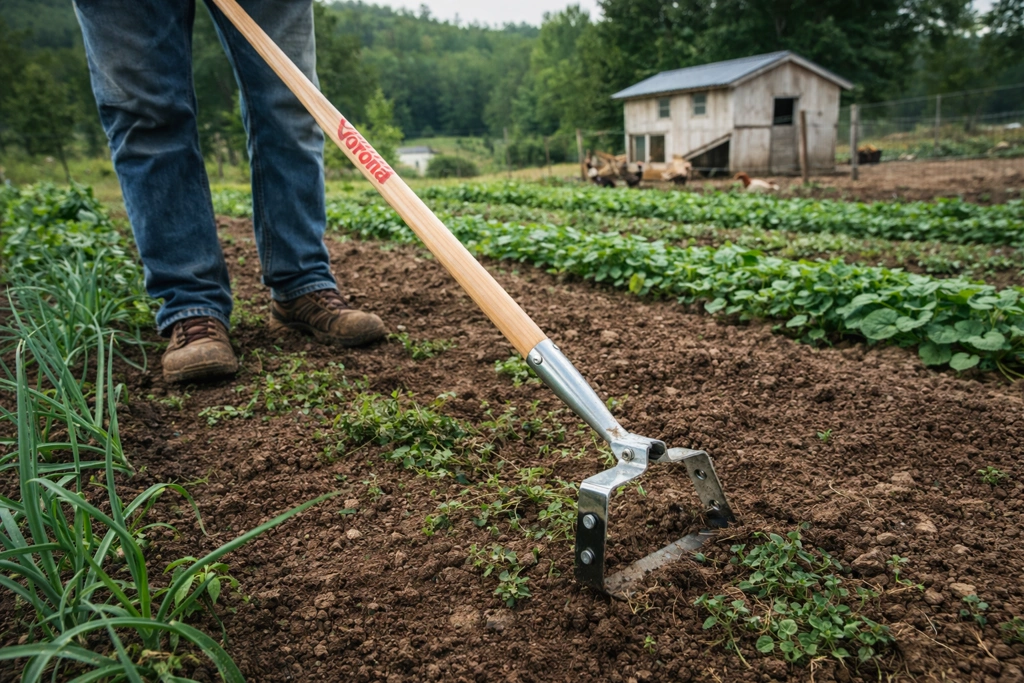
Corona 54 in. L Wood Handle Extended Reach Action Hoe
This is the oscillating stirrup hoe I switched to after my bindweed revelation, and it's become one of my most-used garden tools. The Corona Action Hoe features a self-sharpening steel blade that cuts efficiently on both push and pull strokes, letting you cover a lot of ground without the constant stooping and chopping of traditional hoes.
That 54-inch hardwood handle makes a real difference if you're weeding for more than a few minutes. You can stand fully upright and still reach the center of a four-foot-wide bed without stepping on your soil. For those of us trying to build healthy soil structure, not compacting it with footprints matters.
The blade design slices weeds just below the surface-exactly where you want to cut them. This leaves your soil structure intact and your mulch layer undisturbed. After years of using a draw hoe that brought up huge clods of dirt and buried my seedlings, this felt like magic.
The self-sharpening feature actually works. As the blade moves back and forth through the soil, the edges wear in a way that maintains cutting ability. I've been using mine for two seasons without any maintenance beyond rinsing off the mud.
Now, the limitations: this is purely a weeding and surface cultivation tool. Don't try to chop through woody stems or dig with it. And that wooden handle, while comfortable, will weather if you leave it outside. I learned this the hard way-bring it in or at least lean it under cover.
For loose to moderate soils and annual weed control, particularly in organic gardens where you want minimal soil disruption, this hoe delivers. It's priced reasonably for a tool that'll last years if you treat it right.
- ✅ Cuts weeds efficiently on both the push and pull strokes, making quick work of weeding large areas with less effort
- ✅ The 54-inch long hardwood handle allows you to work from a comfortable, upright position, which helps reduce back strain
- ✅ Slices through weeds just below the soil surface, effectively removing them without overly disturbing the soil structure, which is beneficial for organic gardens
- ✅ The self-sharpening steel blade maintains its edge through use, meaning less time spent on tool maintenance
- ⚠️ Not effective for chopping through thick, woody-stemmed weeds or breaking up heavily compacted soil
- ⚠️ The wooden handle can weather and potentially splinter if left outside, requiring more care than a fiberglass or steel handle
- ⚠️ The head is not designed for moving large amounts of soil or digging, limiting its use to primarily weeding tasks
Getting the Most from Your Hoe (Whichever Type You Choose)
Here's what I wish someone had told me earlier: the best hoe is the one you'll actually use regularly. Weeding works best as frequent, light maintenance rather than occasional desperate battles.
With a stirrup hoe, work when the soil is slightly moist but not wet. Bone-dry soil makes the blade skip and bounce. Muddy soil clogs everything and makes weeds harder to dislodge. That sweet spot right after the morning dew dries? Perfect.
Keep the blade shallow-you're skimming the top inch or so. If you're digging deeper, you're working too hard and probably bringing up new weed seeds. Let the tool do the work through its design, not through your force.
For draw hoes, sharpen the blade occasionally with a file. A sharp hoe cuts through stems and roots instead of just shoving them around. Ten minutes with a file twice a season makes a noticeable difference.
Store any hoe with a wooden handle out of the weather. I coat mine with linseed oil once a year, which takes about three minutes and prevents the handle from drying out and splintering. Metal handles need less fuss but can get uncomfortably hot or cold depending on the season.
Quick Decision Checklist: Which Hoe Do You Need?
- Get a stirrup/scuffle hoe if you're maintaining established beds with mostly annual weeds
- Get a draw hoe if you're breaking new ground, working compacted soil, or need to hill/furrow
- Choose longer handles (54+ inches) if you're over 5'6'' or have back issues
- Prioritize self-sharpening or easy-to-sharpen blades for less maintenance
- Consider your soil type-loose soil favors stirrup hoes, heavy clay needs draw hoes
- Plan to store wooden handles out of weather to prevent deterioration
- Budget for quality tools rather than buying cheap versions that'll frustrate you
The Honest Bottom Line on Hoe Selection
I spent years assuming all hoes were basically the same and that I just wasn't tough enough for weeding. Turns out I was using a demolition tool for a precision job.
If you're building an organic homestead garden and want to keep weeds under control without herbicides or constant backache, invest in a quality stirrup hoe. It changes the entire experience from dreaded chore to reasonably tolerable maintenance. The Corona model above is the one I trust, though your mileage may vary based on your specific garden conditions.
Keep a draw hoe around for the heavy jobs, but don't feel like you need to suffer through surface weeding with it just because that's what's always been done.
Your garden will have fewer weeds, your back will thank you, and you might actually get out there often enough to catch problems before they become disasters. Sometimes the right tool really does make all the difference.