We may earn a commission when you buy through links on this page, at no extra cost to you. How this works.
If you're brand new to water bath canning and facing a wall of pots, racks, and confusing features, you're not alone - choosing your first canner can feel overwhelming when you're not yet sure what actually matters. This guide is written specifically for absolute beginners who want to start preserving high-acid foods like jams, pickles, and tomatoes at home without buying the wrong equipment or overspending on features you don't need yet. We'll walk through the simple, practical criteria that separate a good beginner canner from a poor fit: capacity for your batch size, material durability, rack design, and a few must-have safety features that make the process easier and more reliable. By the end, you'll know exactly what to look for in your first water bath canner so you can start preserving with confidence, not guesswork.
Who This Guide Is For
This guide is for anyone taking their first steps into home canning - whether you're preserving tomatoes from your backyard garden, making jam from farmers market fruit, or starting a small homestead pantry. If you've never used a water bath canner before and feel unsure about what features actually matter, you're in the right place. Choosing your first canner doesn't have to be complicated or expensive. We'll walk through the practical differences in size, material, and design so you can pick a model that fits your kitchen, your batch sizes, and your comfort level. By the end of this guide, you'll know exactly what to look for and feel confident starting your first canning session safely.
What a Water Bath Canner Actually Does
A water bath canner uses boiling water to heat jars of high-acid foods - like jams, pickles, and tomatoes - long enough to destroy spoilage organisms and create a vacuum seal. The jars sit on a rack inside the canner, fully submerged in water that's kept at a rolling boil for a specific time depending on the recipe and jar size.
This method works only for foods with a pH of 4.6 or lower, because the acidity stops dangerous bacteria from growing at boiling temperature. Foods like green beans, corn, and meat require pressure canning instead, which reaches higher temperatures.
Understanding this difference helps you choose the right equipment. A water bath canner is simpler, more affordable, and doesn't need a gauge or pressure valve - just a deep pot with a lid and a rack to keep jars off the bottom. The boiling water circulates around each jar, heating the contents evenly and forcing air out to form the seal as the jars cool.
Because the process is straightforward, the features that matter most are capacity, rack design, and whether the pot fits comfortably on your stove with enough clearance for a full boil.
Capacity: How Big Should Your First Canner Be?
Capacity determines how many jars you can process at once, and for beginners, finding the right size means balancing batch efficiency with practical handling. Most water bath canners are measured in quarts and sized to fit standard canning jars in a single layer - typically 7 to 9 quart jars or 9 to 12 pint jars, depending on the canner's diameter and depth.
Smaller canners in the 15- to 21-quart range are easier to lift when full, fit comfortably on standard stovetops, and store more easily in cabinets or pantries. They work well if you're canning a few jars of jam, salsa, or pickles at a time and want to avoid the physical strain of handling large volumes of boiling water. These compact models suit apartment kitchens, small households, and anyone testing the hobby before committing to larger projects.
Larger canners - 30 quarts and up - let you process more jars in one session, which saves time and energy when you're preserving a bushel of tomatoes or a flat of peaches. The tradeoff is weight: a full 33-quart canner can exceed 40 pounds, requiring strong handles, a stable stove burner, and enough counter or floor space to set it down safely. If your stove has smaller burners or you have limited upper-body strength, a larger canner may feel unwieldy even when only half full.
Match your canner size to your stove's burner diameter, your storage options, and the batch sizes you realistically plan to tackle. If you expect to can a few quarts of applesauce each fall, a 21-quart canner offers plenty of room without overwhelming your kitchen. If you want to preserve 20 pounds of green beans in one afternoon, a 33-quart model will keep you from running multiple small batches. The right capacity makes canning feel manageable rather than exhausting.
Material Matters: Enamel vs. Stainless Steel
The material of your water bath canner affects durability, cost, and which stovetops you can use. Enamel-coated steel canners are the most common choice for beginners - they're lightweight, affordable, and come in a range of sizes. The enamel coating heats evenly and cleans easily, but it can chip if you drop the pot or scrape it with metal tools. Once the coating chips down to bare metal, rust can develop over time, though the canner will still function if you're careful.
Stainless steel canners are more durable and resistant to chips, dents, and rust. They typically last longer and work on all stovetop types, including induction, which enamel-coated models often do not. The tradeoff is weight and price: stainless steel canners are heavier to lift when full and cost significantly more upfront. If you plan to can regularly for years and have an induction cooktop, stainless steel is a sound investment. If you're testing the waters or working with a gas or electric coil stove, an enamel-coated canner offers excellent value and will serve you well with normal care.
Consider your stovetop compatibility first, then balance your budget against how often you expect to use the canner. Both materials will safely process high-acid foods when paired with a proper rack and enough water depth.
Stovetop Compatibility: Does Your Stove Matter?
Your stovetop type directly affects which water bath canner will work safely in your kitchen. Gas and electric coil stoves accommodate almost any canner without restriction, but glass-top and induction ranges require careful attention to design and weight.
Glass-top stoves have manufacturer weight limits, typically between 40 and 50 pounds when full, and require canners with completely flat bottoms to ensure even heat distribution and avoid cracking the surface. Graniteware and lightweight stainless steel canners are usually the safest choices for these surfaces. Check your stove's manual for the exact weight limit before filling a large canner with jars and water.
Induction stovetops only work with magnetic materials, so your canner must have a magnetic stainless steel base. Aluminum and some enamelware canners will not heat at all on induction. To test compatibility, place a magnet on the bottom of the canner - if it sticks firmly, the canner will work.
Flat bottoms matter for all smooth cooktops, not just aesthetics. Warped or ribbed bottoms reduce contact with the heating element, leading to uneven heating and longer processing times that can affect safety. Before purchasing, confirm that the canner bottom is flat and matches your burner diameter closely for the best heat transfer.
If you have a glass-top or induction stove, verify the canner's material, base design, and loaded weight against your stove's specifications to avoid damage and ensure reliable performance during every canning session.
Common Mistakes Beginners Make When Choosing a Canner
Buying a canner that's too large for your stovetop is one of the most common mistakes beginners make when starting their canning journey. A 21-quart canner might seem appealing for processing more jars at once, but if it doesn't sit flat on your burner or extends beyond the heating element, you'll struggle with uneven heating and longer processing times. Measure your largest burner before you buy, and ensure the canner diameter matches your stovetop type - especially important for glass or induction surfaces that have strict size requirements.
Another frequent pitfall is ignoring stovetop compatibility altogether. Not all canners work on all stoves, and assuming yours will fit can lead to frustration when you discover your new purchase won't heat properly or could even damage your cooktop. Glass stovetops, in particular, often have weight limits and require flat-bottomed canners, while induction stovetops need magnetic stainless steel bases. Check your stove's manual and the canner's compatibility list before making a decision.
Skipping the rack is a mistake that can cost you broken jars and wasted food. Some budget canners don't include a rack, and beginners sometimes assume they can use a towel or improvised solution instead. The rack keeps jars from touching the bottom of the pot - where heat is most intense - and prevents them from knocking against each other during the boiling process. Always confirm a rack is included, or factor the cost of buying one separately into your budget.
Choosing based on price alone without checking reviews or features often leads to buyer's remorse. The cheapest option might lack a tight-fitting lid, have thin walls that heat unevenly, or come without essential accessories like a jar lifter or funnel. A low price can also signal poor construction that won't last beyond a few seasons. Read user reviews carefully, paying attention to comments about lid fit, handle sturdiness, and whether the canner maintained a steady boil throughout processing.
To avoid these mistakes, start by confirming your stovetop type and burner dimensions, then look for a canner in the 16- to 21-quart range that explicitly lists compatibility with your stove. Verify that a rack is included, and spend time reading recent reviews from other beginners who share your setup. Prioritize features like a snug lid, sturdy handles, and a flat bottom over the lowest possible price, and you'll set yourself up for successful, frustration-free canning sessions from the start.
Final Takeaway: Start Simple and Build Confidence
The best water bath canner for a beginner is the one that fits your stove, matches your batch size, and stays within your budget. Whether you choose a traditional enamel canner, a stainless steel model, or an all-in-one unit, any of the options reviewed here will help you preserve food safely when paired with proper technique.
Successful canning depends more on following tested recipes and maintaining a full boil than on owning premium equipment. Start with a canner that feels manageable for your kitchen and skill level, then focus on mastering the fundamentals: sterilizing jars, leaving correct headspace, processing for the full time, and cooling slowly.
As you gain confidence, you can explore larger batches, experiment with different jar sizes, or upgrade to features that save time. For now, choose a straightforward canner, gather your jars and supplies, and commit to your first batch. The learning curve is gentle, and the reward of opening a jar of your own preserved tomatoes or jam in the middle of winter makes every step worthwhile.
Ready to get started? Browse our collection of beginner-friendly canning recipes and step-by-step guides to plan your first preserve and build lasting confidence in the kitchen.
Must-Have Features in a Beginner-Friendly Canner
- Jar rack or basket to lift jars safely in and out
- Tight-fitting lid to maintain boil and reduce evaporation
- Handles that stay cool or are easy to grip with mitts
- Flat bottom compatible with your stovetop type
- Depth to cover jars with at least 1-2 inches of water above lids
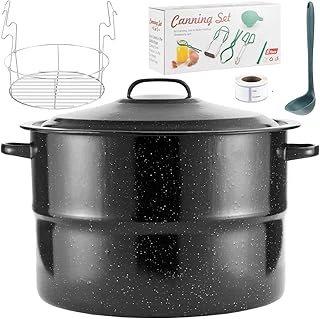
JY COOKMENT 21.5 Quart Water Bath Canning Pot with Rack and Lid
The JY COOKMENT 21.5 Quart Water Bath Canning Pot offers an affordable entry point for beginners who want to try water bath canning without a major investment. At $60.79, this mid-size pot includes both a rack and a lid, giving you the essential pieces needed to start canning right away.
With a 4.5 out of 5 rating, this canner fits small to medium batches - typically seven to nine pint jars or four to five quarts, depending on jar shape and spacing. The 21.5-quart capacity strikes a practical balance: large enough to process a reasonable harvest or recipe batch, yet manageable on most home stovetops and easier to lift when full compared to larger multiple-quart models.
The included rack keeps jars off the pot bottom, allowing water to circulate and preventing direct heat contact that could crack glass. The fitted lid helps bring water to a boil faster and maintains temperature during processing, which matters for timing accuracy and energy efficiency.
Because this is a budget-friendly option, pay attention to material thickness and handle construction. Thinner enamel or stainless coatings may chip or warp over time with repeated heating and cooling cycles, and lighter-gauge metal can develop hot spots on electric or glass cooktops. Check the product details and user reviews for feedback on long-term durability and any issues with the lid seal or rack stability.
This canner works well for beginners testing their interest in home canning, especially if you're preserving smaller garden yields, farmers market finds, or single-recipe batches. If you discover you love canning and plan to scale up, you may eventually want a larger or heavier-duty model, but the JY COOKMENT offers a low-risk way to learn the process and build confidence.
If you want an affordable starter canner that includes the basics, check the current price and reviews to confirm it matches your stovetop type and batch size expectations.
- ✅ Affordable entry price of $60.79 for beginners
- ✅ Includes rack and lid for immediate use
- ✅ 21.5-quart capacity handles small to medium batches
- ✅ 4.5 out of 5 rating from users
- ⚠️ Budget construction may mean thinner materials
- ⚠️ Durability over repeated use may vary
- ⚠️ May need upgrade if canning volume increases
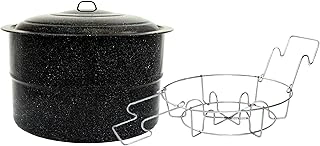
Granite Ware 33 Quart Water Bath Canner with Collapsible Jar Rack, Speckled Black
The Granite Ware 33 Quart Water Bath Canner offers substantial capacity for beginners ready to preserve large harvests or process multiple batches at once. This traditional enamel-coated steel canner holds up to the listed size jars or multiple pint jars, making it a practical choice if you're canning bushels of tomatoes or dozens of jars of jam in a single session.
The speckled black enamel surface distributes heat reliably and cleans up easily after processing. Enamel-on-steel construction provides durability over repeated use and resists chipping when handled carefully. The collapsible jar rack simplifies loading and unloading - you can lift all jars together once processing finishes - and it folds flat for more compact storage than fixed racks.
At the listed size, this canner requires a large burner with sufficient output to bring the water to a rolling boil. Check that your stovetop can accommodate the footprint and maintain steady heat under a full load. The empty canner is lighter than stainless steel models of similar size, but a full load of jars and boiling water still demands careful handling and a stable cooking surface.
Rated 4.4 out of 5, the Granite Ware canner suits beginners who plan to can large quantities and have the stove space and strength to manage a bigger pot. If you're preserving modest harvests or working with a smaller stove, consider a multiple-quart option instead. This canner is ideal if you plan to can large harvests and have the stove space to support efficient, high-volume preserving.
- ✅ 33-quart capacity holds up to 9 quart jars or 13 pint jars
- ✅ Enamel-coated steel distributes heat reliably and cleans easily
- ✅ Collapsible jar rack lifts all jars together and stores flat
- ✅ Rated 4.4 out of 5 for durability and performance
- ⚠️ Requires a large burner and stable stovetop to handle full capacity
- ⚠️ Full load with jars and water is heavy and demands careful handling
- ⚠️ Enamel can chip if dropped or struck, requiring cautious use
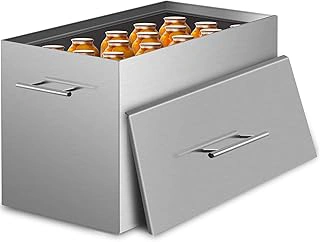
VEVOR 15 Quart Stainless Steel Water Bath Canner with 2 Racks
If you need a water bath canner that works on induction stovetops and holds up season after season, the VEVOR 15 Quart Stainless Steel Water Bath Canner with 2 Racks is worth considering. This compact canner is built from stainless steel, so it resists rust and won't chip or stain like enamelware can over time. The two racks included let you process smaller batches on the bottom rack or double-stack jars for efficient use of vertical space.
At the listed size, this canner is noticeably smaller than the standard 21-quart models, which means it fits on smaller burners and heats up faster. You can typically fit seven pint jars on one rack - ideal for quick batches of jam, salsa, or pickles. The smaller footprint also makes it easier to store in a narrow pantry or under the sink when not in use.
The standout feature is full induction compatibility. Many budget canners rely on enameled steel or thin aluminum bases that don't work well - or at all - on induction cooktops. VEVOR's thick stainless steel base heats evenly and responds quickly to temperature changes, giving you better control during the boiling process. It also works fine on gas, electric coil, and glass-top ranges.
With a 4.3 out of 5 rating and a price of $94.49, this canner sits at the higher end of the beginner price range. You're paying for material quality and cooktop flexibility. The tradeoff is capacity: if you regularly preserve large harvests or want to process quart jars of tomatoes, you'll outgrow the 15-quart size quickly. But for apartment kitchens, induction users, or anyone starting with smaller projects, the durability and compact design make it a smart investment.
This is a good fit if you want a canner that won't need replacing in a few years and you use an induction cooktop. If you need more capacity or want to save upfront cost, consider one of the larger enamel options instead.
- ✅ Stainless steel construction resists rust and staining
- ✅ Induction-compatible base works on all cooktop types
- ✅ Includes two racks for flexible batch processing
- ✅ Compact 15-quart size heats quickly and stores easily
- ⚠️ Smaller capacity limits batch size and quart jar processing
- ⚠️ Higher price point at $94.49 compared to enamel canners
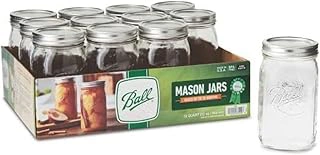
Ball 32oz Wide Mouth Mason Jars with Lids & Bands, 12 Pack
Ball 32oz wide mouth mason jars are a trusted standard for beginners learning to preserve jams, pickles, and whole fruits. The wide mouth opening makes filling easier and simplifies cleaning after use, especially helpful when working with larger pieces or thicker mixtures. These jars are rated 4.6 out of 5 and come with lids and bands included, so you have everything needed to seal your preserves right away.
Each 12-pack is priced at $36.76, offering solid value when you're stocking up to match your canner's capacity. The 32oz quart size fits common water bath canners and accommodates batches of tomatoes, peaches, or salsa without wasting headspace. Because Ball jars are widely available, finding replacement lids and bands when you need them is straightforward.
Wide mouth jars reduce the frustration of getting food in and out, a real advantage when you're still building confidence with safe canning practices. Remember to stock up on quality jars that match your canner's capacity - running short mid-batch disrupts timing and can lead to food waste.
- ✅ Wide mouth opening simplifies filling and cleaning
- ✅ Includes lids and bands in each 12-pack
- ✅ Trusted Ball brand with broad availability
- ✅ 32oz quart size fits most water bath canners
- ⚠️ Lids are single-use and require replenishment over time