We may earn a commission when you buy through links on this page, at no extra cost to you. How this works.
Homesteaders and gardeners looking to protect plants, time watering better, and understand frost risk need accurate data from their own plot, not the nearest airport station five miles away. Even across a small backyard, temperature, humidity, and wind can shift dramatically - a south-facing bed may warm hours earlier than a shaded corner, and low-lying areas often trap cold air on clear nights. These microclimates determine when it's safe to transplant seedlings, whether irrigation is keeping up with dry spells, and where frost will strike first in spring or fall.
A reliable weather station gives you that visibility. Instead of guessing when the last frost passed or hoping rain gauges are accurate, you get real-time readings from sensors placed exactly where your crops grow. Over weeks and seasons, those measurements reveal patterns: which rows dry out fastest, when afternoon sun pushes heat stress, or how much rain actually reached the ground under tree canopy.
This guide walks through the practical decisions that matter when choosing a station - sensor accuracy, wireless range, display readability, and how to position hardware so the data stays useful. It's written for beginners who want straightforward selection advice, not a review roundup or comparison of dozens of models. By the end, you'll know what features to prioritize, what to skip, and how to set up a system that improves your planting and watering decisions from day one.
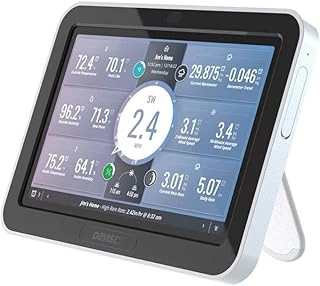
Davis WeatherLink Console for Vantage Pro2 and Vantage Vue Weather Stations
The Davis WeatherLink Console works exclusively with Vantage Pro2 and Vantage Vue weather stations, making it a targeted upgrade for growers who already run Davis outdoor sensor arrays. It replaces or supplements the standard console by adding Wi-Fi connectivity, local data logging, and smartphone app access without requiring a separate computer or cloud subscription for basic viewing.
The console features a color display that cycles through current conditions, highs, lows, and trend graphs. Data updates every few seconds from your existing Davis sensor suite, and the built-in memory stores readings locally so you can review past days or weeks even if your internet drops. The WeatherLink app lets you check conditions remotely and export CSV files for your own analysis.
Setup assumes you have a functioning Davis Vantage Pro2 or Vue base station; the console pairs wirelessly with the outdoor transmitter using the same frequency. You'll plug the console into wall power, connect it to your home Wi-Fi network through the onboard menu, and position it where you want to read the screen. Davis provides firmware updates periodically to add features or fix bugs.
At $425, this console sits well above entry-level all-in-one stations and makes sense mainly if you've already invested in Davis hardware or plan to. The display is readable in varied indoor light, and the interface is more detailed than basic LCD panels, though it takes a few minutes to learn the button navigation. For homesteaders tracking frost dates, soil moisture schedules, or spray windows across multiple garden zones, the combination of local logging and remote access helps you act on weather changes without walking back to the house.
If you're starting from scratch, you'll need to budget for both the outdoor sensor suite and this console. If you already own a Vantage Pro2 or Vue and want modern connectivity without a monthly fee, the WeatherLink Console delivers reliable data handling and app convenience in one unit.
- ✅ Works with existing Vantage Pro2 and Vue sensor suites
- ✅ Local data logging continues even without internet
- ✅ Wi-Fi connectivity and smartphone app access included
- ✅ Color display with trend graphs and detailed readings
- ⚠️ $425 price requires existing Davis hardware to justify
- ⚠️ Button navigation takes time to learn
- ⚠️ Not compatible with non-Davis weather stations
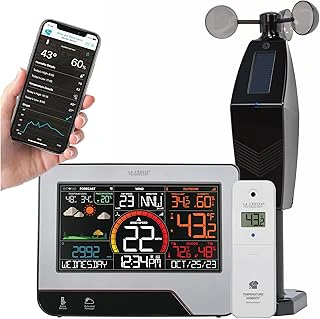
La Crosse Technology V23-WTH Wi-Fi Professional Color Wind + Weather System
The La Crosse Technology V23-WTH combines wind monitoring, Wi-Fi connectivity, and a color display at $139.99, making it a practical middle ground for homesteaders who want a complete picture without managing multiple devices. The system tracks temperature, humidity, wind speed, wind direction, rainfall, and La Crosse Technology V23-WTH Wi-Fi Professional Color Wind + Weather System pressure from a single outdoor sensor array, then syncs data to your phone and displays it on the included console.
Setup is straightforward: mount the sensor unit where it can catch wind without obstructions, plug in the console indoors, and connect both to your home Wi-Fi. The color screen shows current conditions at a glance, and the companion app lets you review trends when you're away from the house or out in the field. With a 4.4 rating, most users report reliable performance and appreciate the simplicity of having wind data included rather than adding it later.
This system works well for first-time weather station buyers who need wind and rain data to plan planting windows, protect young crops, or time irrigation. The tradeoff is sensor precision: readings are solid for homestead decision-making but not lab-grade. If you already own a basic station and only need to add wind, a modular upgrade may make more sense. But if you're starting fresh and want wind, rain, and indoor/outdoor conditions in one package, the V23-WTH delivers good value without requiring separate sensors or subscriptions.
- ✅ Includes wind monitoring in the base package
- ✅ Wi-Fi sync and color display for easy data access
- ✅ All-in-one sensor array simplifies installation
- ✅ Accessible price point at $139.99
- ⚠️ Sensor precision suited for general homestead use, not research-grade accuracy
- ⚠️ Not modular - upgrading individual sensors requires replacing the whole unit
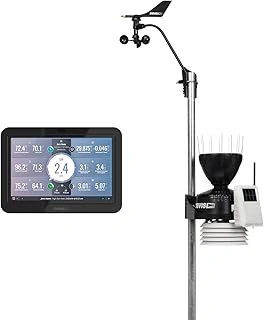
Davis Instruments Wireless Vantage Pro2 with WeatherLink Console
The Davis Instruments Wireless Vantage Pro2 with WeatherLink Console sits at the professional end of the home weather station market, designed for growers who need sensor accuracy and long-term data integrity across larger plots. This system is built around a wireless integrated sensor suite that measures temperature, humidity, wind speed and direction, rainfall, and Davis Instruments Wireless Vantage Pro2 with WeatherLink Console pressure, transmitting readings up to the listed service life to the console. The WeatherLink feature enables data logging and export, which matters when you're comparing microclimates season over season or tracking frost patterns across multiple garden zones.
Expandability sets this station apart: you can add soil moisture sensors, leaf wetness detectors, and additional temperature probes to monitor specific beds or high tunnels. That modularity makes the Vantage Pro2 a scalable choice for homesteaders managing orchards, market gardens, or livestock pastures where weather data informs daily decisions - irrigation timing, pest pressure windows, or harvest scheduling. The sensor array uses proven technology with a strong reputation in agricultural and research applications, so data reliability holds up over years of outdoor exposure.
At $1,012.99, this is an investment rather than an entry-level purchase. The higher cost buys you durable construction, replaceable sensor components, and the ability to archive weather records for long-term analysis. If you're running a one- or two-bed kitchen garden, simpler stations will meet your needs at a fraction of the price. But for growers who depend on precise environmental data to manage larger plantings, reduce crop risk, or optimize resource use, the Vantage Pro2 delivers the accuracy and flexibility that justify the upfront expense. Expect a learning curve with setup and software, but the payoff is a weather monitoring system that grows with your operation.
- ✅ Wireless transmission range up to 1,000 feet
- ✅ Expandable with soil moisture, leaf wetness, and additional temperature sensors
- ✅ Data logging and export through WeatherLink for long-term analysis
- ✅ Durable construction with replaceable sensor components
- ✅ Proven accuracy in agricultural and research settings
- ⚠️ Price of $1,012.99 makes it a significant investment
- ⚠️ Learning curve for setup and software use
- ⚠️ Overpowered for small kitchen gardens or casual hobbyists
What Makes a Good Garden Weather Station
A good garden weather station needs to capture data where your plants actually grow, not just near your house. Wireless range determines how far you can place sensors from the base console - look for at least 300 feet in open space, though walls and metal siding cut that down. More sensors mean you can monitor multiple microclimates at once: one near ground cover, another by raised beds, a third in full sun.
Setup should be straightforward. Models with plug-and-play sensors and clear pairing instructions save time, especially if you're mounting hardware on posts or pergolas in variable weather. Power options matter too: solar-charged sensors work well for remote spots, while AC-powered consoles keep the display running without battery swaps.
Console versus app-only access is a real tradeoff. A physical console lets you glance at conditions without unlocking a phone, useful when you're moving between chores. App-based systems offer cloud logging and remote access but depend on Wi-Fi stability. Some stations offer both, giving you flexibility as your workflow changes.
Accuracy and update frequency round out the picture. Sensors that refresh every few seconds catch sudden shifts - wind gusts before a storm, temperature swings at dawn - while slower intervals may miss short events. Check that the station logs history so you can compare yesterday's soil temperature to today's transplant conditions, not just live readings.
Core Sensors Every Garden Station Should Include
Temperature sensors tell you when frost risk arrives and when soil warming begins in spring, helping you time transplants and cover tender crops before damage occurs. A sensor that reads both current temperature and tracks daily highs and lows gives you the range needed to plan safe planting windows.
Humidity measurement matters because prolonged leaf wetness and high humidity create conditions where fungal diseases spread quickly. When your station shows humidity climbing above 80 percent for several hours, you know to improve airflow around susceptible plants or delay overhead watering until conditions dry out.
Rainfall data replaces guesswork in irrigation. A tipping-bucket rain gauge records each increment of precipitation, so you know whether last night's storm delivered a quarter inch or a full inch. That difference determines whether you skip watering for a day or a week, saving water and preventing root problems from oversaturation.
Wind sensors reveal microclimates shaped by buildings, hedgerows, and terrain. Consistently high wind readings in one garden zone explain why transplants struggle there, while calmer pockets show where heat-sensitive greens or tall crops will perform better. Direction data also helps you understand which beds dry fastest and where windbreaks will deliver the most benefit.
Together, these four sensors give you the environmental variables that directly affect germination rates, transplant survival, pest pressure, and harvest timing. Stations missing any one of these leave gaps in the information you need to make confident daily decisions in the garden.
Optional Sensors Worth Considering
Soil moisture probes measure water content at root depth, helping you decide when to irrigate rather than guessing from surface dryness. These sensors work best in larger garden plots where soil conditions vary from bed to bed, or when you're managing crops with different moisture needs. The tradeoff is calibration - most probes require adjustment for soil type, and mineral buildup or root interference can skew readings over time.
UV index sensors track ultraviolet radiation levels, which matters most if you're growing sun-sensitive crops like lettuce or managing delicate seedlings outdoors. A UV reading gives you a clear signal to deploy shade cloth or adjust planting schedules during high-intensity periods. The limitation is that UV data changes slowly across a garden unless you have dramatic elevation or shade differences, so one sensor usually covers a small to mid-sized plot.
this product pressure sensors add predictive power by detecting pressure trends that signal incoming weather fronts. Falling pressure often means rain or wind within 12 to 24 hours, while rising pressure suggests clearing conditions. This helps you time tasks like fertilizing, spraying, or harvesting before storms arrive. The catch is that this product data applies regionally rather than at microclimate scale, so it won't tell you how a specific garden corner behaves - it simply gives you advance notice of broader weather shifts.
Choose optional sensors based on the problems you're actually solving. Soil moisture makes sense if you manage multiple irrigation zones or struggle with overwatering. UV becomes useful when you're protecting shade-preferring plants or hardening off transplants. this product pressure adds value when you need lead time for weather-dependent chores, not when you only care about temperature and rainfall in a single raised bed.
How You'll Access and Use Your Weather Data
Once your sensors are collecting temperature, humidity, wind speed, and rainfall, you need a practical way to read and interpret that data. Most weather stations offer at least one of three access methods, each with distinct tradeoffs that affect convenience, reliability, and long-term usefulness.
Console-only models display live readings on a dedicated indoor unit. These are simple, require no internet connection, and continue working during Wi-Fi outages. You walk into your kitchen or office and check current conditions at a glance. The downside is limited history - many budget consoles show only the last 24 hours of highs and lows - and no way to track trends over weeks or months unless you record data manually.
Wi-Fi enabled stations upload readings to a companion mobile app or web dashboard. You can check your garden's microclimate from anywhere, review hourly or daily graphs, and set alerts for frost, wind gusts, or sudden humidity drops. Cloud-based storage means you retain months of data without manual logging. The tradeoff is dependence on your home network and the manufacturer's server uptime. If your router goes down or the company shuts down its cloud service, you lose remote access and historical records.
Some advanced systems offer both a local console and cloud connectivity, giving you redundancy. Others include SD card slots or USB export for offline data logging - particularly valuable if you're tracking seasonal patterns for crop planning or comparing year-over-year soil moisture trends. Serious growers who need CSV exports for spreadsheet analysis should confirm that feature before purchasing, as not all Wi-Fi models include it.
Choose console-only if you want simplicity and don't need long-term records. Opt for cloud-connected systems if you're away often, manage multiple garden zones, or want automated alerts and trend analysis. Hybrid setups - local display plus internet backup - offer the best of both worlds but typically cost more and require more setup time.
Durability, Power, and Maintenance Realities
Garden weather stations spend months exposed to sun, rain, wind, and freezing temperatures, so build quality matters more than feature lists. Look for outdoor sensors rated to your climate extremes - UV-resistant housings, sealed battery compartments, and corrosion-proof mounting hardware will outlast cheaper alternatives by years. Many homesteaders discover that a $60 station with solid weatherproofing delivers better long-term value than a $120 model with fragile sensors that crack after one winter.
Power choice shapes how often you'll handle maintenance. Battery-powered sensors typically need fresh AA or AAA cells every twelve to eighteen months, though cold snaps can shorten that window. Solar-rechargeable units reduce battery swaps but require enough daily sun exposure to stay charged - stations mounted under eaves or in shaded microclimates may still need backup batteries. Wired power eliminates battery concerns entirely but limits placement options and adds installation complexity.
Routine upkeep keeps data accurate. Rain gauges collect leaves, pollen, and insect debris, so a quick rinse every few weeks prevents clogging and false readings. Temperature and humidity sensors benefit from an annual wipe to remove dust and spider webs that can insulate the probe from true air conditions. Wind cups and anemometers should spin freely; a drop of silicone lubricant once a year maintains smooth rotation. Check mounting brackets each spring for rust or loosening hardware, especially after ice or high winds.
Realistic lifespan for mid-range consumer stations runs three to seven years, depending on build quality and your local weather severity. Sensors exposed to constant moisture or intense UV degrade faster than those in milder zones. Budget an extra ten minutes per month for visual checks and cleaning, and you'll catch small issues before they corrupt your microclimate data or require full sensor replacement.
Placement Tips for Accurate Garden Readings
Sensor placement determines whether your weather station delivers reliable data or misleading noise. Even a well-built station will report inaccurate temperatures if mounted against a sun-baked wall or record phantom rainfall under a dripping eave. Most placement errors are invisible until you compare readings to a neighbor's station or notice that your frost warnings never match reality.
Temperature and humidity sensors perform best mounted four to six feet above ground in a shaded, well-ventilated spot. A passive radiation shield or louvered enclosure helps, but the key is keeping direct sunlight and radiant heat from nearby surfaces away from the sensor. Avoid placement within ten feet of reflective walls, asphalt, gravel paths, or active compost piles - all of which skew readings several degrees higher than true air temperature.
Rain gauges need open sky and level ground. Position the collector at least twice the distance from any obstruction as that obstruction is tall: a ten-foot tree requires twenty feet of clearance. Roof drip lines, overhanging branches, and building eaves will either block precipitation or funnel extra water into the gauge, rendering seasonal totals useless for irrigation planning.
Wind sensors demand the most exposure. Mount the anemometer and vane on a pole or mast with unobstructed airflow from all directions, and raise it at least twice the height of nearby structures or trees. A sensor tucked behind a fence or barn will underreport wind speed and give inconsistent direction data, which matters when you're timing sprays or predicting storm movement across your property.
Wireless transmission range varies by terrain and interference. Test signal strength before permanent installation, and keep the transmitter within the manufacturer's specified distance from your console or router. Metal siding, thick stone walls, and dense tree cover all reduce effective range, sometimes by half.
Finally, heat sources sabotage microclimate accuracy. Sensors placed near exterior walls, HVAC vents, driveways, or livestock shelters will report localized conditions rather than representative garden data. Quarterly accuracy checks and regular cleaning of the rain collector - removing leaves, pollen, and insect nests - keep your station dependable through seasons of use.
Choosing the Station That Fits Your Garden Goals
Matching a weather station to your garden goals comes down to four practical factors: how much you want to spend, the size and layout of your growing space, which environmental variables matter most to your crops, and how you prefer to review the data.
Budget shapes your choices quickly. Basic stations with temperature and humidity sensors start around $30 and give you enough information to time irrigation and track frost risk. Mid-range models add rain gauges and wind monitoring for another $50 to $100, which helps if you're managing multiple beds or microclimates. Connected stations with soil sensors and app integration climb toward $200 but offer the most complete picture for serious homestead planning.
Plot size matters because larger properties often need multiple sensors to capture meaningful differences between sunny slopes, shaded valleys, or windbreak zones. A single station works fine for a compact backyard garden, but five acres with varied terrain benefits from a base unit plus remote sensors positioned in key microclimates.
Sensor priorities should align with what you actually grow and the problems you face. If late blight pressure is high, leaf wetness and humidity tracking become essential. If you're managing drip lines across raised beds, rainfall and soil moisture sensors pay for themselves in water savings. Wind matters more in exposed sites where young transplants struggle, while UV and solar radiation data help greenhouse growers dial in shade cloth timing.
Data access preference is the final filter. Manual-read displays suit gardeners who check conditions during morning rounds and prefer simple, battery-powered reliability. Wireless consoles let you monitor from the house without walking outside in bad weather. App-connected stations are best if you want historical graphs, alerts when conditions cross thresholds, or the ability to check readings while you're at work.
Start with the core sensors your crops demand - temperature, humidity, and rain are the foundation - and expand later if you find gaps in your decision-making. A station you check regularly and trust will always outperform a complex setup that sits ignored because the interface frustrates you or the install was too complicated to maintain.
Your ability to interpret and act on weather data will grow with each season. Early mistakes in placement or calibration become obvious as you compare station readings to what actually happens in the beds, and small adjustments make a real difference. The best station is the one that makes your garden decisions clearer, not the one with the most features.