We may earn a commission when you buy through links on this page, at no extra cost to you. How this works.
Working tight clay soil by hand challenges even experienced homesteaders, and a poorly designed broadfork can turn that challenge into back strain or wrist fatigue. If you're ready to loosen compacted clay without a tiller - preserving soil structure and the microbial life below - choosing an ergonomic broadfork built for the task makes all the difference.
Clay resists penetration, so tine sharpness and length matter. Handle geometry determines whether you lean into leverage or fight the tool with brute force. A sturdy foot pedal lets you drive tines into hard ground using leg strength instead of your lower back.
This guide compares three this product on those three dimensions: tine design for clay penetration, handle ergonomics that reduce strain, and foot pedal construction that supports your weight. Each model trades off differently in price, durability, and comfort, so you can match the tool to your soil condition and physical needs without guessing.
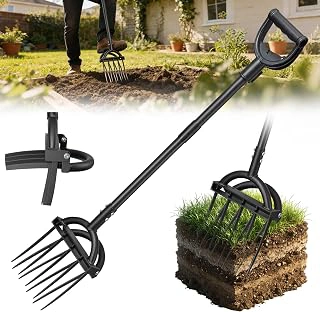
Heavy Duty Broad Fork with 5+4 Sharp Tines and Ergonomic Handles
The Heavy Duty Broad Fork with 5+4 Sharp Tines costs $35.99 and carries a 4.3 out of 5 rating, making it the most budget-friendly option in this comparison. The nine-tine configuration - five on one side, four on the other - covers a reasonable working width while the sharp tips help initial penetration in moderately compacted clay.
This broadfork uses a lighter build than premium models, which keeps the weight manageable but means you may need to make additional passes through very dense, dry clay. The ergonomic handles offer a comfortable grip during the rocking motion, though the frame may flex slightly under heavy loads compared to thicker steel construction.
For gardeners working smaller plots or testing whether a broadfork suits their workflow before committing to a higher-priced tool, this model delivers core functionality without the investment. It handles clay that has been moistened or worked previously more easily than virgin hardpan. If your soil is extremely tight or you plan to work large areas regularly, you may find the lighter frame tiring over extended sessions.
The price advantage is clear: at roughly half the cost of heavier-duty alternatives, this broadfork lets you experiment with the technique and assess your soil's response. Just plan for shorter work intervals and be ready to re-loosen stubborn spots. A solid starting point if you're new to Heavy Duty Broad Fork with 5+4 Sharp Tines and Ergonomic Handles or working lighter clay.
- ✅ Budget-friendly at $35.99
- ✅ Sharp tines aid penetration in moderately compacted soil
- ✅ Lighter weight reduces fatigue for shorter sessions
- ✅ Ergonomic handles provide comfortable grip
- ⚠️ Lighter frame may flex under heavy loads
- ⚠️ Requires more passes in very hard, dry clay
- ⚠️ Less durable for large-scale or frequent use
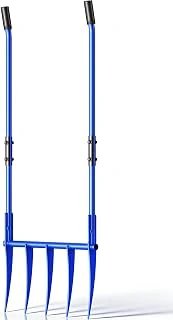
56'' Heavy Duty Broadfork with 5 Sharp Cambered 11'' Tines and Ergonomic Handles
The 56'' Heavy Duty Broadfork with 5 Sharp Cambered 11'' Tines and Ergonomic Handles sells for $129.98 and earns a 4.5 rating from users who work clay soil regularly. The 11-inch cambered tines reach deeper than shorter models, which matters when you need to break up compacted clay layers below the surface. Cambered tines curve slightly, helping them slice through dense soil rather than jamming on impact.
The 56-inch handle height reduces how far you bend during each lift cycle. Taller gardeners especially notice less lower-back fatigue compared to shorter tools. The ergonomic handle design spreads grip load across your palms, which becomes important during longer sessions on stubborn beds.
Five tines strike a practical balance: the tool aerates a larger swath with each plunge, covering ground efficiently without requiring excessive force to drive all the tines down. Heavier clay may still demand 56'' Heavy Duty Broadfork with 5 Sharp Cambered 11'' Tines and Ergonomic Handles on the crossbar, but the cambered shape and moderate tine count keep resistance manageable for most adults.
This broadfork suits homesteaders who loosen established clay beds multiple times per season. The construction handles repeated use in tough soil, and the ergonomic features reduce cumulative strain over years of spring and fall bed prep. If you work clay often and want a tool that lasts without demanding extra recovery time after each session, this model delivers consistent performance.
- ✅ 11-inch cambered tines penetrate deep clay layers effectively
- ✅ 56-inch handle height reduces bending and lower-back strain
- ✅ Ergonomic handle design spreads grip load during extended use
- ✅ Five-tine width covers ground efficiently without excessive force
- ✅ Durable construction suitable for repeated seasonal clay work
- ⚠️ Heavier clay may still require bodyweight to drive tines fully
- ⚠️ Five tines create narrower coverage than wider models
- ⚠️ Higher price point than shorter or lighter broadforks
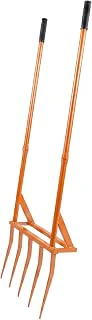
56 Inch 5-Tine Heavy Duty Broadfork, Orange Rust-Resistant with Widened Foot Pedal
The 56 Inch 5-Tine Heavy Duty Broadfork in orange sits at the upper end of the price spectrum at $149.99, but that cost reflects durable construction and a widened foot pedal that reduces fatigue during longer working sessions. Rated 4.5 out of 5, this model delivers the same tine depth and spacing as lower-priced options while adding a rust-resistant finish that extends tool life in damp storage conditions and clay environments where soil clings to metal.
The widened foot pedal stands out as the most practical upgrade. When you're driving tines into compacted clay, a broader surface distributes pressure across more of your boot sole, lowering the strain on the ball of your foot. This becomes noticeable after the first dozen or so insertions - your foot stays comfortable instead of sore, which matters if you're working a multiple-square-foot bed or managing multiple raised plots in one session.
The rust-resistant orange coating holds up better than bare steel when the broadfork sits in a shed through humid summers or gets stored while still damp after spring tillage. Clay soil accelerates corrosion because it holds moisture against metal longer than loamy or sandy ground, so a protective finish pays off over seasons of use. You won't need to scrub rust spots or re-oil tines as often, and the tool maintains its appearance and structural integrity through years of annual deep loosening.
The tradeoff is straightforward: you pay an extra premium compared to entry-level 56 Inch 5-Tine Heavy Duty Broadfork, Orange Rust-Resistant with Widened Foot Pedal, but the combination of foot comfort and corrosion resistance makes sense for larger homesteads where you rely on the tool every season or for gardeners who work long blocks of clay bed prep in a single day. If your operation is small - say, two 4×multiple beds - the extra cost may outweigh the comfort benefit. But if you manage 1,multiple square feet or more of clay garden space, or if you know you'll use this broadfork heavily each spring and fall, the improved pedal and finish translate into less physical wear on you and longer service life for the tool.
Worth the investment if you manage large garden areas or want maximum foot comfort during extended broadfork sessions.
- ✅ Widened foot pedal reduces fatigue during longer sessions
- ✅ Rust-resistant orange finish extends tool life in damp conditions
- ✅ Durable construction suitable for heavy annual use
- ⚠️ Higher upfront cost at $149.99
- ⚠️ Premium may not justify itself for small garden operations
What Is a Broadfork and Why Does Clay Soil Need One?
A broadfork is a manual soil-loosening tool with long steel tines mounted to a horizontal crossbar and two upright handles. You drive the tines into the ground with foot pedals, then rock the handles back to lift and fracture compacted layers without turning them over. This process aerates the soil, creates space for water and root growth, and preserves the natural stratification that supports microbial life.
Clay soil compacts easily because its fine particles pack tightly together, squeezing out air pockets and slowing drainage. When you rototill clay, the spinning blades pulverize the structure, mix layers, and can create a hard pan below the tilled zone. Over time, tilled clay often becomes denser and more difficult to manage. Broadforking breaks up clods and opens channels for water and air movement while leaving this product organisms, organic matter, and fungal networks largely intact.
Clay responds well to broadforking because the tool works with the soil's natural ability to crack along planes of weakness. The lifting motion fractures compacted blocks into smaller aggregates without smearing or puddling the surface. Earthworms, ground beetles, and other organisms continue their work undisturbed, and the improved aeration speeds decomposition of organic matter you add as mulch or compost. The result is looser soil that drains better and warms faster in spring, all without the noise, fuel, or repeated passes a tiller requires.
The No-Till Advantage: How Broadforks Protect Soil Health
this product let you aerate clay soil without flipping it upside down or slicing through the networks that keep it alive. When you drive a tiller through compacted ground, you tear apart earthworm tunnels, shred fungal threads that deliver nutrients to plant roots, and bury the richest organic matter where microbes struggle to reach it. A broadfork punctures vertically, lifts gently, and drops the soil back in place with its biology intact.
That difference matters in clay. Mycorrhizal fungi attach to plant roots and trade minerals for sugars, but they grow slowly and die when exposed to air and sun. Earthworms open channels that let rain soak in instead of running off, and their castings glue clay particles into stable aggregates. Broadforking preserves both.
Each pass loosens six to twelve inches of soil depth, creating space for roots and water without scrambling the layers. Organic matter stays near the surface where it decomposes fastest. Worm populations recover between seasons instead of starting over. After two or three years of spring and fall broadforking paired with a one- or two-inch compost top-dress, tight clay begins to crack into blocks that crumble instead of baking into pavement.
The improvement compounds. Looser soil drains faster after storms, warms earlier in spring, and gives roots room to push deeper during summer dry spells. You spend less time fighting the ground because the ground is doing part of the work.
Key Features to Look for in an Ergonomic Broadfork
Tine length determines whether you can break through compacted clay layers in a single pass. Look for tines at least 11 inches long; anything shorter forces you to make repeated passes or leaves hardpan untouched below the surface. Longer tines also mean you can aerate deeper without increasing physical effort, which matters when clay crusts extend well below the topsoil.
Handle height should align with your torso when the broadfork stands upright. If the grips sit below your chest, you'll bend forward on every stroke, loading your lower back instead of using your legs to drive the tines down. Adjustable or tall handles let you stand straighter and transfer weight vertically through the tool rather than levering it at an awkward angle.
Foot pedal width gives you enough surface to push with the full sole of your boot. A narrow crossbar concentrates pressure on a small part of your foot, causing fatigue and limiting the force you can safely apply. A pedal that spans the width of both feet distributes the load and lets you step down with confidence, even in stiff clay.
Tine sharpness - particularly pointed or cambered tips - makes the difference between punching through crust and bouncing off it. Blunt or square-cut tines require more downward force and increase the chance of the tool skidding sideways. Sharp tips slice between soil aggregates instead of compressing them, so each push feels cleaner and demands less repetition.
Handle grip diameter and angle affect how much leverage you can generate without hand strain. Grips that are too thin dig into your palms during the rocking motion; grips that angle away from your natural wrist position create torque on every pull. Look for round or oval handles that let you shift hand placement and that curve slightly back toward your body when the tines are buried.
How to Properly Use a Broadfork to Avoid Back Strain
Proper technique turns a broadfork from a back-straining chore into a rhythm you can sustain for an entire bed. Start by positioning your feet shoulder-width apart, placing one foot firmly on the tool's step bar. Push straight down using your legs and body weight rather than bending forward and forcing with your arms or lower back. Once the tines sink fully into the soil, pull both handles back toward your chest while keeping your spine neutral and core engaged.
The loosening motion comes from a controlled rock, not a jerk. Tilt the handles back until you feel the soil begin to lift and fracture beneath the surface, then release and step backward about six inches. Resist the urge to overreach or twist sideways; moving incrementally keeps your joints aligned and prevents compensatory strain. In very dense clay, warm up with a few shallow passes before attempting full-depth penetration, and plan for shorter work sessions with rest breaks rather than pushing through fatigue.
If the tines stop partway down, step off and reposition slightly rather than forcing the tool deeper. Clay that hasn't been worked before may need a second pass after the first loosening, especially during dry spells. By prioritizing leverage and patience over brute effort, you'll finish each row feeling productive instead of sore.
When to Broadfork Clay Soil for Best Results
Timing makes the difference between smooth penetration and a bent tool. Work clay soil when moisture content sits in the narrow window between wet and dry - typically a day or two after moderate rain in spring or fall. Saturated clay clings to tines and creates compaction as you work, while bone-dry clay resists penetration and can bend or crack broadfork tines under the leverage required.
Use the squeeze test to judge readiness: grab a handful of soil from spade depth and compress it in your fist. Ideal clay holds its shape when you open your hand but crumbles into several pieces when you press a thumb into the ball. If water drips out or the soil smears like putty, wait another day. If it won't hold shape at all or feels rock-hard, the window has closed.
Spring broadforking works best two to three weeks before planting, once frost has left the ground but before the soil dries out in warmer weather. Fall sessions should happen after harvest but before freeze-up, when autumn rains naturally bring clay back into workable range. Both seasons give soil time to settle and microbial life time to colonize the newly opened spaces before you plant.
Broadforking right after a soaking rain cuts effort roughly in half and extends tine life by reducing the force needed to reach full depth. Plan garden bed prep around weather forecasts rather than fixed calendar dates, and you'll spend less energy while getting better aeration and root penetration in the beds that matter most.
Maintaining Your Broadfork for a Lifetime of Use
Clay sticks, holds moisture, and can quietly corrode steel if you leave it on the tines overnight. A few minutes of care after each session will keep your broadfork working smoothly for decades.
Rinse the tines as soon as you finish working. If clay has already dried, use a wire brush to scrub it off before it hardens into a cement-like layer that's harder to remove later. Pay attention to the base of each tine where soil packs in tight.
Before you store the tool, wipe a light coat of oil - mineral oil, linseed oil, or a spray lubricant - onto the tines and any bare metal surfaces. This thin barrier keeps rust from forming, especially if your storage area sees humidity swings.
Check the bolts that hold the handles to the crossbar every few months. Clay work vibrates fasteners loose over time, and a wobbly handle puts extra stress on your wrists. Tighten any that feel slack.
Store your broadfork indoors, in a shed, or under a tarp. Leaving it outside exposes the wood to rot and the metal to constant moisture, which shortens its lifespan by years. These small habits turn a good tool into a reliable one that outlasts cheaper replacements.
Final Thoughts: Choosing the Right Broadfork for Your Homestead
Selecting the right broadfork for clay soil comes down to matching three variables: the depth and spacing of the tines, the handle geometry that fits your height and leverage style, and whether a foot bar will reduce the effort needed to penetrate compacted ground.
The Meadow Creature offers the widest tine stance and longest handles, making it easier to rock back and apply body weight when soil resists initial entry. That extra leverage becomes valuable on larger plots where you will repeat the motion dozens of times in a session. The Johnny's Selected Seeds model balances a narrower profile with adequate depth for most clay types, and the angled grips reduce wrist strain during the lift phase. For smaller beds or gardeners who prefer a lighter tool, the smaller frame still delivers meaningful aeration without requiring a full commitment of upper-body strength. The Hoss version sits in the middle, pairing sufficient tine length with a foot platform that lets you step down rather than lean forward, which many users find gentler on the lower back.
Ergonomic features matter more in heavy soil than they do in loam or sand. Clay clings to metal, multiplies resistance, and punishes poor posture over the course of an afternoon. A well-designed handle angle keeps your wrists neutral. A foot bar shifts work from your arms to your legs. Choosing a tool that accommodates these realities will determine whether broadforking becomes a regular part of your soil-building routine or a chore you dread.
Match your choice to how often you plan to use the tool, the size of the area you need to cover, and how compacted your clay truly is. If you face hardpan or clay that has been untouched for years, prioritize the foot bar and longer tines. If your beds are already loosening after a season or two of organic matter additions, a lighter frame may feel less cumbersome. Broadforking does become easier with repetition as your technique improves and as the soil structure opens up with each pass, so the investment in an ergonomic design pays forward across multiple growing seasons.