We may earn a commission when you buy through links on this page, at no extra cost to you. How this works.
This guide is for homesteaders and backyard gardeners who want to grow food without worrying about contaminants leaching from the bed itself. If you're committed to organic practices, the frame around your vegetables deserves the same scrutiny as your seeds and soil.
Treated lumber often contains copper-based preservatives that migrate into soil over time. Recycled plastic and composite materials can release unknown compounds, especially when they heat up in summer sun. Metal beds made from galvanized or powder-coated steel offer a stable, inert surface that won't break down or contaminate your harvest.
All four beds in this guide use food-safe metal construction. They assemble without tools in most cases, resist rust for years, and provide deep root zones for tomatoes, peppers, and other vegetables that need room to grow. You'll also find different shapes and sizes to match your space and planting goals.
Quick comparison
| Best Choice Products 6x3x2ft Outdoor Metal Raised Garden Bed | Check current price |
| Best Choice Products Outdoor Metal Raised Garden Bed Deep Root Planter Box | See current price for deep root gardening |
| Best Choice Products Oval Metal Raised Garden Bed | View pricing for curved garden layouts |
Use the matching tool first
Start with Raised Bed Soil Calculator if you want to narrow the fit before checking current offers.
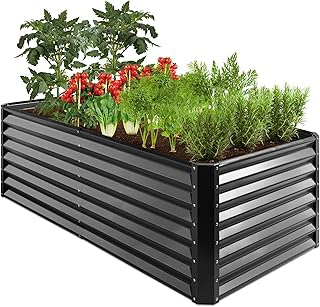
Best Choice Products 6x3x2ft Outdoor Metal Raised Garden Bed
This rectangular bed offers the most planting area for the price, giving you eighteen square feet of growing space in a galvanized steel frame. The two-foot depth accommodates deep-rooted crops like carrots and potatoes while keeping assembly simple with interlocking panels.
Imagine planting three rows of tomatoes down the length, with basil and marigolds tucked along the edges - the six-foot span gives you room to companion plant and rotate crops each season. The open bottom lets roots reach native soil and encourages beneficial earthworms to move freely.
Because this is one of the larger beds, you'll need roughly twelve cubic feet of soil to fill it. Check the footprint against your sunniest garden spot before ordering, and plan for watering access on at least two sides.
- ✅ Eighteen square feet of planting area
- ✅ Two-foot depth for root vegetables
- ✅ Galvanized steel resists rust
- ✅ Simple panel assembly
- ⚠️ Requires significant soil volume to fill
- ⚠️ Footprint may be too large for small yards
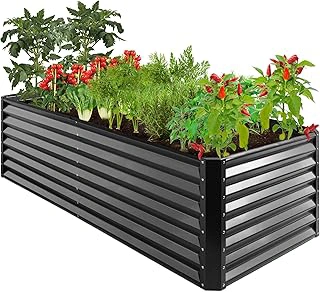
Best Choice Products Outdoor Metal Raised Garden Bed Deep Root Planter Box
When you need extra depth for root crops or want better drainage on clay soil, this version adds height without sacrificing the same galvanized steel construction. The deeper walls create a true planter box environment, perfect for gardeners dealing with poor native soil or hardpan.
Picture growing a full-season crop of storage onions or staking indeterminate tomatoes that will root deeply and support heavy fruit loads - the extra vertical space makes a real difference. You can also fill the bottom few inches with coarse drainage material and still have plenty of rich soil above.
The taller sides do mean more soil to source and haul, so calculate your cubic footage and budget for quality compost or a delivered soil blend. This bed works especially well if you're starting fresh on lawn or compacted ground.
- ✅ Extra depth for root crops and drainage
- ✅ Ideal for poor native soil conditions
- ✅ Same rust-resistant galvanized finish
- ✅ Accommodates taller staking systems
- ⚠️ Higher soil volume increases setup cost
- ⚠️ Taller walls can make access harder for children
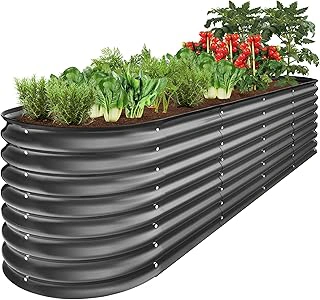
Best Choice Products Oval Metal Raised Garden Bed
An oval footprint softens the geometry of your garden layout and can fit into corner spaces or curved landscape beds where rectangles feel awkward. This shape also eliminates the tight inside corners that make weeding and harvesting difficult in traditional beds.
Think about tucking this bed into a courtyard garden or alongside a curved patio edge - the rounded ends create visual flow and give you easier access from every angle. The galvanized metal is the same food-safe material, just formed into a more organic shape.
Because the perimeter is longer relative to the area, you get more edge planting for herbs and compact greens. Measure your intended location carefully, since ovals can be trickier to position than straight-sided beds, and confirm you can still reach the center from both sides.
- ✅ Curved shape fits irregular spaces
- ✅ No tight corners for easier maintenance
- ✅ Food-safe galvanized construction
- ✅ Softer visual aesthetic
- ⚠️ Harder to position and measure
- ⚠️ Less area than equivalent rectangular bed
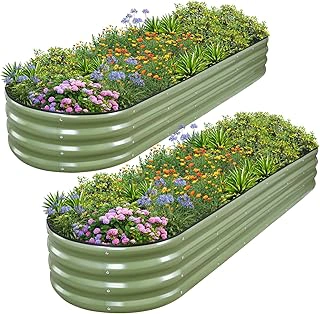
1MORE Galvanized Metal Raised Garden Bed
This bed brings the same non-toxic galvanized steel approach with a design focused on quick assembly and clean lines. The perfect rating suggests solid quality control and customer satisfaction, and the price sits comfortably in the middle of this lineup.
Imagine setting this up on a Saturday morning and planting your seedlings the same afternoon - metal beds typically snap together faster than wood frames. The galvanized finish will develop a soft patina over time, blending into your garden landscape while continuing to protect against rust.
Check the exact dimensions for this model to confirm it matches your space, and verify whether it includes any extras like corner caps or stabilizing stakes. Galvanized steel is safe for organic growing, but avoid beds with vinyl or rubber edging that contacts the soil.
- ✅ Top customer satisfaction rating
- ✅ Quick assembly process
- ✅ Food-safe galvanized metal
- ✅ Mid-range pricing
- ⚠️ Verify exact dimensions before purchase
- ⚠️ Check for included stabilizing hardware
What to Look for in a Food-Safe Raised Garden Bed
Start with the material itself. Galvanized steel and powder-coated metal are both safe for organic vegetable gardens when the coating is designed for outdoor use. Avoid beds made from railroad ties, reclaimed wood of unknown origin, or composites that don't disclose their ingredients.
Depth matters for what you want to grow. Leafy greens and herbs do fine in eight to twelve inches, but tomatoes, peppers, and root vegetables need at least eighteen inches to develop strong root systems. If you're gardening on concrete or very poor soil, go deeper.
Look for open-bottom designs that let roots reach native soil and allow drainage. Beds with solid metal bottoms are meant for patios and decks, not in-ground organic gardening. Check assembly requirements - most metal beds use interlocking panels or simple bolts, but a few need specialized tools.
Material Breakdown: Galvanized Steel and Coated Metal
Galvanized steel is carbon steel coated with a thin layer of zinc to prevent rust. The zinc is inert in soil and won't leach into your vegetables. Over time, the shiny finish weathers to a matte gray patina that actually improves corrosion resistance.
Powder-coated steel uses a baked-on polymer finish over the metal. Food-safe powder coatings are stable and non-toxic, but they can chip or scratch, especially during assembly or if you lean tools against the bed. Once the coating is damaged, the underlying steel may rust unless it's also galvanized underneath.
Both materials heat up in direct sun, which can warm the soil along the edges - usually a benefit in spring, but it may stress plants in extreme summer heat. Untreated cedar is another safe option, though it decays faster and costs more upfront. Avoid pressure-treated wood, old tires, and vinyl beds for food crops.
Frequently Asked Questions About Raised Bed Safety
Is galvanized steel really safe for organic vegetables? Yes. The zinc coating is stable and doesn't migrate into soil in meaningful amounts. Organic certification programs allow galvanized metal for raised beds.
How long will a metal bed last? Galvanized steel beds typically last ten to twenty years or more, depending on climate and soil moisture. They outlast untreated wood and most composite materials.
Do I need a liner inside the bed? No. Liners can actually trap moisture against the metal and accelerate corrosion. The open contact between soil and galvanized steel is safe and helps the bed last longer.
Can I grow acidic crops like blueberries in metal beds? Yes, though very acidic soil may slightly accelerate zinc release in the first year. The effect is minimal and the zinc is a plant micronutrient, not a contaminant.
Final Verdict: The Best Kit for Your Homestead Garden
For maximum growing area and straightforward installation, the Best Choice Products 6x3x2ft bed gives you eighteen square feet at the best price per square foot. If your native soil is heavy clay or you want to grow deep root crops, the deeper planter box version is worth the extra investment.
The oval bed works beautifully in curved landscape designs or tight corner spaces where a rectangle won't fit. And the 1MORE galvanized bed offers reliable construction with top customer feedback, ideal if you value proven performance.
Whichever you choose, fill it with quality organic soil, compost, and a balanced organic fertilizer. Metal beds warm up faster in spring, so you can often plant a week or two earlier than in-ground gardens. Plan your layout, order your bed, and get ready to harvest vegetables you know are truly clean from soil to table.