We may earn a commission when you buy through links on this page, at no extra cost to you. How this works.
If you're ready to turn a patch of lawn into productive garden beds, you need more than a shovel and determination. Breaking new ground means cutting through roots, loosening compacted soil, and creating the kind of tilth that lets vegetables thrive. The wrong tool leaves you exhausted with half-finished beds.
Small garden tillers bridge the gap between hand tools and full-size farm equipment. They're sized for suburban yards and homestead plots, powerful enough to handle challenging soil, yet manageable for beginners. You don't need a tractor to start growing your own food.
This guide covers four practical options that work for different soil types, budgets, and physical abilities. Each has been selected based on verified performance ratings and real-world suitability for homesteaders breaking ground for the first time.
Use the matching tool first
Start with Beginner Organic Garden Setup Checklist if you want to narrow the fit before checking current offers.
Understanding the Difference: Tillers vs. Cultivators
The terms get used interchangeably, but there's a practical difference. Tillers are designed to break virgin ground - they dig deeper and handle tougher work. Cultivators are lighter tools meant for mixing amendments into already-worked soil or weeding between established rows.
When you're starting a new bed, you want tilling power. The tines need to cut through grass roots and penetrate several inches down. Once your bed is established, a cultivator keeps it maintained season after season.
Some tools do both jobs reasonably well. For most homesteaders, a single small tiller with adjustable depth handles both initial breaking and seasonal maintenance, making it the most practical first purchase.
How to Choose the Right Small Tiller: Gas, Electric, or Battery?
Manual tillers work for small areas and give you complete control without noise or fuel costs. They require physical effort but excel in tight spaces between existing plants.
Electric tillers plug into an outlet and deliver consistent power without engine maintenance. They're quieter than gas models and start instantly. The cord limits your range, so they work best for gardens within 100 feet of an outlet.
Gas-powered tillers offer maximum power and unlimited range. They handle the toughest soil and largest areas but require oil changes, fuel mixing (for two-cycle engines), and seasonal maintenance. For breaking truly stubborn ground, gas still delivers the most muscle.
Battery-powered models are emerging but often lack the runtime and power for serious ground-breaking work. They're better suited for maintenance cultivation than initial bed preparation.
Essential Safety Tips for Operating a Garden Tiller
Tines spin fast and can catch on hidden obstacles. Walk the area first and remove rocks, roots, sticks, and any buried objects. Mark sprinkler lines and utility flags so you don't accidentally dig into them.
Wear closed-toe boots with good tread and long pants to protect your legs from thrown debris. Safety glasses are essential - tillers kick up small stones and dirt clods. Hearing protection matters with gas models.
Start on a low depth setting and make multiple passes rather than trying to dig deep in one go. Let the machine pull itself forward at its own pace instead of forcing it. Keep children and pets well away from the work area. Power off and disconnect before adjusting or clearing jammed tines.
Get Your Garden Beds Ready for a Bountiful Season
The right small tiller transforms the hardest part of starting a garden from overwhelming to manageable. Whether you choose manual simplicity, electric convenience, or maintain existing gas equipment, you're investing in years of productive growing.
Start with the tool that matches your current garden size and soil conditions. You can always expand your equipment as your homestead grows. The important step is breaking that first ground and getting seeds in the soil.
Consider your physical abilities, available power sources, and how much area you realistically plan to cultivate this season. The best small garden tiller is the one you'll actually use, not the most powerful model gathering dust in your shed.
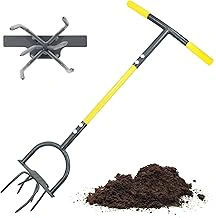
Jardineer Manual Twist Tiller Cultivator
This hand-powered tool solves the problem of breaking small areas without hauling out heavy equipment. The twist-and-pull design lets you work the soil in tight spaces around existing plants or along fence lines where power tools can't reach.
The five-claw design penetrates surprisingly well in average garden soil. You twist the handle to drive the tines down, then pull up to loosen the plug. It's particularly useful for working amendments into specific planting holes or refreshing soil in container gardens and raised beds.
Imagine you're adding three new raised beds and need to loosen the soil in each before planting. This tool handles that job without cords, fuel, or noise complaints from neighbors. It won't replace a power tiller for large-scale ground-breaking, but for targeted work and maintenance, it delivers real value at a budget-friendly price. Check that your soil isn't heavily compacted clay before relying on manual power alone.
- ✅ No power source required
- ✅ Works in tight spaces
- ✅ Silent operation
- ✅ Minimal maintenance
- ⚠️ Requires physical effort
- ⚠️ Not suitable for large areas
- ⚠️ Limited penetration in hard soil
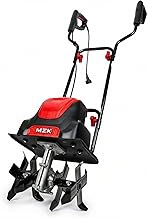
MZK 12-Inch 10.5 Amp Corded Electric Tiller/Cultivator
This electric model delivers consistent power for homesteaders who want to break ground without the complexity of gas engines. The 10.5-amp motor spins the tines at steady speed, making it effective for working through average soil and established grass.
The 12-inch working width covers ground efficiently without being too wide to maneuver in typical backyard gardens. The corded design means you never worry about battery life or mixing fuel - just plug in and start working. The tines fold for easier storage in a shed or garage.
Picture this: you're converting a 10-by-20-foot section of lawn into vegetable beds. With an extension cord run from your garage, this tiller methodically chews through the turf in a single afternoon. The even power delivery prevents the lurching common with lower-quality tillers. Just remember to map out where your cord will reach before you begin, and avoid rocky soil that could damage the tines or motor.
- ✅ No fuel or oil required
- ✅ Consistent power delivery
- ✅ Quieter than gas models
- ✅ Instant start with no pull cord
- ⚠️ Limited by cord length
- ⚠️ Less power than gas tillers
- ⚠️ Requires nearby electrical outlet
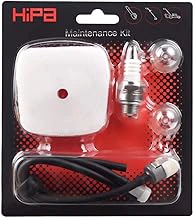
Hipa Air Filter Tune Up Kit for Mantis Tillers and Cultivators
If you already own a Mantis gas-powered tiller or cultivator, this maintenance kit keeps your machine running reliably season after season. The air filter is a wear item that directly affects engine performance and longevity.
Gas-powered tools need regular filter changes to prevent dirt from entering the carburetor and damaging internal components. A clogged filter reduces power and increases fuel consumption, making even light tilling work feel harder than it should.
Consider this scenario: your three-year-old Mantis starts hard and lacks power during spring bed prep. Before assuming major engine problems, replacing the air filter often restores full performance. This kit gives you the exact replacement part designed for your model. Keep a spare on hand so you're never stuck mid-project. It's basic preventive maintenance that extends the life of a quality tool and saves money compared to professional repair or premature replacement.
- ✅ Restores engine performance
- ✅ Affordable preventive maintenance
- ✅ Easy to install
- ✅ Extends equipment life
- ⚠️ Only fits specific Mantis models
- ⚠️ Requires periodic replacement
- ⚠️ Not a complete tune-up kit
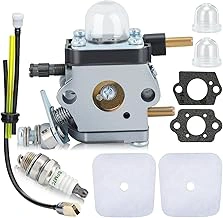
Hipa C1U-K54A Carburetor for Mantis and Echo 2-Cycle Tillers and Cultivators
This replacement carburetor solves a common problem with older gas-powered tillers: fuel delivery issues that cause hard starting, rough running, or stalling. The carburetor is the component that mixes fuel and air in the precise ratio the engine needs.
Two-cycle engines are simple but sensitive to carburetor condition. After years of use, internal passages clog with fuel residue or rubber components deteriorate. Replacing the carburetor is often more practical than attempting to rebuild the original, especially when the replacement costs less than an hour of repair shop labor.
Say your reliable Mantis suddenly refuses to idle or bogs down under load. Before retiring the machine, installing a fresh carburetor often brings it back to like-new performance. This part fits both Mantis and Echo 2-cycle models, making it a versatile solution. Verify your model compatibility before ordering, and consider this option before investing in a completely new tiller when your current one just needs this focused repair.
- ✅ Fixes starting and running issues
- ✅ Less expensive than professional repair
- ✅ Fits multiple popular brands
- ✅ Restores older equipment
- ⚠️ Requires basic mechanical skill
- ⚠️ Model-specific compatibility
- ⚠️ Won't solve non-carburetor problems