We may earn a commission when you buy through links on this page, at no extra cost to you. How this works.
This guide is for homesteaders and gardeners who want to start seeds indoors without spending a fortune on equipment. Natural window light rarely gives seedlings what they need. Even bright windows deliver uneven, low-intensity light that causes stretching and weak stems. Your transplants struggle in the garden because they never developed the sturdy structure they needed indoors.
A dedicated seed starting light solves this problem by delivering consistent, full-spectrum light for 12 to 16 hours daily. Your seedlings stay compact, develop thick stems, and build strong root systems before they ever see soil outdoors. The systems below all cost less than $100, use energy-efficient LEDs, and work in small spaces like basements, spare rooms, or kitchen counters. You'll get better germination rates, healthier plants, and earlier harvests without the guesswork.
Quick comparison
| SDOVUERC Full Spectrum 768 LEDs Grow Lights with Sunlike Spectrum and Timer | Check current price |
| DYMOND BoostGro Full Spectrum Linkable LED Indoor Seed Starter Grow Light | Check availability |
| Epic Gardening Full-Spectrum LED Seed Starting Grow Light with Adjustable Height | Check fit details |
Use the matching tool first
Start with Beginner Organic Garden Setup Checklist if you want to narrow the fit before checking current offers.
What to Look For in a Budget Seed Starting Light
Not all grow lights work equally well for seedlings. Look for full-spectrum LEDs that mimic natural sunlight, including both blue light (for compact growth) and red light (for photosynthesis and root development). Avoid lights labeled only as 'white' or 'daylight' without spectrum details.
Check the coverage area to match your seed tray size. Most budget lights cover one to four standard 1020 trays. Adjustable height or mounting flexibility matters because seedlings need the light closer as they germinate, then slightly farther away as they mature. A built-in timer saves you from manually switching lights on and off daily. Linkable designs let you expand your setup as your seed starting ambitions grow. Energy efficiency is a bonus - LEDs use far less power than older fluorescent fixtures and produce less heat, reducing the risk of drying out soil or scorching tender leaves.
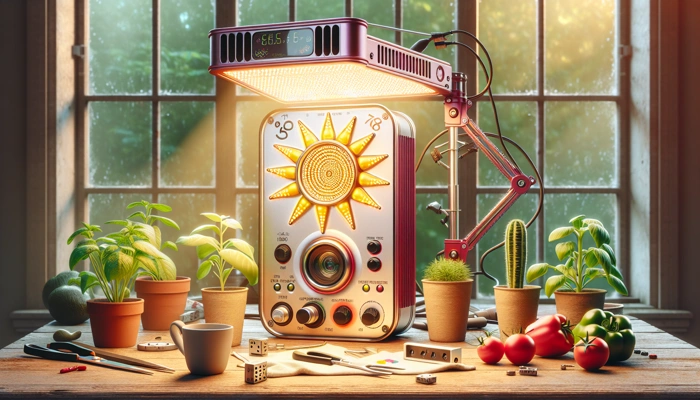
SDOVUERC Full Spectrum 768 LEDs Grow Lights with Sunlike Spectrum and Timer
This system packs 768 LEDs into an affordable package and includes a built-in timer, making it easy to automate your seed starting routine. The sunlike spectrum provides the wavelengths seedlings need without the harsh purple glow that some cheaper lights emit. You can set the timer for 3, 9, or 12-hour cycles, so your seedlings get consistent light even when you're away.
Imagine you're starting tomatoes and peppers in late winter. You set the timer for 12 hours, position the light a few inches above your trays, and let it run. The seedlings emerge evenly and stay compact without daily adjustment. The fixture is lightweight and easy to hang or prop above shelving. At this price point, it's a solid entry option that doesn't sacrifice spectrum quality. One thing to check: make sure your setup allows for height adjustment as plants grow, since this light works best when kept close to foliage.
- ✅ Built-in timer with multiple cycle options
- ✅ 768 LEDs deliver strong, even coverage
- ✅ Sunlike spectrum supports all growth stages
- ✅ Lightweight and easy to install
- ⚠️ Requires external height adjustment mechanism
- ⚠️ Coverage best suited for smaller tray setups
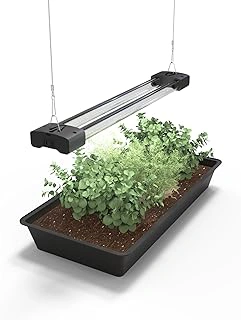
DYMOND BoostGro Full Spectrum Linkable LED Indoor Seed Starter Grow Light
The linkable design sets this option apart for gardeners who plan to scale up their seed starting operation over time. You can connect multiple units together with a single plug, which keeps your setup tidy and avoids overloading power strips. The full-spectrum output works well for seedlings, and the slim profile fits neatly on wire shelving or suspended above tables.
Say you start with one tray of lettuce and herbs this spring, then decide next year to add three more trays. You can add another BoostGro unit and link it to your existing light without adding another outlet or timer. The fixture is easy to mount with included hardware, and the low heat output means you can position it close to emerging seedlings without worry. This is a practical choice if you're budget-conscious now but want flexibility later. Just confirm your shelving or mounting surface can support multiple linked units if you expand.
- ✅ Linkable design simplifies multi-tray setups
- ✅ Full-spectrum LEDs support strong growth
- ✅ Low heat output safe for close placement
- ✅ Compact and easy to mount
- ⚠️ No built-in timer (requires external timer)
- ⚠️ Single unit may not cover very wide trays
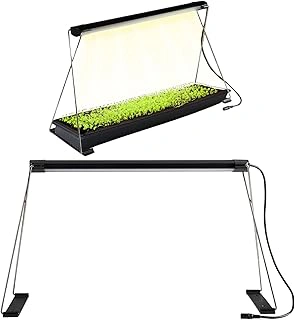
Epic Gardening Full-Spectrum LED Seed Starting Grow Light with Adjustable Height
Adjustable height is built right into this system, which removes one of the biggest hassles of DIY seed starting setups. The stand lets you raise or lower the light as your seedlings grow, keeping the optimal distance without rigging chains or wire. The full-spectrum LEDs deliver balanced light that works from germination through the hardening-off phase.
Picture this: you plant kale and broccoli seeds, and they germinate in just a few days. You lower the light to within two inches of the soil surface to prevent stretching. As the seedlings develop true leaves, you raise the light incrementally. The whole process stays simple because the adjustment mechanism is intuitive. This is one of the pricier options under $100, but the convenience of built-in height control pays off if you're starting multiple successions or different crops with varying light needs. Check the base footprint to make sure it fits your workspace - it takes up slightly more room than a hanging light.
- ✅ Adjustable height built into the stand
- ✅ Full-spectrum LEDs support all seedling stages
- ✅ No additional hardware or mounting needed
- ✅ Clean, professional appearance
- ⚠️ Higher price point in this category
- ⚠️ Base footprint requires dedicated table space
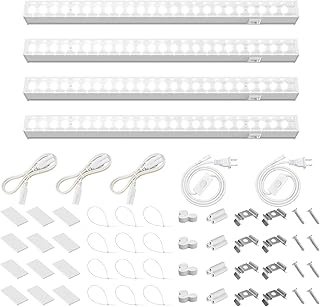
Barrina T5 1FT 5000K Full Spectrum LED Grow Lights for Indoor Plants
These compact T5-style fixtures offer flexibility and value, especially if you already have shelving in place. The 1-foot length fits standard wire racks perfectly, and the 5000K spectrum provides the cool, bright light that keeps seedlings from stretching. You can mount them individually or link several together for larger setups, and the included hanging hardware makes installation quick.
Suppose you're using a basement utility shelf for seed starting and need lights for two or three levels. You can install one Barrina fixture per shelf level, link them if desired, and get consistent light across multiple trays without spending a lot. The low profile means they don't interfere with shelf spacing, and the plug-and-play design requires no special wiring. These work especially well if you're growing a variety of crops at once and want independent control over each shelf. One consideration: the 1-foot length is ideal for compact setups but may require multiple units for wider trays.
- ✅ Compact 1-foot size fits standard shelving
- ✅ 5000K full-spectrum output prevents stretching
- ✅ Easy to install with included hardware
- ✅ Linkable for multi-shelf setups
- ⚠️ Single unit covers limited area
- ⚠️ No built-in timer (external timer needed)
How to Set Up Your New Grow Lights for Optimal Growth
Start by positioning your light 2 to 3 inches above the soil surface right after planting. This close placement encourages seeds to germinate evenly and prevents stretching as soon as the first leaves emerge. As seedlings grow, raise the light gradually to maintain that 2- to 4-inch distance from the top of the foliage.
Run your lights for 14 to 16 hours daily. Seedlings need a rest period, so don't leave them on 24 hours. A simple plug-in timer makes this automatic and consistent. Water your trays in the morning so foliage has time to dry before the lights turn off for the night. Keep an eye on soil moisture - grow lights can dry out trays faster than natural light, especially if your setup lacks humidity. If you notice wilting or pale leaves, double-check your light distance and duration before assuming you have a watering problem.
Common Mistakes to Avoid When Using Grow Lights
One frequent mistake is placing lights too far from seedlings. Even powerful LEDs lose effectiveness with distance. If your plants stretch or look pale, lower the light. Another misstep is running lights around the clock. Seedlings need darkness to complete certain biological processes, so stick to a 14- to 16-hour schedule.
Overwatering becomes easier under grow lights because you check your trays more often and may water out of habit rather than need. Let the soil surface dry slightly between waterings. Also, don't assume all seedlings need identical light. Tomatoes and peppers thrive under intense light, while lettuce and greens tolerate slightly less. If you're growing both, position heat-loving crops closest to the light and leafy greens slightly farther away or on a lower shelf.
Frequently Asked Questions About Indoor Seed Starting
Do I need special bulbs for seed starting? Full-spectrum LEDs designed for plants work best. Standard household bulbs lack the spectrum balance seedlings need and produce inconsistent results.
Can I use these lights for mature plants? Yes, but fruiting plants like tomatoes and peppers eventually need stronger light than most budget seed starting systems provide. These lights excel for seedlings and leafy greens.
How long do LED grow lights last? Quality LEDs typically last 30,000 to 50,000 hours. At 16 hours per day, that's several years of seed starting seasons before you need to replace them.
Will grow lights increase my electric bill significantly? LEDs are efficient. Running a 20-watt fixture for 16 hours daily costs roughly two to three dollars per month, depending on your local rates.