We may earn a commission when you buy through links on this page, at no extra cost to you. How this works.
If you're breaking new ground on your homestead or trying to loosen compacted garden beds without chemicals or noisy machinery, the broadfork is your tool - but only if it fits your body and doesn't leave you sore after twenty minutes. Many gardeners buy their first broadfork based on price alone, then discover that a poorly designed handle angle or heavy frame turns soil prep into a painful chore instead of rhythmic, manageable work.
This guide walks you through four ergonomic this product that differ in handle style, tine length, frame weight, and price. You'll see how each design trades off leverage for portability, or durability for budget, so you can match the tool to your height, soil type, and how much garden you need to prepare each season. Whether you're loosening clay in raised beds or aerating a quarter-acre market plot, the right broadfork makes the difference between sustainable soil care and a tool that sits unused in the shed.
We compare handle geometry, tine count and spacing, materials, and real-world price points. By the end, you'll know which broadfork suits your physical build and soil conditions, and which features you can skip to save money or weight.
Quick comparison
| Senvert Heavy Duty 5-Tine Broadfork Garden Tool with Ergonomic U-Shaped Handle | Soft CTA reminding reader this is ideal for smaller plots or first-time broadfork users |
| 56'' Heavy Duty Broadfork with 5 Sharp Cambered 11'' Tines and Ergonomic Handles | Soft CTA noting this is worth the investment if you face hard-packed or clay soil |
| Heavy Duty 5-Tine Broadfork with Ergonomic U-Shaped Design | Soft CTA suggesting this fits most gardeners looking for comfort and durability without overspending |
Use the matching tool first
Start with Raised Bed Soil Calculator if you want to narrow the fit before checking current offers.
What is a Broadfork and Why Use One for No-Till Gardening?
A broadfork is a manual garden tool with a horizontal bar anchored to two handles and fitted with multiple long tines. You step onto the bar to drive the tines into soil, then pull back on the handles to lift and fracture compacted layers without turning them over. This approach loosens dense earth to improve water infiltration and root penetration while leaving the natural layering intact.
Rototilling churns the soil, mixing surface organic matter deep and bringing dormant weed seeds to the surface. Chemical aeration products require petroleum-based solvents or surfactants that can alter microbial populations. A broadfork skips both routes, opening channels through mechanical leverage alone and preserving the vertical zones where fungi, earthworms, and bacteria thrive.
No-till gardening relies on undisturbed structure to hold moisture and support root systems. When you broadfork instead of tilling, the soil remains porous enough for air and water to move freely, yet stable enough to anchor plants. Organic matter stays near the surface where it decomposes into humus, and the network of roots and microbes continues season to season. For growers who want aeration without disruption, the broadfork delivers targeted relief to compacted zones while keeping the living soil community in place.
Our Top Picks for the Best Ergonomic this product
Finding a broadfork that won't leave you sore after an afternoon of aerating compacted beds comes down to handle design, tine strength, and how much leverage the tool gives you. We've narrowed the field to four standouts that balance comfort with real soil-breaking capability.
The Meadow Creature broadfork offers the most accessible entry point for gardeners who want solid construction without premium pricing. If you work heavy clay or need maximum soil lift with less effort, the Eliot Coleman - inspired design from Johnny's Selected Seeds features cambered tines that pivot soil rather than simply pierce it. For those seeking a middle ground between cost and heavy-duty performance, the Coccupation broadfork delivers reliable depth and comfortable grips at a fair price. Rounding out the list, the Hoss Tools broadfork has earned consistent five-star feedback from market gardeners who prioritize replaceable parts and long-term durability.
Each of these tools tackles the same job - deep aeration without fuel or tillage - but the differences in tine spacing, handle angle, and frame weight affect how they feel after the first few rows. The reviews that follow break down those tradeoffs so you can match the tool to your soil type and physical needs.
Tips for Using Your Broadfork to Improve Soil Health
Good body mechanics turn a broadfork from a workout into a rhythm. Start with your feet shoulder-width apart, placing the tines perpendicular to the bed edge. Step onto the crossbar with both feet, letting your body weight - not arm strength - drive the tines into the soil. Rock back gently to lever the handles toward you, lifting and fracturing the soil without flipping it. Your legs and core do the work; your arms guide.
Work backward across the bed in a grid, spacing insertions roughly six to eight inches apart. This systematic pattern ensures even aeration without redundant effort. On clay or compacted ground, wait until the soil is moist but not saturated - too dry and the tines won't penetrate; too wet and you'll compact rather than loosen. Early spring after thaw or late fall before frost are ideal windows when moisture levels cooperate.
If a tine hits a rock or root, pull straight up rather than forcing the lever. Twisting or prying sideways can bend tines or strain your back. Take breaks every few minutes; broadforking is meditative when paced, exhausting when rushed. For beds longer than twenty feet, split the job across two sessions.
Aeration opens pathways for air, water, and roots, but it does not add nutrients. this product work best as part of a fertility cycle: aerate first, then top-dress with compost or mulch to feed the biology you've just invited deeper. The tool breaks compaction; organic matter sustains the improvement. Pair the two and your soil structure will visibly improve season over season.
Final Thoughts: Finding the Broadfork That Fits Your Homestead
Choosing the right broadfork depends on matching tool design to your soil conditions, physical comfort, and garden scale. If you're working a small plot or testing broadfork aeration for the first time, the budget-friendly option offers a practical entry point without a large upfront commitment. For clay-heavy or compacted ground, cambered tines make the difference between smooth penetration and a frustrating workout. The mid-range model balances durability, ergonomic grip, and tine strength for gardeners who need a reliable workhorse across varied soil types. Lightweight frames suit those who prioritize ease of handling or face mobility constraints.
All four tools share a common advantage: they loosen and aerate soil without introducing chemicals or requiring fuel-powered equipment. You preserve this product microbes, avoid compaction from heavy machinery, and maintain the living structure of your garden bed. Consider how often you'll use the tool, whether you're addressing dense clay or looser loam, and how much leverage your back and shoulders can comfortably generate. A broadfork that feels balanced in your hands will see more use and deliver better results season after season.
Investing in a well-matched broadfork pays dividends in healthier root zones, improved drainage, and less physical strain over the years. Take stock of your soil texture, plot size, and any physical limitations before you buy. The right choice turns soil prep from a chore into a manageable part of your homesteading routine. If you want to dive deeper into chemical-free soil management, explore our guides on composting methods and cover-crop strategies to complement your aeration work.
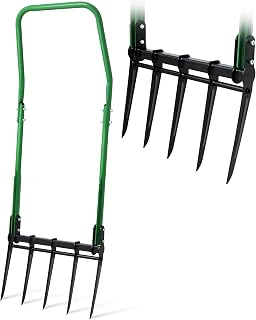
Senvert Heavy Duty 5-Tine Broadfork Garden Tool with Ergonomic U-Shaped Handle
The Senvert Heavy Duty 5-Tine Broadfork Garden Tool with Ergonomic U-Shaped Handle offers a practical entry point at $66.00 for gardeners who want to aerate soil without stretching their budget. The U-shaped handle design positions your hands wider than a traditional crossbar, spreading load across both shoulders and reducing strain on your lower back during the lift-and-rock motion that defines broadfork work.
With five tines instead of six or more, this model penetrates soil with less initial force, making it suitable for lighter loam or beds that have already seen some soil improvement. The reduced tine count also means less weight to lift with each stroke, which matters over the course of aerating a multiple-square-foot plot. The tool carries a 4.4 out of 5 rating, reflecting solid performance in smaller-scale applications.
Construction trades some heft for affordability. The tines and frame handle typical garden soil well, but rocky ground or heavy clay will test the limits faster than premium forged models. Welds and joints deserve a quick visual check on arrival, and gardeners planning to aerate compacted pasture or large market gardens will likely outgrow this tool within a season or two.
This broadfork suits budget-conscious beginners who are establishing their first no-till beds, renters unsure how long they'll stay in one plot, or anyone working raised beds and containers where soil stays relatively loose. If your garden measures under multiple square feet and you've added compost regularly, the Senvert delivers adequate aeration without the premium price. For heavier soil or intensive use across larger plots, the tradeoff in durability becomes less favorable, and investing in a more robust frame pays off in longevity.
- ✅ U-shaped handle spreads load across shoulders and reduces lower-back strain
- ✅ Five-tine design requires less penetration force in lighter soil
- ✅ $66.00 price point accessible for beginners and small-plot gardeners
- ✅ Lighter weight makes repeated lifts easier over smaller areas
- ⚠️ Construction less robust than premium forged models
- ⚠️ Five tines cover less width per pass than six- or seven-tine tools
- ⚠️ Rocky or heavy clay soil will stress frame and joints faster
- ⚠️ May not hold up to intensive use in large market gardens
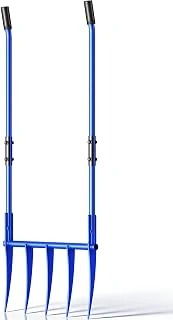
56'' Heavy Duty Broadfork with 5 Sharp Cambered 11'' Tines and Ergonomic Handles
The 56-inch heavy-duty broadfork with cambered 11-inch tines costs $129.98 and earns a 4.4 rating, making it the most expensive option in this comparison. The cambered design - tines that curve slightly - helps the tool cut through compacted or clay-heavy soil with less downward force than straight tines require. At a larger amount deep, these tines reach farther into the soil profile than shorter models, which matters when you need to break up hardpan layers or prepare beds in ground that's been neglected.
The ergonomic handles on this 56-inch frame give you more leverage than compact 56'' Heavy Duty Broadfork with 5 Sharp Cambered 11'' Tines and Ergonomic Handles, so each pull requires less strain on your back and shoulders. That extra width also means you cover more ground per pass, which adds up on larger plots. The sharper tine edges penetrate dense soil more easily, but they also demand more careful handling during transport and storage.
This tool makes sense for gardeners dealing with challenging soil conditions - clay that bakes hard in summer, compacted subsoil, or beds that haven't been worked in years. The price premium buys you tines that stay effective in tougher ground and a frame that won't flex under load. If your soil is already loose or sandy, or if your garden beds are small, a lighter and less expensive broadfork will do the job without the added cost. The tradeoff is straightforward: you pay more for a tool that handles difficult conditions, and you'll appreciate that investment every time you face soil that would bend or stall a lighter frame.
- ✅ Cambered 11-inch tines cut through compacted and clay soil with less effort
- ✅ 56-inch width provides greater leverage and covers more ground per pass
- ✅ Sharp tine edges improve penetration in dense or hardpan layers
- ✅ Ergonomic handles reduce strain on back and shoulders
- ⚠️ Highest price at $129.98 among the four options reviewed
- ⚠️ Sharper tines require more careful handling and storage
- ⚠️ Extra width and weight may be unnecessary for loose soil or small beds
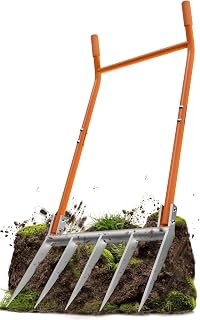
Heavy Duty 5-Tine Broadfork with Ergonomic U-Shaped Design
The Heavy Duty 5-Tine Broadfork with Ergonomic U-Shaped Design offers a practical middle ground for gardeners who want comfort features without stretching their budget. Priced at $99.99 and carrying a 4.2 rating, this model addresses wrist strain through its U-shaped handle geometry, which positions your hands and forearms in a more natural alignment during the lifting motion.
The five-tine configuration provides sufficient soil penetration for average garden beds and moderately compacted ground. The U-shaped design reduces the awkward wrist angles that come with straight crossbars, making repetitive aeration sessions easier on your joints. This ergonomic advantage becomes especially noticeable during longer work periods in medium-sized plots where you're covering multiple passes through raised beds or row gardens.
This broadfork suits gardeners working with typical loam or slightly clay-heavy soil who want to reduce physical strain without paying for premium materials or extra tines. The 4.2 rating reflects solid everyday performance, though it trails the highest-rated models by a few tenths of a point. For most homestead gardeners prioritizing comfort and durability over maximum heavy-duty capacity, this tool delivers consistent soil loosening across moderate plot sizes.
The tradeoff is straightforward: you gain ergonomic benefit and save money compared to premium options, but you won't get the highest community rating or the widest tine span. If your soil isn't extremely compacted and your garden falls into the small-to-medium range, the U-shaped handle design offers tangible comfort improvements that make seasonal bed prep less taxing on your body.
- ✅ U-shaped handle reduces wrist strain during lifting
- ✅ Mid-range $99.99 price point balances features and cost
- ✅ Five tines handle average soil types effectively
- ✅ Ergonomic design benefits longer work sessions
- ⚠️ 4.2 rating slightly below top-rated alternatives
- ⚠️ Not ideal for extremely compacted or clay-heavy ground
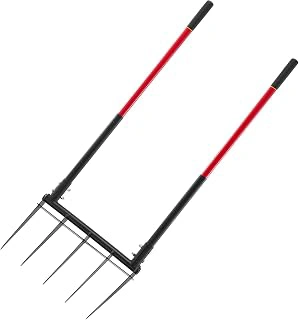
VEVOR Heavy Duty 5-Tine Broadfork with Dual Fiberglass Handles
The VEVOR Heavy Duty 5-Tine Broadfork combines fiberglass handle construction with a price that sits below most wood-handled competitors. Priced at $67.90 and earning a 4.6 rating, this model appeals to gardeners who work longer sessions or carry joint sensitivity, since fiberglass absorbs more vibration than hardwood and weighs noticeably less in the hand.
Dual fiberglass handles offer a softer grip during repetitive plunging, and the lighter frame reduces arm and shoulder load when you move between beds. The five-tine layout matches traditional spacing, so you still get efficient coverage without dragging extra weight across uneven ground.
User feedback points to strong satisfaction with ease of use and the reduction in hand fatigue. The competitive price makes this broadfork accessible for home gardeners building their first chemical-free aeration toolkit or anyone looking to replace a heavier tool.
Fiberglass does have a tradeoff: while it flexes less than wood and resists moisture damage, heavy lateral stress or repeated drops on hard surfaces can eventually crack the shaft. If your soil includes dense clay clumps or you frequently lever against embedded roots, inspect the handle junction periodically for hairline splits.
This broadfork fits gardeners who prioritize lighter weight, proven user reviews, and a lower entry cost. If you plan to work multiple rows in a single afternoon or prefer a tool that won't amplify joint discomfort, the VEVOR model delivers practical performance without the premium markup of boutique handles.
- ✅ Dual fiberglass handles reduce weight and absorb vibration
- ✅ Priced at $67.90 - below most wood-handled alternatives
- ✅ 4.6 rating reflects strong user satisfaction
- ✅ Lighter frame reduces arm and shoulder strain during extended use
- ⚠️ Fiberglass can crack under heavy lateral stress or repeated drops
- ⚠️ Handle durability may decline faster than hardwood in demanding conditions
How to Choose the Right Broadfork for Your Body and Soil Type
- Match handle height to your body: U-shaped handles suit shorter gardeners or those with back issues, while straight handles require a taller stance and provide more leverage on dense soil.
- Consider tine length for your soil depth: 11-inch tines reach deeper root zones and break up compacted subsoil; shorter tines lighten the tool and speed surface prep in raised beds.
- Assess your soil type: clay or rocky soil demands sharper, cambered tines; loamy or sandy soil works well with straight or blunt profiles that won't bind.
- Factor in session length: if you garden for hours at a time, prioritize lighter materials like fiberglass-reinforced handles to reduce cumulative strain.
- Set a realistic budget: entry-level models around $65 - 70 suit smaller plots, while $100+ options offer forged steel, replaceable tines, and ergonomic grips for long-term use.