We may earn a commission when you buy through links on this page, at no extra cost to you. How this works.
If you're raising backyard chickens and want to grow your flock yourself, hatching eggs at home brings a special kind of satisfaction. You'll watch the entire process unfold, from warm egg to fluffy chick, and you'll have full control over genetics, timing, and biosecurity.
Modern incubators make the job far easier than it used to be. Automatic turning saves you from rotating eggs by hand multiple times a day. Built-in temperature and humidity controls reduce the chance of human error. Even if you've never hatched before, today's budget models offer features that once belonged only to commercial hatcheries.
This guide reviews four egg incubators priced well under $200. Each one handles the core tasks - climate control, automatic turning, and visibility - so you can focus on preparation and enjoying the hatch. We'll walk you through the features that matter, compare your options side by side, and help you choose the model that fits your goals and space.
Use the matching tool first
Start with Chicken Coop Space & Feed Calculator if you want to narrow the fit before checking current offers.
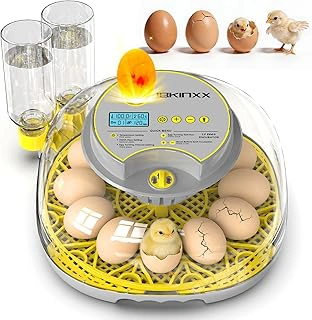
IBKINXX Incubator for Hatching Eggs - 12 Egg Capacity with Automatic Turner and Climate Control
This 12-egg unit delivers the essentials in a compact footprint. The automatic turner rotates eggs on schedule, and the digital controls let you set and monitor temperature and humidity from the top panel. It's straightforward to operate, with a clear lid that lets you watch the eggs without lifting it.
At $49.99, it's the most budget-conscious option in this group, making it a solid entry point if you're hatching for the first time or working with limited funds. The smaller capacity keeps things manageable - imagine setting six fertile eggs from your own hens and having room to spare if a neighbor wants to add a few of theirs.
The tradeoff is simplicity over advanced features. You won't find a built-in candler or extra sensors, so you'll need to candle eggs separately and watch the humidity gauge closely. It's best for someone who wants reliable basics without extra complexity, or who plans to hatch just a few chicks per season.
- ✅ Most affordable option in the group
- ✅ Automatic turner and digital climate controls included
- ✅ Compact size fits easily on a countertop or shelf
- ⚠️ No built-in candler
- ⚠️ Fewer advanced monitoring features
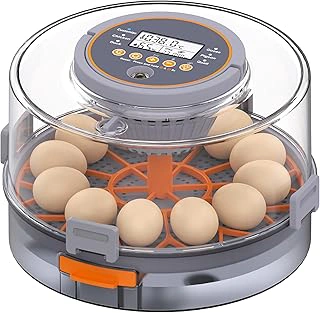
Intelligent Egg Incubator with Automatic Egg Turning, Humidity, and Temperature Control
This model steps up the control layer. You get automatic turning, plus separate digital readouts for temperature and humidity that make it easier to dial in your settings and react quickly if something drifts. The interface is intuitive, so you spend less time decoding the manual and more time focused on the eggs.
Priced at $59.84, it sits in the middle of the pack on cost but offers a noticeable upgrade in monitoring precision. Picture a scenario where you're incubating eggs from a mixed flock - some from your Orpingtons, some from a friend's Marans. The extra visibility into humidity lets you adjust for the slightly thicker shells on those Marans eggs during lockdown.
It's sized for around 12 eggs, so capacity is similar to the IBKINXX. The main difference is in how much feedback you get from the unit. If you're the type who likes to track conditions closely or you've had inconsistent hatches in the past, the added detail can make a real difference. If you just want to set and forget, the simpler model may be enough.
- ✅ Enhanced digital monitoring for temperature and humidity
- ✅ User-friendly interface with clear readouts
- ✅ Automatic turning on a reliable schedule
- ⚠️ Mid-range price may not suit the tightest budgets
- ⚠️ Capacity still limited to around 12 eggs
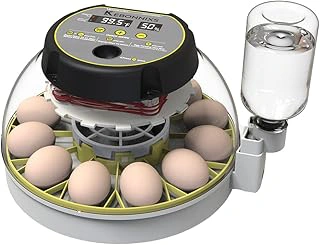
KEBONNIXS 12 Egg Incubator with Humidity Display, Egg Candler, Automatic Egg Turner
The standout feature here is the built-in egg candler. You can check embryo development without removing eggs or setting up a separate light source, which keeps the environment stable and saves time. The humidity display is clear and responsive, and the automatic turner handles rotation without fuss.
At $53.99, it offers the best feature-to-price ratio if candling matters to you. Imagine you're on day seven and want to pull any clear eggs before they take up space or risk contamination. The candler lets you do that quickly, right inside the unit, and you're back to stable conditions in seconds.
Capacity remains at 12 eggs, so it's not the choice for larger hatches. But for a beginner who wants hands-on learning - tracking development, adjusting based on what you see - this model gives you the tools without overwhelming complexity. It's also a good fit if you're hatching eggs from multiple sources and need to identify which ones are progressing.
- ✅ Built-in candler simplifies embryo checks
- ✅ Clear humidity display helps fine-tune conditions
- ✅ Strong value for the feature set at this price
- ⚠️ Still a 12-egg capacity limit
- ⚠️ Candler quality may not match standalone tools
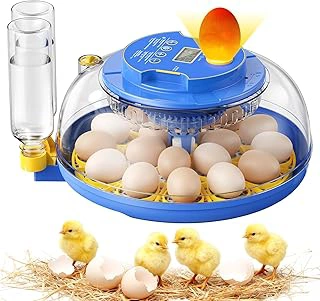
18 Egg Incubator with 360° View, Automatic Turning, Humidity Control & Built-in Candler
If you need more capacity, this 18-egg unit gives you room to grow. The 360° transparent design lets you observe every egg from any angle, and the built-in candler handles embryo checks without disrupting the climate. Automatic turning and digital humidity control round out the feature set.
At $49.48, it's priced lower than the 12-egg models with candlers, making it the budget-friendly choice for higher volume. Picture a spring hatch where you're setting a dozen eggs from your own flock plus six from a neighbor's rare breed project. The extra capacity means you can accommodate both without running a second incubator.
The tradeoff is space. An 18-egg unit takes up more counter or shelf area, and if you're only hatching a few eggs at a time, the extra room goes unused. But if you're planning multiple hatches per season, breeding for specific traits, or sharing incubation duties with other homesteaders, the added capacity and full visibility make this model hard to beat for the price.
- ✅ Highest capacity at 18 eggs for larger hatches
- ✅ 360° visibility from all angles
- ✅ Built-in candler and competitive price
- ⚠️ Larger footprint requires more space
- ⚠️ Overkill if you're only hatching a few eggs at a time
Key Features to Look for in an Egg Incubator
Not all incubators work the same way, and the features you choose will shape your hatching experience. Capacity comes first. A 12-egg unit suits most backyard keepers who want a few chicks at a time, while an 18-egg model gives you more flexibility if you're planning a larger hatch or expect lower fertility rates.
Automatic egg turning is almost essential. Eggs need to be rotated several times daily to prevent the embryo from sticking to the shell membrane. Manual turning works, but it's easy to forget or disrupt the schedule. An automatic turner does the job on a timer, keeping the process consistent.
Temperature and humidity control define hatch success. Look for a digital display that shows current readings and lets you make adjustments. Stable temperature matters throughout incubation, and humidity becomes critical during lockdown - the final three days before hatch.
Visibility helps you monitor progress without opening the lid and losing heat or humidity. Clear tops or built-in candlers let you check embryo development and remove any non-viable eggs early.
How We Chose These Incubators
We focused on incubators that meet the needs of backyard chicken keepers who are just getting started or looking for a reliable backup. Every model here includes automatic turning and digital climate controls, which are the features most likely to improve your hatch rate without requiring constant attention.
Price was a hard constraint. All four options come in well under $200, and most are under $60. We prioritized units that deliver core functionality without asking you to pay for features you may not use or understand yet.
We also looked at practical differences - capacity, visibility, built-in candlers - that help you choose based on your specific situation. A first-time hatcher with a small coop has different needs than someone planning multiple hatches or working with rare breeds. The goal was to present a range that covers those scenarios without padding the list with redundant options.
A Beginner's Guide to Setting Up Your New Incubator
Before you load eggs, run the incubator empty for 24 hours. This lets you confirm the temperature holds steady and the turner cycles correctly. Set the temperature to 99.5°F for chicken eggs and humidity around 45-55% for the first 18 days.
Place the incubator on a stable surface away from drafts, direct sunlight, and heat vents. Even small temperature swings can affect development, so a quiet corner of a room with consistent ambient temperature works best.
When you're ready to load, place eggs pointy-end-down in the turner. Mark one side with a pencil if you want to track rotation manually as a backup. Resist the urge to open the lid often - every time you do, you lose heat and humidity.
On day 18, stop turning and raise humidity to 65-70% for lockdown. This softens the membrane and helps chicks pip and zip. Keep the lid closed during hatch, even if you're anxious to help. Chicks need time to absorb the yolk sac and dry off before you move them to the brooder.
Frequently Asked Questions About Egg Incubation
How long does it take to hatch chicken eggs? Chicken eggs typically hatch on day 21, though some may pip a day early or late. Lockdown begins on day 18.
Do I need to turn eggs if the incubator does it automatically? No. Automatic turners handle the job reliably. Manual turning is only necessary if the turner fails or you're using a still-air model without one.
What if humidity drifts during incubation? Small fluctuations are normal. If humidity drops significantly, add a wet sponge or shallow dish of water. If it's too high, crack the vent slightly or reduce the water surface area.
Can I open the incubator to candle eggs? Yes, but do it quickly and only once or twice before lockdown. Use the built-in candler if your model has one, or work in a dark room with a flashlight to minimize the time the lid is open.
What do I do with eggs that don't hatch? Wait at least 24 hours after the first chick hatches. If an egg shows no progress - no pipping, no internal sounds - remove it carefully. Some eggs are simply not viable.
Final Thoughts: Which Incubator is Right for Your Homestead?
If you're hatching for the first time and want to keep costs low, the IBKINXX 12-egg model gives you automatic turning and digital controls without extra features to learn. It's a straightforward, budget-friendly start.
For better monitoring and a bit more precision, the Intelligent Egg Incubator offers clearer feedback on temperature and humidity. It's a good middle ground if you've had inconsistent results before or want to track conditions closely.
The KEBONNIXS incubator adds a built-in candler at a competitive price, making it the best choice if you want hands-on tracking without extra equipment. It's especially helpful if you're learning embryo development or working with eggs from multiple sources.
Finally, if you need higher capacity or plan to hatch regularly, the 18-egg model with 360° visibility and a candler gives you the most room and flexibility for the price. It's the right pick for larger flocks or shared hatching projects.
Choose based on how many eggs you plan to hatch, how much detail you want, and how much space you have. Any of these incubators will get you started on the rewarding path of raising chicks from egg to flock.