We may earn a commission when you buy through links on this page, at no extra cost to you. How this works.
Avid Armor USV20 Ultra Series Chamber Vacuum Sealer with 11.5-Inch Bar
Pick a chamber sealer that keeps your meat fresh through the season.
Homesteaders and hunters who process deer, beef, or pork at home need a vacuum sealer that can handle blood, marinade, and bone fragments without clogging or failing mid-batch. Chamber vacuum sealers pull air from an enclosed chamber rather than sucking liquid through a suction nozzle, which means you can seal wet cuts, pre-marinated chops, and even soup or stew without damaging the pump or wasting bags.
Edge sealers work for dry goods and occasional use, but they struggle when you're sealing thirty pounds of venison in one afternoon or packing bone-in cuts that leak. A chamber sealer uses a different bag style - smooth on both sides instead of textured - that costs less per foot and seals more reliably under load. The vacuum cycle is faster, the seal is wider, and you can run batch after batch without waiting for the machine to cool down.
This guide compares three chamber vacuum sealers chosen for homestead-scale meat harvesting. Each one offers different pump strength, chamber size, and control options, so you can match the machine to your processing volume and budget. We'll walk through what features matter when you're sealing large quantities of fresh or frozen meat, and explain the tradeoffs that affect reliability during fall harvest season.
Key Features to Look for in a Chamber Vacuum Sealer
- Bar length that fits your typical package sizes
- Pump power measured in cubic feet per minute
- Chamber depth for thicker cuts or multiple bags
- Seal width that holds up under freezer storage
- Manual controls for adjusting vacuum strength
- Transparent lid so you can watch the seal process
Tips for Long-Term Storage of Vacuum-Sealed Meat
- Label every package with cut, date, and animal type
- Freeze meat before sealing if it's above 40°F to prevent bacteria growth
- Store packages flat until frozen, then stack to save space
- Keep a freezer inventory log so you rotate stock
- Check seals monthly for the first few months to catch any failures early
- Plan to use vacuum-sealed game meat within 12-18 months for best quality
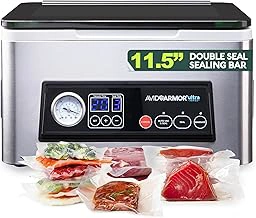
Avid Armor USV20 Ultra Series Chamber Vacuum Sealer with 11.5-Inch Bar
The Avid Armor USV20 Ultra Series offers an 11.5-inch seal bar at $309, making it a practical middle ground for homesteaders who process deer, pork, or small beef orders each fall. The 4.7 rating reflects steady performance across moderate batch sizes without the bulk or cost of commercial-grade units.
An 11.5-inch bar accommodates most roasts, steak cuts, and gallon-size portions of ground meat. You can seal family-sized packages in one pass rather than trimming larger cuts to fit shorter bars. This width handles venison hindquarters broken down into meal portions and bone-in pork chops stacked flat.
The chamber design pulls air from the entire bag rather than relying on suction at the open end, so you can seal liquids like broth or marinated cuts without overflow. The seal remains consistent across textured bags and embossed pouches, which matters when you're working through a cooler of fresh harvest in a single afternoon.
At this price point, you gain chamber reliability without paying for features like digital programming or dual seal bars. The manual controls keep operation simple: close the lid, press seal, and wait for the cycle to finish. Families processing one or two animals per season will find the capacity and speed adequate without excessive counter footprint.
This model suits small-scale meat operations where batch size stays under fifty pounds per session and seal width covers standard butcher cuts. If you frequently portion whole pigs or need to run back-to-back sessions for large beef orders, you may outgrow the duty cycle. For typical homestead harvests, the USV20 balances bar length, chamber volume, and cost in a way that matches the rhythm of seasonal processing.
- ✅ 11.5-inch bar fits most roasts and family-sized portions
- ✅ Chamber design seals liquids and marinated cuts without overflow
- ✅ $309 price avoids commercial-grade cost while maintaining reliability
- ⚠️ Manual controls lack programmable presets
- ⚠️ Duty cycle may limit consecutive large-batch sessions
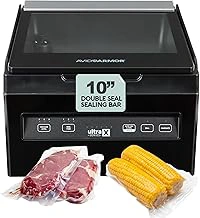
Avid Armor USVX Ultra Series Chamber Vacuum Sealer with 10-Inch Bar, Black
The Avid Armor USVX Ultra Series offers chamber vacuum sealing in a smaller footprint, built around a 10-inch seal bar that fits counters where the USV20 would crowd your workspace. At $294, it costs about multipleess than the USV20 and works well when you're sealing rabbits, chickens, or quartered cuts from a single deer rather than standing rib roasts or whole venison loins.
The 10-inch bar limits your bag width to around the listed size usable space, so thick pork chops laid flat or wider brisket portions won't fit edge-to-edge. You'll need to stack or turn cuts at an angle, which adds a minute or two when you're packing the listed size of ground venison into one-pound portions. The chamber depth and oil pump match the USV20, so vacuum strength and liquid handling stay consistent - you'll pull the same the listed size of mercury whether you're sealing bone broth or marinated backstrap.
This model makes sense if your counter space stops at the listed size deep or you process smaller game most of the season. A family sealing two to three deer, a spring lamb, and weekly chicken harvests will find the 10-inch bar manageable, though you'll occasionally wish for the extra width when a shoulder roast comes off the bone saw. The USVX uses the same chamber bags as any vacuum sealer, but remember that 10-inch bags leave you with roughly the listed size of usable width after the seal, while larger bags on the USV20 give you closer to the listed size.
Homesteaders tight on counter real estate or focused on poultry and small game get a capable chamber sealer without paying for width they rarely need. If you process whole hogs, quarter beef, or age large primals before freezing, the narrower bar will slow your workflow enough to justify the USV20's extra cost and footprint.
- ✅ Smaller footprint fits tight counter spaces
- ✅ Same vacuum strength and oil pump as the USV20
- ✅ $100 less expensive than the larger model
- ✅ Handles liquids and marinades without issues
- ⚠️ 10-inch bar limits bag width to around 9.5 inches usable
- ⚠️ Larger cuts require angling or stacking
- ⚠️ Slows workflow when sealing wide roasts or primals
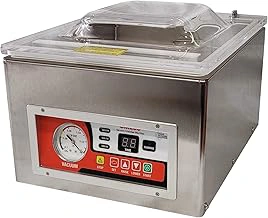
CM255 Chamber Vacuum Sealer with High Powered Pump, Industrial Grade
The CM255 Chamber Vacuum Sealer targets homesteaders who process multiple deer, a half-cow, or several hogs each season and need equipment that can run for hours without overheating. Priced at $350, this industrial-grade unit ships with a high-powered pump designed to handle the repetitive sealing cycles that come with bulk meat harvesting.
Chamber vacuum sealers work by removing air from the entire chamber rather than just the bag, which allows you to seal liquids, marinades, and wet cuts without the mess that edge sealers create. The CM255's pump is built to maintain consistent vacuum pressure across dozens of bags in a single session, so you can move quickly when you have a dozen or more tenderloins, roasts, or ground beef packages waiting.
This model suits homesteaders who harvest year-round or run a small farm-share operation where you're sealing dozens of packages at a time. If you only process one or two animals each fall, the extra power and the $350 price point may be more than you need. But for homesteads that rely on preserved meat as a primary protein source or sell cuts to neighbors, the CM255's durability and speed reduce the CM255 Chamber Vacuum Sealer with High Powered Pump, Industrial Grade that sealing becomes during harvest weekends.
The industrial-grade construction means heavier components and a larger footprint than lighter home models. You'll want dedicated counter space or a sturdy work table. The trade-off is a machine that doesn't struggle with thick bags, cold meat, or the moisture that comes from fresh-cut venison or pork.
Choose the CM255 when sealing frequency and volume justify the investment - when a breakdown mid-harvest would mean spoiled meat or lost income, and when you need a sealer that can keep pace with a full day of processing.
- ✅ High-powered pump handles repetitive bulk sealing without overheating
- ✅ Industrial-grade build for frequent, heavy-use harvesting schedules
- ✅ Seals liquids and wet cuts cleanly in chamber design
- ⚠️ $350 price point may exceed needs for occasional processors
- ⚠️ Larger footprint requires dedicated work space
What Makes a Chamber Vacuum Sealer Different
Chamber vacuum sealers work differently from the countertop edge models many home cooks start with. Instead of pulling air through the open end of a bag, a chamber sealer places the entire bag inside a lidded chamber, then evacuates all the air from that enclosed space. When the pressure equalizes inside and outside the bag, the machine heat-seals the edge and releases the vacuum. Because air is removed from the chamber rather than sucked through the bag opening, liquids stay put. You can seal wet cuts of meat, marinated venison, or bone broth without the pump pulling moisture into the mechanism.
Edge sealers are lighter and less expensive, but they struggle with anything wet. If you try to seal a bag of stew meat with blood or a marinade, the liquid gets drawn toward the pump and either clogs the machine or forces you to stop mid-cycle and blot the bag. Chamber models eliminate that problem. The trade-off is size and cost: chamber sealers are heavier, take up more counter or shelf space, and typically cost several hundred dollars more than edge units.
For homesteaders processing deer, beef, or pork in the fall, the ability to seal liquids and wet product reliably makes a chamber sealer worth considering. You also gain speed when sealing large batches, since the cycle completes faster and you skip the blotting and repositioning that edge sealers require. If your harvest volume is a few dozen pounds a year and cuts are patted dry, an edge sealer may be enough. But once you're processing whole animals or want to vacuum-seal soups and stocks alongside meat, a chamber model becomes the more practical tool.
Chamber Sealers vs. Edge Sealers: When to Upgrade
Edge sealers - the countertop models most home cooks recognize - pull air through an internal pump, then heat-seal the open end of a textured bag. They work well for dry goods like flour, coffee, or freeze-dried meals, but struggle when liquid is present. Moisture gets sucked into the pump, shortening its life and forcing you to tilt bags or freeze contents first.
Chamber vacuum sealers take a different approach. The entire bag sits inside a sealed chamber, and the machine evacuates air from the chamber itself, not through the contents. Because external and internal pressure equalize, liquid stays in the bag. You can seal soup, marinated venison, or blood-tinged game meat without tilting, pre-freezing, or risking pump damage.
For occasional meal prep or sealing a few pounds of venison backstrap, an edge sealer is budget-friendly and compact. When you process a quarter beef, a dozen turkeys, or multiple deer each fall, a chamber model saves hours of work and eliminates the frustration of failed seals on wet cuts. The cost difference is real - chamber units start around three hundred dollars and climb past a thousand - but they pay for themselves in speed, reliability, and the ability to seal liquids without extra steps.
If you harvest more than fifty pounds of meat annually, marinate before freezing, or sell value-added products like pre-seasoned sausage, a chamber sealer becomes the practical choice. Edge sealers remain useful for pantry staples and small batches, but they're not built for the pace or conditions of a busy homestead processing day.
How to Properly Seal Different Cuts of Meat
Steaks and chops need roughly half an inch of headspace between the meat and the seal edge to prevent juices from being pulled into the vacuum chamber during the cycle. Lay steaks flat in a single layer and smooth out any folds in the bag before sealing to ensure even contact with frozen surfaces later.
Ground meat should be flattened to about one inch thick in the bag. This thickness allows faster thawing and easier stacking in the freezer. Press out air pockets by hand before sealing, and avoid overfilling bags with more than two pounds per package, since thicker blocks take much longer to defrost.
Roasts and larger cuts benefit from snug bags that follow the contour of the meat. Trim excess bag material to reduce freezer clutter, but leave enough room at the top for a strong seal. If a roast has an irregular shape, position it so the widest part sits flat against the bag bottom.
Bone-in cuts pose the biggest risk for punctures. Wrap any sharp edges with a small piece of freezer paper or fold a paper towel around the bone tip before bagging. This barrier protects the bag during handling and stacking. Check the seal visually after the cycle finishes - if you see any wrinkles or gaps near bone contact points, double-seal with a second pass or use a new bag.
Portion sizes depend on how you plan to cook. Single-meal portions of one to one-and-a-half pounds work well for weeknight dinners, while bulk packs of three to five pounds suit batch cooking or large gatherings. Label each bag with the cut, weight, and date before freezing so you can rotate stock and use older packages first.
Maintenance and Troubleshooting Your Chamber Sealer
Chamber vacuum sealers depend on oil-lubricated rotary vane pumps that need regular attention to maintain strong vacuum pressure and prevent premature wear. Most manufacturers recommend checking the oil level every 20 to 40 hours of run time and changing it completely every 100 to 150 hours, though the schedule varies by model and workload intensity. Fresh oil stays clear or amber; if it turns milky or dark brown, moisture or debris has entered the system and the oil should be replaced immediately.
The chamber gasket forms the airtight seal around the lid perimeter. Inspect it every few weeks for cuts, cracks, or embedded food particles that can create air leaks and reduce vacuum strength. Wipe the gasket and sealing surfaces with a damp cloth after each heavy session, and apply a thin layer of food-grade silicone grease every month to keep the rubber flexible. Most gaskets last one to two years under steady home use before needing replacement.
Weak seals often trace back to one of three causes: low oil level starving the pump, a dirty or damaged gasket breaking the chamber seal, or a worn heat strip that fails to fuse the bag properly. If the vacuum gauge climbs slowly or stalls below the target pressure, check the oil first and inspect the gasket next. If seals look intact but bags still leak air, the heat strip or Teflon tape may need replacement. Many models use standard-width strips and tape available from the manufacturer or aftermarket suppliers.
Slow vacuum cycles usually signal restricted airflow. Remove the drip tray and vacuum any debris from the pump intake and exhaust ports. If you seal wet or liquid-heavy products frequently, condensation can collect inside the pump housing; running the pump for a few minutes with the lid open and no bag inside helps evaporate trapped moisture. Keeping a maintenance log with oil-change dates and gasket inspections makes it easier to catch patterns and stay ahead of problems. Routine care takes less than ten minutes per month and protects a multi-hundred-dollar investment from avoidable this product during peak harvest season.
Final Thoughts: Choosing the Right Chamber Sealer for Your Homestead
Choosing a chamber vacuum sealer comes down to matching the machine to your actual harvest volume and kitchen layout. The Avid Armor USV20 fits most homestead workflows - enough capacity for a typical deer or a quarter beef, solid construction, and a price that reflects real value without unnecessary features. If counter space is tight or you process smaller batches, the Avid Armor USVX delivers chamber performance in a footprint that works in crowded kitchens. For those running a larger operation or processing multiple animals each fall, the Weston Pro 2300 CM255 handles the workload without slowing down.
A chamber sealer is a long-term investment that reduces freezer burn, cuts food waste, and preserves meat quality through months of storage. The upfront cost pays back in better flavor, fewer ruined cuts, and the ability to seal liquids like marinades or stews without the mess of an external sealer. Before you buy, take stock of your counter space, your typical batch size, and how often you'll actually use the machine. Match the model to your real needs, not your best-case scenario, and you'll end up with a tool that earns its place on the homestead year after year.