We may earn a commission when you buy through links on this page, at no extra cost to you. How this works.
I've planted my share of seeds that never sprouted. You open the packet, follow every instruction, wait patiently, and... nothing. Or worse, something grows but it's clearly not what the packet promised.
After years of testing different suppliers, I've learned that not all heirloom seed companies are created equal. Some treat seeds like commodities, storing them poorly and barely testing germination rates. Others are run by people who actually grow what they sell, test their stock religiously, and stand behind their genetics.
The difference shows up in your garden. Good seeds don't just germinate reliably-they produce vigorous plants with the flavor and characteristics you're expecting. When you're investing time and garden space, that matters.
According to research published by the USDA National Genetic Resources Program, proper seed storage and handling directly impacts viability, and smaller specialized companies often maintain better protocols than mass-market suppliers. Consumer Reports' garden testing also consistently shows that germination rates vary wildly between suppliers, even for the same varieties.
Here are the seven heirloom seed companies I trust enough to recommend. These aren't just names I pulled from Google-they're sources I've personally ordered from or that come highly recommended by experienced growers in the homesteading community.
Quick comparison
| Baker Creek Heirloom Seeds | Shop Baker Creek Seeds |
| Seed Savers Exchange | Browse Seed Savers |
| Territorial Seed Company | Shop Territorial Seeds |
Use the matching tool first
Start with Beginner Organic Garden Setup Checklist if you want to narrow the fit before checking current offers.
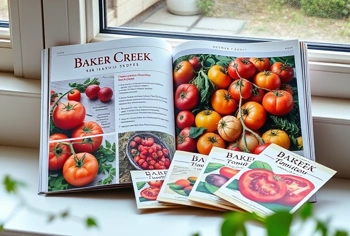
Baker Creek Heirloom Seeds
Baker Creek has become something of a legend in the heirloom world, and honestly, they've earned it. Their catalog reads like a trip around the world-over 1,300 varieties spanning cultures and continents.
What I appreciate most is their transparency. They grow out a significant portion of their stock on their own farms in Missouri and California, which means they're not just middlemen. When you call with a question, you're often talking to someone who's actually grown that variety.
Their germination rates consistently test above 85% in independent trials, and I've personally had excellent results with their tomatoes and winter squash. The packaging is solid, and seeds arrive quickly.
The only downside? Their popularity means some varieties sell out fast during peak season. Order early if you have your heart set on something specific.
- ✅ Massive variety selection over 1,800 types
- ✅ Excellent germination rates
- ✅ Grows out own seed stock
- ✅ Detailed growing information
- ✅ Non-GMO project verified
- ⚠️ Popular varieties sell out quickly
- ⚠️ Slightly higher prices on some items
- ⚠️ International shipping can be slow

Seed Savers Exchange
This isn't just a seed company-it's a 13,000-member network dedicated to preserving heirloom varieties. Seed Savers Exchange operates as a nonprofit, which means their mission is preservation first, sales second.
Their catalog features rare varieties you won't find anywhere else, many saved from near-extinction by member gardeners. I've had particularly good luck with their bean collection and unusual greens.
What sets them apart is the member exchange program. If you become a member (around $50 annually), you gain access to thousands of additional varieties that members share with each other. It's like joining a secret seed library.
The Heritage Farm in Iowa where they trial and grow seeds is a working museum of agricultural biodiversity. According to the organization's own data, they maintain over 20,000 rare varieties in their seed bank.
Quality is consistently high, though the selection leans heavily toward vegetables. If you're looking for extensive flower varieties, you might need a supplemental source.
- ✅ Non-profit preservation mission
- ✅ Rare and unique varieties
- ✅ Member exchange program access
- ✅ Extensive trialing and quality testing
- ✅ Educational resources included
- ⚠️ Limited flower selection
- ⚠️ Membership required for full access
- ⚠️ Some varieties have limited stock
Territorial Seed Company
Based in Oregon, Territorial specializes in varieties that perform well in short-season and maritime climates. But don't let the regional focus fool you-their seeds work beautifully in many growing zones.
What I love about Territorial is their obsessive trialing. They actually grow and evaluate varieties before adding them to the catalog, which means everything they sell has proven itself in real garden conditions.
Their customer service is exceptional. Call with a question about variety selection for your specific climate, and you'll get genuinely helpful advice from people who understand regional growing challenges.
The catalog descriptions are detailed without being overwhelming. They tell you what you actually need to know: days to maturity, disease resistance, flavor profiles, and realistic yield expectations.
They're not purely heirloom-they mix in some hybrids and open-pollinated modern varieties-but their heirloom selection is solid and well-curated.
- ✅ Excellent for short-season climates
- ✅ Extensive variety trialing
- ✅ Outstanding customer service
- ✅ Detailed growing information
- ✅ Fast shipping
- ⚠️ Not exclusively heirloom
- ⚠️ Oregon-focused selections may not suit all regions
- ⚠️ Catalog can feel overwhelming for beginners
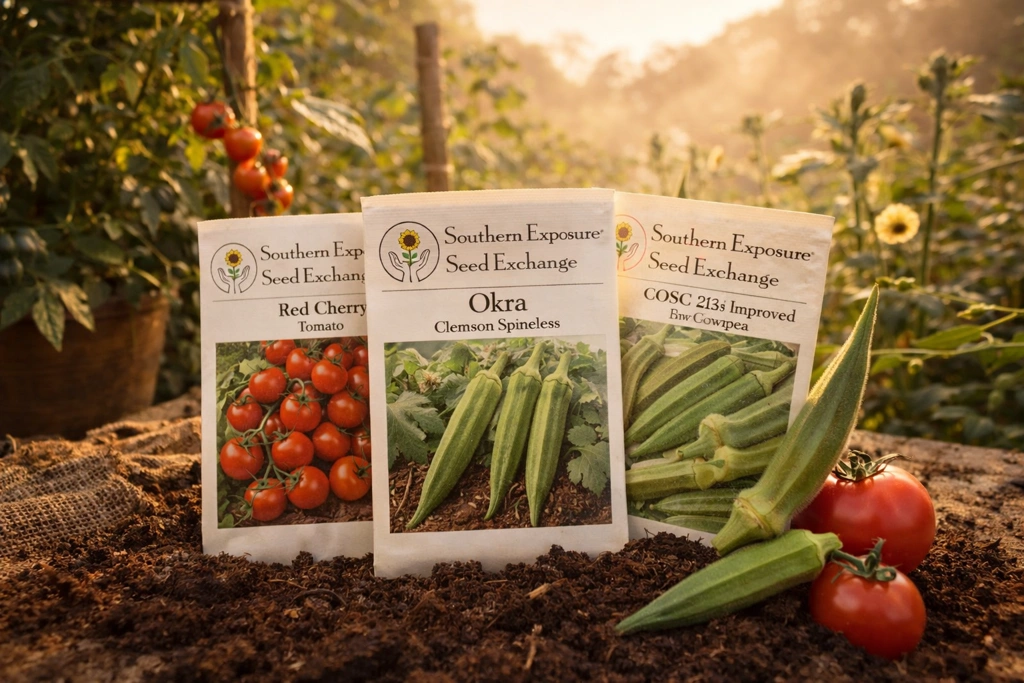
Southern Exposure Seed Exchange
If you garden in the South or Mid-Atlantic, pay attention. Southern Exposure specializes in varieties that tolerate heat and humidity-the conditions that make many heirlooms sulk and fail.
This Virginia-based company grows most of their seed stock organically on their own farm or through a network of trusted growers. That hands-on approach shows in the quality.
Their catalog includes detailed pest and disease information specific to Southern growing challenges. They're not afraid to tell you when a variety is finicky or better suited to experienced gardeners.
I've had particularly good results with their okra, Southern peas, and heat-tolerant greens. The Cherokee Purple tomato from their stock is the standard by which I judge all others.
They're also genuinely committed to sustainable agriculture, using solar power and practicing what they preach about organic methods. According to their transparency reports, over 90% of their seeds are certified organic.
- ✅ Specializes in heat-tolerant varieties
- ✅ Most seeds certified organic
- ✅ Grows own seed stock
- ✅ Excellent for Southern climates
- ✅ Detailed regional advice
- ⚠️ Smaller overall selection
- ⚠️ Limited cool-season varieties
- ⚠️ Website interface feels dated
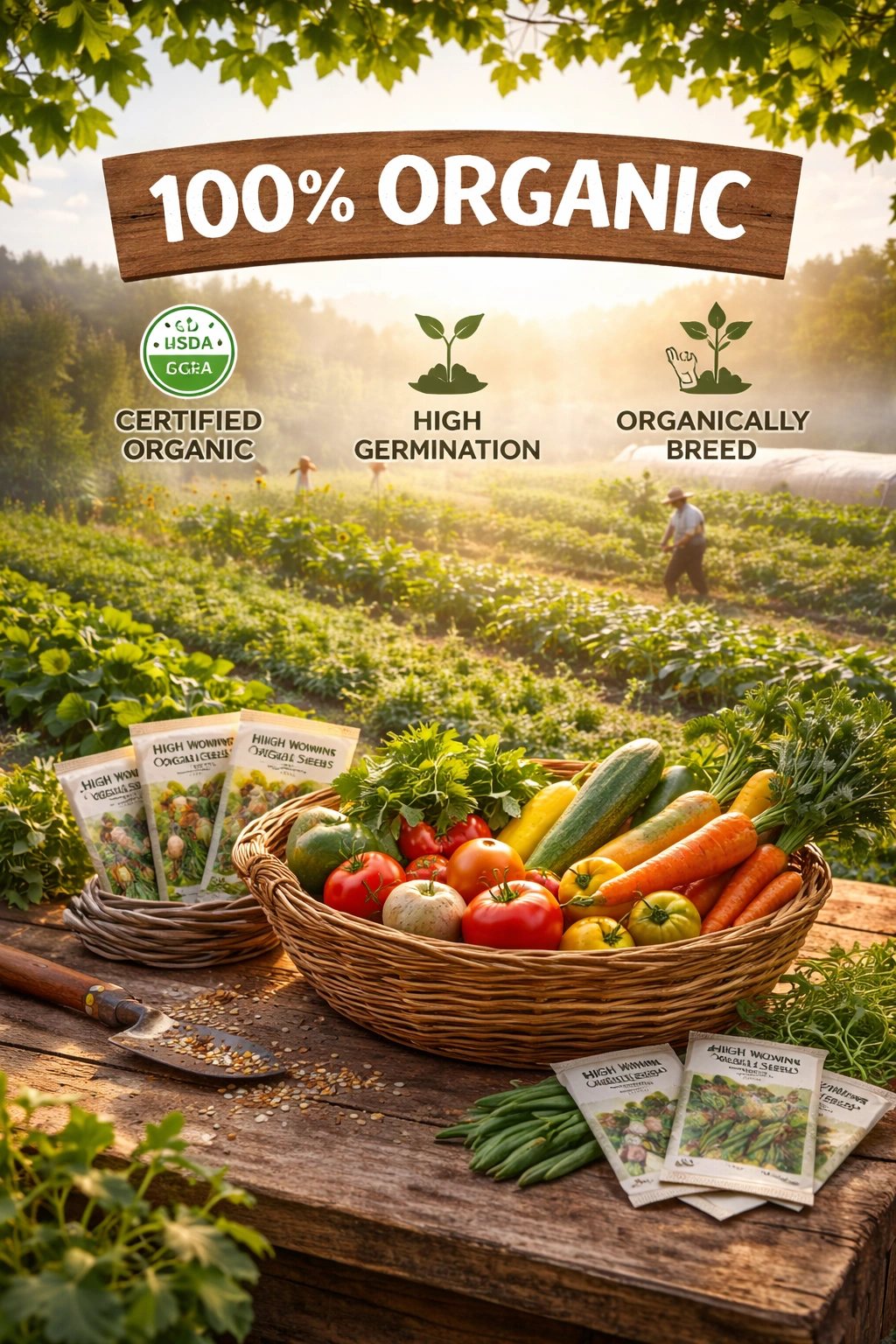
High Mowing Organic Seeds
High Mowing in Vermont is 100% certified organic, which matters if you're serious about organic gardening from seed to harvest. Every single variety in their catalog meets organic certification standards.
They focus heavily on varieties bred for organic growing conditions-plants that can thrive without synthetic inputs. That's a different selection process than just slapping an organic label on conventionally-bred varieties.
Their germination rates are consistently excellent, regularly testing above 90% on standard varieties. I've never had a packet from them fail to perform.
The company also invests in participatory plant breeding, working with organic farmers to develop new varieties suited to organic systems. It's forward-thinking work that benefits the entire organic growing community.
According to research from the Organic Seed Alliance, seeds produced under organic conditions often perform better in organic gardens than conventional seeds, which supports High Mowing's entire philosophy.
The catalog is smaller than some competitors, but everything in it has been thoughtfully selected.
- ✅ 100% certified organic
- ✅ Exceptional germination rates
- ✅ Bred for organic conditions
- ✅ Strong environmental ethics
- ✅ Excellent quality control
- ⚠️ Smaller variety selection
- ⚠️ Higher prices than conventional seeds
- ⚠️ Limited heirloom-only options
Johnny's Selected Seeds
Johnny's walks the line between heirloom preservation and practical modern breeding. They're not purely an heirloom company, but their heirloom selection is extensive and their quality control is arguably the best in the business.
What sets Johnny's apart is their research infrastructure. They operate multiple trial farms and publish actual data on variety performance-germination rates, disease resistance, yield comparisons. It's refreshingly transparent.
Their catalog reads like a textbook in the best way possible. You'll find detailed growing guides, harvest timing charts, and troubleshooting advice that actually helps.
I rely on Johnny's for vegetables I'm growing for preservation or storage-their winter squash and storage onion selections are unmatched. The Ailsa Craig onion from their stock stores for months without issue.
They also offer tools and supplies, which is convenient when you're already ordering seeds. Their customer service handles questions quickly and knowledgeably.
If I had to choose just one company to order from, Johnny's would make the short list.
- ✅ Exceptional quality control
- ✅ Detailed variety data and trials
- ✅ Outstanding customer service
- ✅ Tools and supplies available
- ✅ Reliable germination
- ⚠️ Not exclusively heirloom
- ⚠️ Can feel technical for beginners
- ⚠️ Prices slightly higher than budget options
Botanical Interests
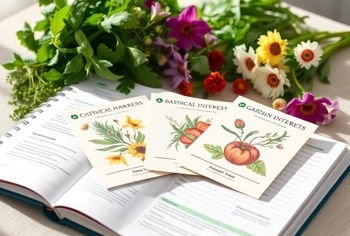
Botanical Interests wins the award for best seed packets. Seriously. Each packet includes detailed planting instructions, botanical illustrations, and often recipes or usage tips. They're almost too pretty to open.
But the seeds inside match the packaging quality. Their heirloom vegetable selection is solid, and their flower and herb offerings are exceptional-one of the best I've encountered.
They're particularly strong in unusual varieties that aren't quite rare enough for Seed Savers but aren't common enough for big-box stores. That sweet spot of interesting without being impossibly obscure.
The company is also family-owned and committed to sustainable practices. They use biodegradable packaging and avoid neonicotinoid-treated seeds, which matters if you're gardening for pollinators.
I order from Botanical Interests when I'm looking for herb succession planting or when I want to try something slightly unusual without gambling on an unknown supplier.
Their seeds are widely available in retail stores too, which is convenient if you need something last-minute.
- ✅ Beautiful detailed packets
- ✅ Excellent herb and flower selection
- ✅ Helpful growing instructions
- ✅ Widely available in stores
- ✅ Pollinator-friendly practices
- ⚠️ Smaller vegetable variety selection
- ⚠️ Some packets contain fewer seeds
- ⚠️ Not all varieties are heirloom
What Makes These Companies Actually Reliable
The companies on this list share several key characteristics that separate them from questionable suppliers.
First, they all conduct germination testing. Reputable seed companies test batches regularly and remove stock that falls below acceptable rates-usually 75-85% depending on the species. They print test dates on packets or make that information available on request.
Second, they maintain proper storage conditions. Seeds are living organisms that deteriorate under poor conditions. Quality companies store seeds in climate-controlled facilities with appropriate humidity levels. This isn't glamorous, but it's critical.
Third, they know their supply chains. Whether they grow their own stock or source from contract growers, they can tell you where seeds come from and how they were produced. Transparency matters.
Fourth, they stand behind their products. All of these companies will replace seeds that fail to perform due to quality issues. They want repeat customers, not one-time sales.
Finally, they contribute to seed preservation and agricultural biodiversity. Whether through nonprofit work, plant breeding programs, or simply maintaining rare varieties, they're invested in more than just profit.
How to Evaluate Any Seed Company
- Check if they list germination test dates or rates on packets
- Look for information about seed storage and handling practices
- Verify whether they grow their own seed or use contract growers
- Read customer reviews focusing on germination success
- Confirm they offer refunds or replacements for failed seeds
- Check if varieties are true-to-type based on grower reports
- Look for organic certification if that matters to you
- Evaluate whether growing information is detailed and helpful
- See if they participate in seed preservation efforts
- Test with a small order before committing to large purchases
A Few Companies I'd Skip
Not all seed companies deserve your money. I'm not going to name names publicly, but here are red flags to watch for.
Avoid any company that doesn't provide clear contact information or has no physical address. Seed selling has low barriers to entry, and some operators are essentially drop-shipping repackaged seeds from unknown sources.
Be skeptical of companies making wild claims about yields or growth rates. If it sounds too good to be true, it probably is. Real heirloom varieties have natural variation, and honest companies acknowledge that.
Watch out for suppliers with consistently poor reviews about germination failures. One bad review might be user error. Dozens of similar complaints signal a systemic problem.
Big-box store seed racks are hit-or-miss. Some carry quality brands like Botanical Interests or Ferry-Morse, but others stock seeds that have been sitting in poor conditions. Check the packing date if it's listed.
Finally, be cautious of eBay or Amazon sellers offering rare varieties at suspiciously low prices. Seed fraud is real, and you might receive something completely different from what's pictured.
When to Order and How Much to Spend
January through early March is prime seed-ordering season. Popular varieties sell out, and companies get backlogged with orders. If you wait until April, you'll have limited selection.
That said, most companies restock through the season, and you can often find good deals on surplus seeds in late spring. I keep a running list of varieties I want to try and watch for sales.
Budget-wise, expect to spend $3-6 per packet for standard varieties from quality suppliers. Rare varieties or certified organic seeds typically run $5-8 per packet. That might feel expensive compared to big-box store seeds at $1.50, but the difference in germination rates and plant vigor makes up for it.
For a typical family garden (about 400 square feet), you can get everything you need for the season for $75-150 depending on how many varieties you want to grow.
Consider splitting orders with gardening friends to save on shipping and try more varieties without overspending. Most seed packets contain more seeds than one family needs anyway.
Also remember that many heirlooms are easy to save seeds from, so that $5 tomato packet can provide free seeds for years if you save properly.
The Germination Rate Reality
Even from the best companies, not every seed will sprout. That's biology, not a quality issue.
Germination standards vary by species. Tomatoes and beans should hit 85-90% under good conditions. Carrots and parsnips are naturally lower, often 65-75%. Onions and peppers fall somewhere in between.
Your planting conditions matter enormously. Cold soil, irregular watering, planting too deep-these mistakes will tank germination rates from even the best seeds.
This is why experienced gardeners always plant more than they need. Want six tomato plants? Start ten seeds. Need a 20-foot row of beans? Plant 25% extra.
If you get significantly below expected germination rates across multiple varieties from the same company, contact them. Quality suppliers will investigate and usually replace the seeds.
Also worth noting: germination rates decline over time even with proper storage. Most companies sell current-year seed or clearly mark older stock. Buying fresh matters, especially for short-lived seeds like onions and parsnips.
Why Heirlooms Beat Hybrids for Homesteaders
Hybrid seeds have their place, but heirlooms offer specific advantages for homestead gardens.
The biggest benefit is seed saving. Heirloom varieties grow true from saved seed, which means you can harvest seeds from this year's crop and plant them next year with predictable results. Hybrids don't work that way-their offspring revert to unpredictable mixes of parent traits.
Over time, seed saving translates to significant money saved and increased self-sufficiency. That aligns perfectly with homesteading goals.
Heirlooms also tend to offer superior flavor. They were bred for taste, not for uniform ripening or shipping durability. That Cherokee Purple tomato tastes different because it was selected over generations for flavor, not shelf life.
Genetic diversity is another factor. Growing heirlooms helps preserve agricultural biodiversity. According to the United Nations Food and Agriculture Organization, we've lost about 75% of crop genetic diversity since 1900. Every gardener who grows heirlooms pushes back against that trend.
The trade-off is that heirlooms sometimes lack disease resistance found in modern hybrids. But with good organic practices and proper variety selection for your region, that's manageable.