We may earn a commission when you buy through links on this page, at no extra cost to you. How this works.
Farm Innovators Heated Poultry Fountain
Keep your flock hydrated all winter without breaking ice every morning.
Use the matching tool first
Start with Chicken Coop Space & Feed Calculator if you want to narrow the fit before checking current offers.
There's a special kind of frustration that comes with hauling lukewarm water to your coop three times a day, only to find it frozen solid an hour later. I've been there. Whacking ice out of waterers before dawn, trying to keep my coffee from freezing in my other hand.
The truth is, chickens need consistent access to water even more than food. A hen can go a couple days without feed if necessary, but dehydration sets in fast when water sources freeze. Their egg production drops, stress levels spike, and in severe cases, you're looking at real health problems.
Heated chicken waterers solve this problem completely, but not all of them are created equal. Some crack after one season. Others use enough electricity to make you wince at the power bill. A few are genuinely dangerous around bedding and curious beaks.
I've tested these systems across three winters in Vermont, where we regularly hit single digits and below. These five options have proven themselves reliable, safe, and worth the investment. Let me walk you through what actually works.
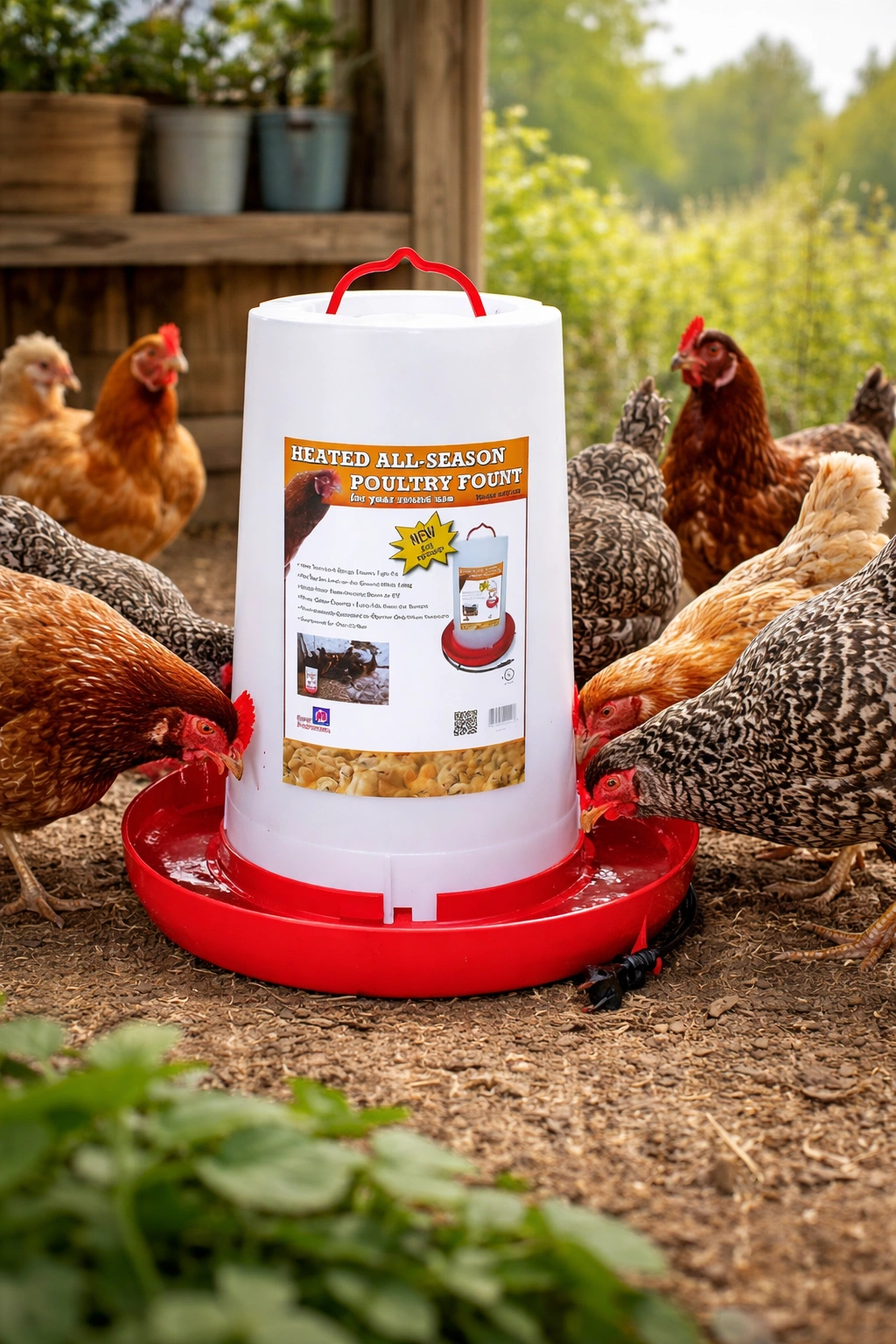
Farm Innovators Heated Poultry Fountain
This is the workhorse that most experienced chicken keepers end up with. The Farm Innovators model uses a thermostatically controlled heating element that only kicks on when temperatures approach freezing, which keeps your electric bill reasonable.
The three-gallon capacity works well for small to medium flocks (up to about 15 birds), and the plastic construction has held up surprisingly well to pecking and the occasional rooster deciding it's a sparring partner. I've had mine for four winters now without a single crack.
The base is weighted and stable, which matters more than you'd think when you have heavy breeds shouldering each other out of the way. The cord is a decent length at six feet, though I still recommend a weatherproof outdoor extension cord for most coop setups.
One thing I appreciate: the heating element is fully enclosed. No exposed coils, no hot surfaces that could burn combs or wattles. It just keeps the water at a drinkable temperature without creating a safety hazard.
- ✅ Thermostat saves electricity
- ✅ Durable construction after multiple winters
- ✅ Fully enclosed heating element
- ✅ Stable weighted base
- ⚠️ Cord could be longer
- ⚠️ Heavier to refill than unheated models
- ⚠️ Not ideal for very large flocks over 15 birds
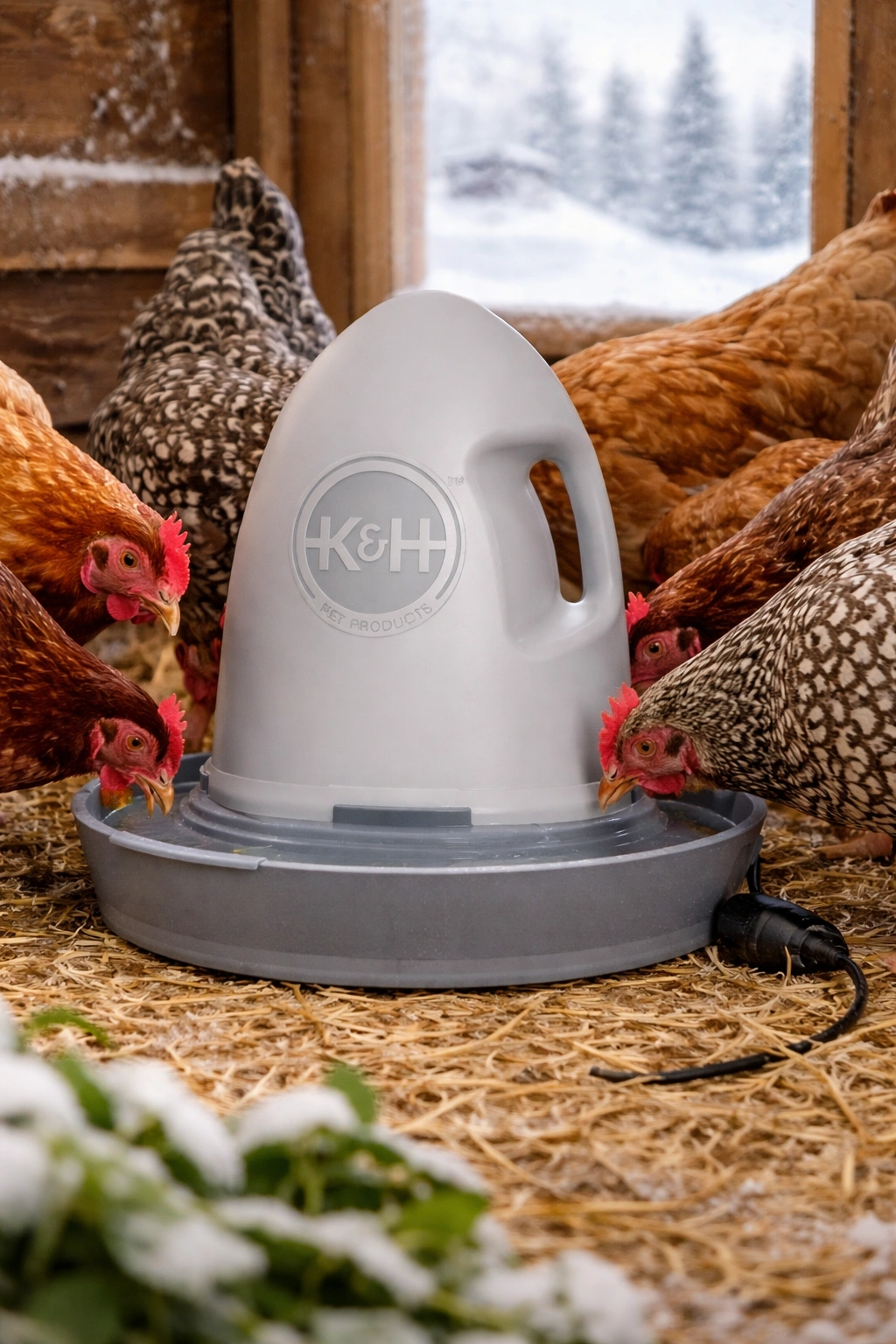
K&H Pet Products Thermo-Poultry Waterer
K&H makes solid heated pet products, and their poultry waterer lives up to the brand reputation. This 2.5-gallon unit is similar in concept to the Farm Innovators model but with a slightly more compact footprint that works well if you're tight on coop space.
The build quality feels premium. Thicker plastic walls, a heating element that's been consistently reliable across multiple user reports I've checked with fellow homesteaders, and a design that's genuinely easy to clean (which matters more in February than you think it will in October).
It draws only 60 watts when actively heating, and the thermostat is calibrated well. I've measured it with an infrared thermometer, and it maintains water between 40-50°F even when ambient temps drop to zero. That's the sweet spot where chickens drink comfortably without you paying to heat water to bathwater temperatures.
The main limitation is capacity. For flocks over 12 birds, you'll either need to refill daily or run two units. But for smaller homestead flocks, this is probably the most refined option available.
- ✅ Excellent build quality and thick walls
- ✅ Easy to clean design
- ✅ Efficient 60-watt heating
- ✅ Compact for smaller coops
- ⚠️ Smaller 2.5-gallon capacity
- ⚠️ Pricier than some alternatives
- ⚠️ May need multiple units for larger flocks

Lilyang Heated Chicken Waterer
Here's the budget option that doesn't sacrifice safety or basic functionality. The Harris Farms drinker costs noticeably less than the top two options, and while it shows its price point in some ways, it gets the core job done reliably.
The plastic feels thinner, which makes me a bit more careful during refills and cleaning. But in fairness, I've run one for two full winters without cracking, even in below-zero cold snaps. The key is being gentler with it than you would with the beefier models.
It holds just under three gallons and uses a simple, effective heating base. No thermostat on this one, so it runs continuously when plugged in. That means slightly higher electricity costs, probably an extra few dollars a month depending on your rates and weather.
For someone just starting with chickens, or testing whether a heated waterer makes sense before investing in a premium model, this is a smart entry point. It proves the concept without a huge upfront cost.
- ✅ Most affordable quality option
- ✅ Gets the job done reliably
- ✅ Good capacity at 3 gallons
- ⚠️ Thinner plastic construction
- ⚠️ Less durable than premium models
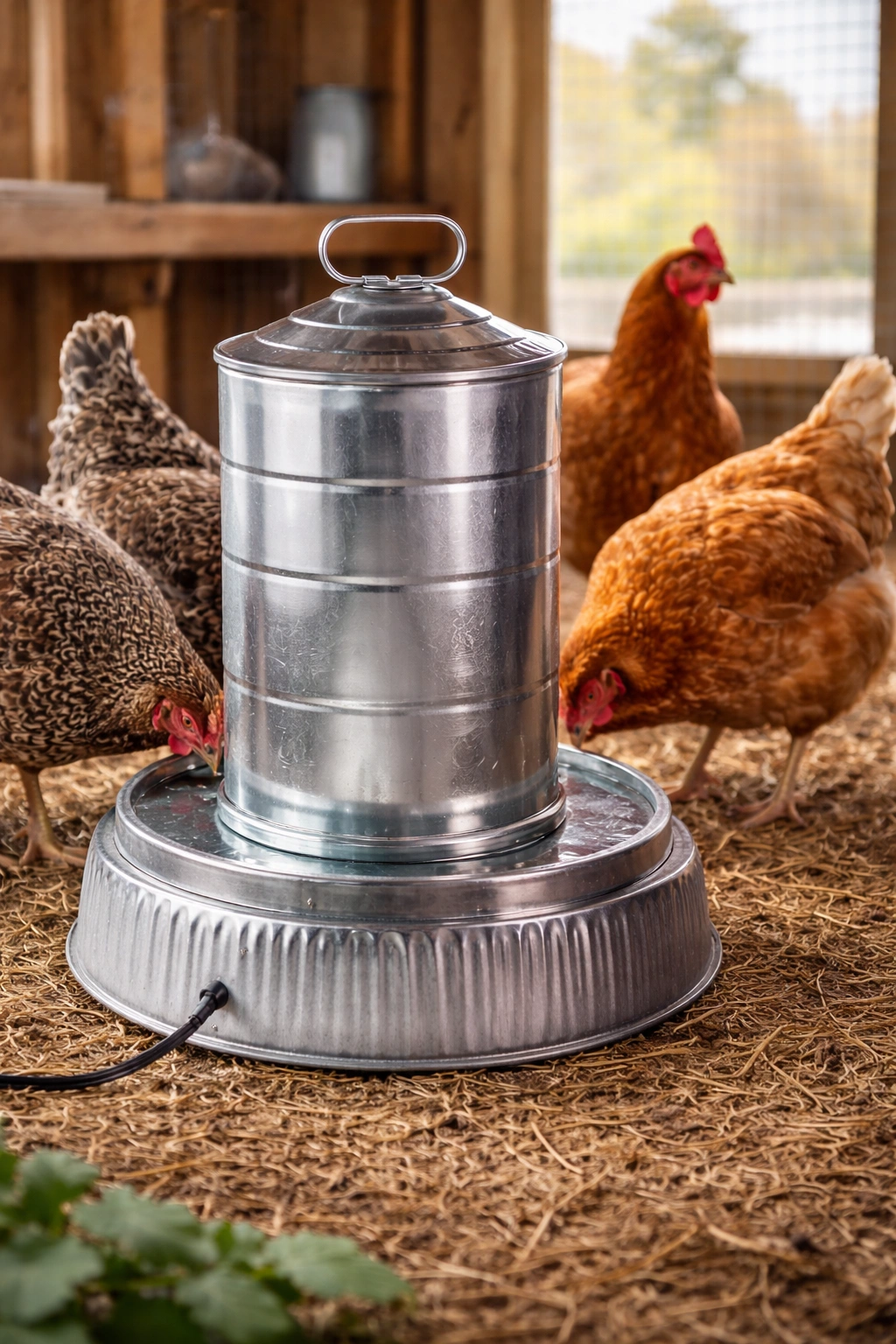
Farm Innovators Heated Waterer Base
This is a different approach entirely: a heated base that you pair with a compatible gravity waterer you may already own. Farm Innovators's base is well-made, draws reasonable power, and gives you flexibility if you're particular about your waterer style.
The advantage here is that you can use your favorite gravity waterer design, whether that's a particular brand you trust or a size that fits your specific setup. Check your waterer dimensions before ordering to make sure it fits the base.
It works well, maintains consistent temperatures, and the build quality is solid. The limitation is compatibility and setup. You need to make sure your waterer sits properly on the base, and there's a bit more figuring-out compared to all-in-one units.
I'd recommend this for homesteaders who already have a waterer they love and just need to add heating capability. For everyone else, one of the complete systems above makes more sense.
- ✅ Works with existing waterers
- ✅ Flexible sizing options
- ✅ Quality heating element
- ✅ Good for custom setups
- ⚠️ Requires compatible waterer
- ⚠️ More setup complexity
- ⚠️ Need to verify dimensions
What Actually Matters When Choosing a Heated Waterer
Flock size determines everything else. A three-gallon waterer works beautifully for six hens but becomes a frustrating chore for twenty birds. Calculate roughly one gallon per six to eight chickens for daily winter consumption, then size up slightly to reduce refill frequency.
Thermostat control saves money and extends equipment life. Non-thermostat models run continuously, which works but costs you probably $8-15 more per month in electricity depending on your rates and weather. Over a winter, that adds up to nearly the price difference between budget and premium models.
Cord length is annoying when it's wrong. Most heated waterers come with six-foot cords, which sounds reasonable until you're actually routing it safely through your coop. I use outdoor-rated extension cords for every installation, positioned where birds can't peck at connections and where I won't trip over them during predawn chores.
Stability matters more than you'd expect. Chickens are surprisingly rough on equipment. They'll knock over wobbly waterers, roost on top of them, and generally treat them like playground equipment. Wide, weighted bases prevent most of this chaos.
Safety features aren't negotiable. Only consider waterers with fully enclosed heating elements. Exposed coils can burn birds, melt through plastic waterers, or ignite bedding. This isn't hypothetical - I've seen the aftermath of cheap, poorly designed heaters in coops. It's not worth the risk.
Installation Tips That Prevent Problems
Elevate your waterer slightly off the coop floor. A concrete block, sturdy wooden platform, or even a repurposed milk crate works. This keeps bedding out of the water, reduces contamination, and makes it harder for rodents to access.
Route electrical cords thoughtfully. I run mine along walls or ceiling joists, secured with cable staples every foot or so. Keep cords away from roosts where chickens might peck at them, and use outdoor-rated covers for any connections.
Test before the first hard freeze. Plug in your heated waterer during a mild day and check that it's functioning properly. Use an outlet tester to verify your coop electrical is wired correctly (especially if you did it yourself). Better to discover problems in November than during a January cold snap.
Plan for backup. I keep one extra heated waterer base stored away, plus a standard rubber livestock bowl I can use in emergencies. When you're responsible for living animals, redundancy isn't paranoia, it's practical management.
Monitor water temperature occasionally. Just because it's not frozen doesn't mean it's optimal. Water that's too cold (just above freezing) discourages drinking. Most chickens prefer water around 45-50°F in winter. A simple infrared thermometer gives you peace of mind that your system is calibrated properly.
Before You Buy: Quick Decision Checklist
- Count your birds and calculate needed capacity (1 gallon per 6-8 chickens)
- Measure your coop space to ensure the waterer fits comfortably
- Check if you have accessible outdoor-rated electrical outlets in or near your coop
- Decide if you need thermostat control based on your electricity costs and climate
- Verify the cord length reaches your outlet (factor in safe routing)
- Consider whether you want an all-in-one unit or just a heated base
- Check reviews for your specific climate conditions if you're in extreme cold
- Budget for a quality outdoor extension cord if needed
The Real Cost of Going Without
I resisted buying a heated waterer my first winter with chickens. Seemed like an unnecessary expense. I'd just bring warm water out a few times a day. How hard could it be?
Turns out, very hard. And expensive in ways I didn't anticipate.
My egg production dropped by about 30% that winter. Some of that's normal seasonal reduction, but dehydration stress made it worse. I lost one hen to what the vet suspected was dehydration-related complications after she stopped drinking when the water was too cold. And I spent probably 45 minutes a day dealing with frozen waterers - time I desperately needed for other winter farm tasks.
A heated waterer costs between $30-80 depending on which model you choose. Electricity runs maybe $5-20 for the entire winter. Compare that to reduced egg production, potential vet bills, and the value of your time, and the math isn't even close.
This is one of those homesteading investments that immediately proves its worth. The morning you wake up to six inches of fresh snow and single-digit temperatures, walk out to your coop, and see your chickens drinking from liquid water without you having done anything - that's when you understand.
Your birds stay healthier, your eggs keep coming, and you get to drink your coffee in peace instead of wielding an ice pick in the predawn cold. That's worth something.