We may earn a commission when you buy through links on this page, at no extra cost to you. How this works.
If you're a homesteader or gardener looking to grow healthier vegetables, you've probably realized that good soil is everything. But walk into a garden center or scroll through online listings, and the sheer number of options can stop you in your tracks: compost, composted manure, peat moss, lime, gypsum, blood meal, bone meal, synthetic fertilizers, organic blends - the list goes on. Each label promises better yields, richer soil, or faster results, yet few explain when or why you'd actually need them.
This guide is for anyone who wants to improve their vegetable garden soil but isn't sure which amendments to choose or how to match them to their garden's real needs. Maybe your tomatoes looked pale last season, your clay soil drains poorly, or a neighbor swears by lime but you're not sure if your beds need it. We'll walk you through a clear, step-by-step approach: understanding what your soil actually lacks, selecting amendments that address those specific gaps, and avoiding the common mistakes that waste money or even harm your plants.
By the end, you'll know how to read your soil, pick the right materials, and apply them confidently - without guesswork or marketing hype.
How to Choose the Right Amendment for Your Situation
- Test your soil first to identify pH and nutrient gaps
- Match amendment type to the specific need (low nitrogen, high pH, poor drainage, etc.)
- Choose organic amendments when building long-term soil health
- Consider availability and cost - compost and manure are often local and affordable
- Apply amendments at the right time (fall for slow-release, spring for quick needs)
- Start with small amounts and observe plant response before adding more
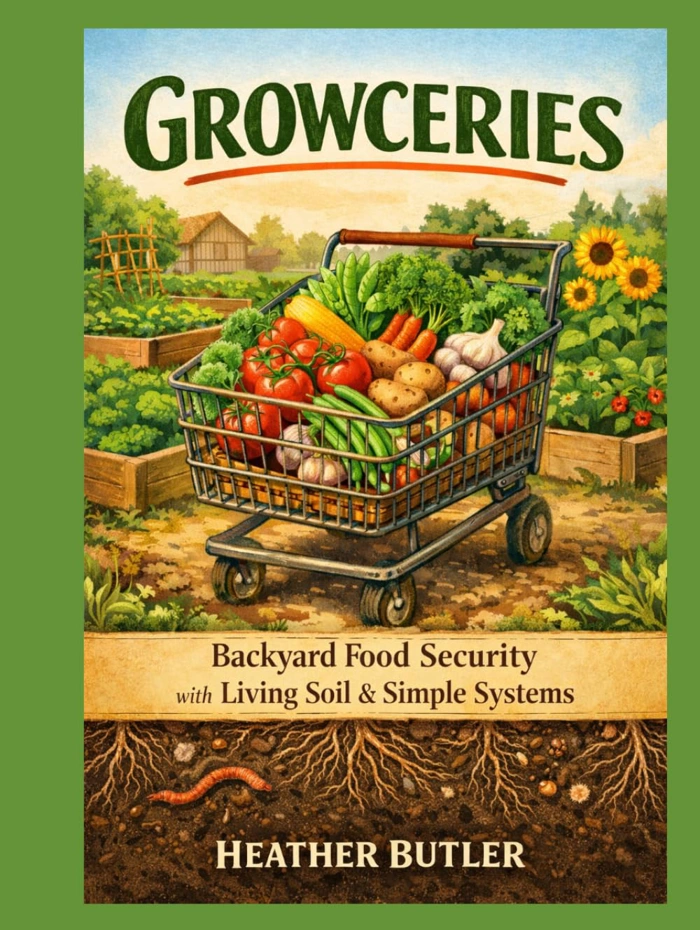
Growceries: How to Build Backyard Food Security with Living Soil
Growceries: How to Build Backyard Food Security with Living Soil is a resource for gardeners who want to deepen their understanding of how soil amendments contribute to long-term food security and ecosystem resilience. Rather than offering quick fixes, this book focuses on living soil systems - the networks of microbes, organic matter, and mineral balance that sustain productive gardens year after year.
For homesteaders moving beyond basic amendment practices, this book connects individual material choices to broader soil health strategies. It explores how compost, cover crops, and mineral inputs interact to build self-sustaining fertility, reduce dependency on external inputs, and create gardens that remain productive through changing conditions.
The book carries a 5.0 rating and is priced at $24.99. It's suited for readers who've mastered the fundamentals of soil testing and amendment application and are ready to think systemically about soil as a living resource rather than an inert growing medium. If your goal is building food security through soil that regenerates itself, this book offers frameworks and context that typical amendment guides don't cover.
For a deeper look at living soil and food security, this book offers valuable insights - check availability and reviews.
- ✅ Focuses on living soil systems and long-term resilience
- ✅ Connects amendment choices to broader food security strategies
- ✅ Suitable for gardeners moving beyond basic practices
- ✅ Perfect 5.0 rating
- ⚠️ Priced at $24.99, higher than basic guides
- ⚠️ Not ideal for complete beginners seeking step-by-step instructions
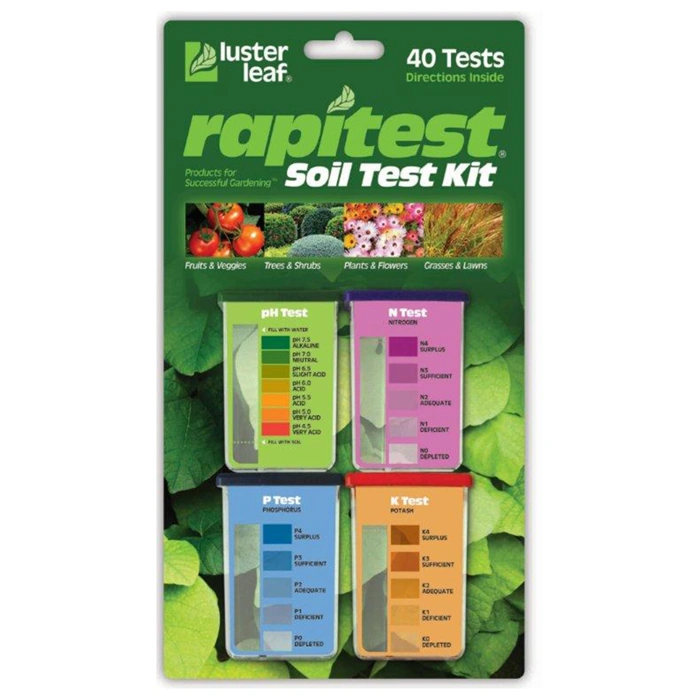
Rapitest Soil Test Kit for Gardens, Vegetables, Flowers & Lawns
The Rapitest Soil Test Kit offers a practical entry point for gardeners who want to understand their soil before committing to amendments. Priced at $16.83, it tests four key parameters: pH, nitrogen (N), phosphorus (P), and potassium (K). These measurements form the foundation of informed amendment decisions - pH tells you whether your soil can effectively deliver nutrients, while the N-P-K readings reveal which elements are lacking or abundant.
Using the kit is straightforward: collect samples from different garden areas, mix with the provided solutions, and compare the color results to the included chart. Within minutes, you'll know whether you need lime to raise pH, sulfur to lower it, or specific amendments to address nutrient gaps. For example, low nitrogen might point you toward compost or blood meal, while low phosphorus suggests bone meal or rock phosphate.
This kit is particularly useful for beginners who feel uncertain about which amendments to buy. Instead of guessing or applying products your soil doesn't need, you get concrete data that narrows your choices. It won't provide lab-grade precision, but it delivers enough clarity to make better decisions about amendment types and quantities. The color-matching method requires good lighting and careful observation, so plan to test on a bright day.
With a 4.2 out of 5 rating, the Rapitest kit balances affordability with functionality. It contains enough materials for multiple tests, allowing you to track changes after applying amendments or to test different garden zones. If you're new to soil testing, this kit is a straightforward option - check current availability and reviews to see if it fits your garden planning process.
- ✅ Affordable at $16.83 for multiple tests
- ✅ Tests pH, nitrogen, phosphorus, and potassium
- ✅ Results help identify which amendments are needed
- ✅ Suitable for beginners learning soil management
- ⚠️ Color-matching method requires good lighting and careful comparison
- ⚠️ Less precise than professional lab testing
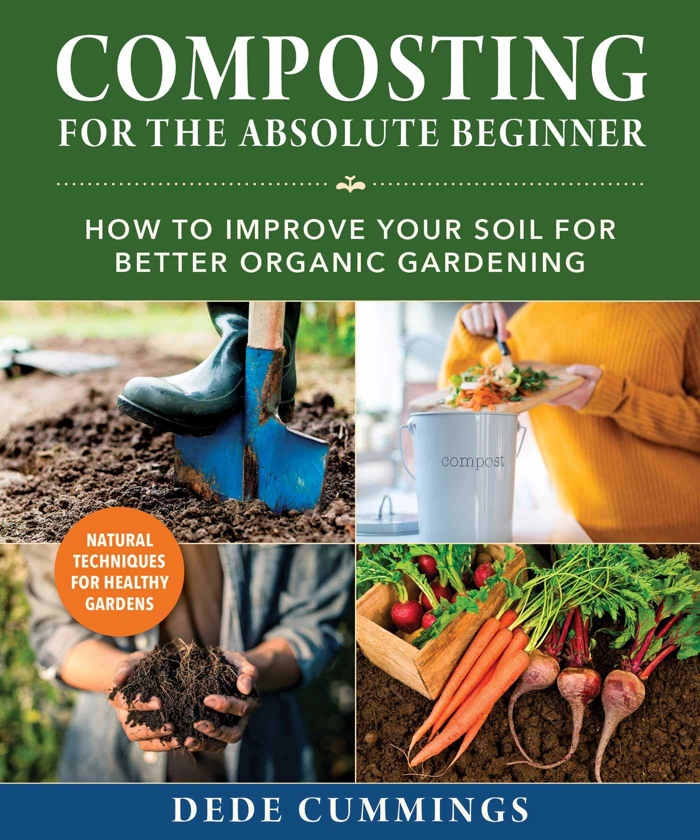
Composting for the Absolute Beginner: Improve Soil for Organic Gardening
If you're interested in making your own compost instead of buying bagged amendments, Composting for the Absolute Beginner: Improve Soil for Organic Gardening offers a practical starting point. This book is written for homesteaders and gardeners who want to understand the basics of turning kitchen scraps, yard waste, and other organic materials into nutrient-rich soil amendments.
The guide focuses on simple, approachable methods that don't require expensive equipment or prior experience. It walks through the fundamentals of what compost is, how decomposition works, and how to set up a basic composting system that fits your space and schedule. Whether you have a backyard bin or just a small corner of your property, the book explains how to manage moisture, balance green and brown materials, and troubleshoot common issues like odors or slow breakdown.
For organic vegetable gardeners, homemade compost offers a way to improve soil structure, increase water retention, and add slow-release nutrients without relying on synthetic fertilizers. The book connects composting directly to soil health, explaining how finished compost supports beneficial microbial activity and helps create the kind of soil environment where vegetables thrive.
At $16.77, this resource is a one-time investment for readers committed to DIY soil building. The 4.4 out of 5 rating reflects solid reader feedback. It's most suitable for those who have the time and interest to produce their own amendments rather than purchase them, and who want a clear, beginner-friendly reference to guide the process.
If you're ready to start composting at home, this beginner guide may be a helpful resource - see current price and reader reviews.
- ✅ Beginner-friendly approach to composting basics
- ✅ Practical methods for small and large spaces
- ✅ Connects composting to organic soil improvement
- ✅ One-time cost of $16.77
- ⚠️ Requires time and commitment to produce compost
- ⚠️ Not a substitute for immediate soil amendments
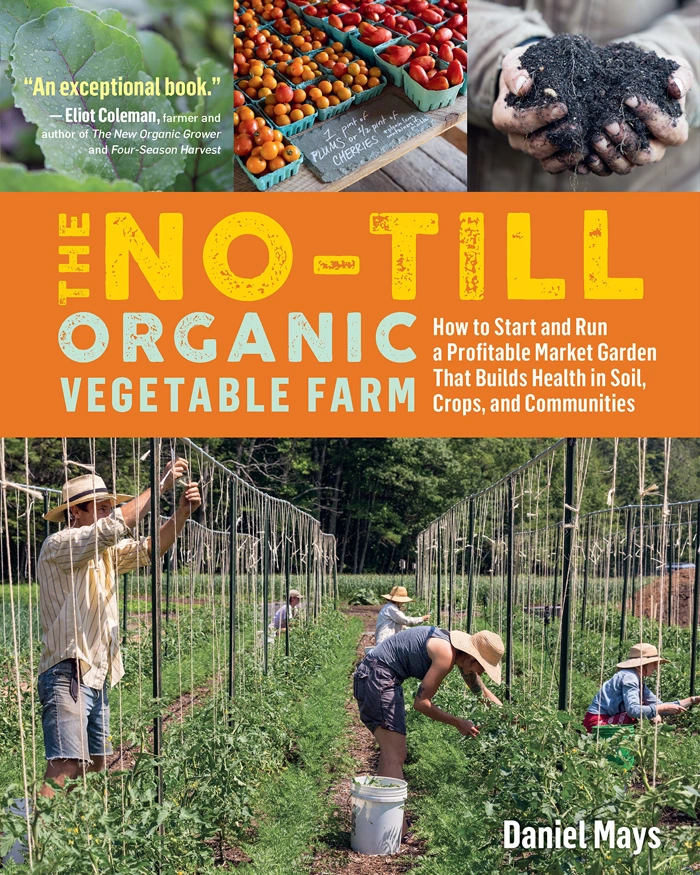
The No-Till Organic Vegetable Farm: How to Start a Profitable Market Garden
The No-Till Organic Vegetable Farm is a practical guide for gardeners interested in building soil fertility without turning or tilling. When you preserve soil structure, your amendment strategy shifts - instead of mixing materials deep into the bed, you layer compost, mulches, and organic matter on the surface and let soil biology do the integration work. This book walks through that approach with a focus on market gardening, making it especially useful if you're scaling up production or managing multiple beds.
The organic methods covered include composting in place, selecting amendments that feed soil life rather than just plants, and timing applications to match crop rotations. Because the book is rooted in real farm operations, it balances soil science with logistical detail: how much compost per bed, when to apply amendments in a busy planting schedule, and how to source materials affordably at scale.
With a 4.8 out of 5 rating, readers appreciate the straightforward tone and actionable advice. The no-till framework may require rethinking some conventional practices - broadcast amendments stay on top, and you rely more on mulch and cover crops to suppress weeds and protect structure - but the book provides clear reasoning for each shift. If you're curious about low-disturbance soil management or want to reduce labor while building long-term fertility, this guide offers a proven roadmap grounded in organic principles and market garden realities.
If you're exploring no-till vegetable growing, this guide offers practical amendment strategies - see current price and reader feedback.
- ✅ Practical no-till approach that preserves soil structure
- ✅ Organic amendment strategies tailored to market garden scale
- ✅ Clear guidance on surface-applied compost and mulch timing
- ✅ Highly rated by readers for actionable, real-world advice
- ⚠️ Focuses on market garden operations, which may be larger scale than some home gardeners need
- ⚠️ Requires shift in mindset if you're accustomed to tilling amendments into soil
Who This Guide Is For
This guide is designed for three types of growers who want to improve their vegetable garden soil but feel uncertain about where to start.
If you're planting your first vegetable garden, you may be overwhelmed by the sheer number of amendment products available - bags of compost, rock dust, kelp meal, lime, sulfur, and dozens more. You know healthy soil matters, but you're not sure which materials your garden actually needs or how to avoid wasting money on unnecessary products.
Homesteaders and self-sufficiency gardeners will find practical guidance on building soil fertility over time using accessible, often locally sourced amendments. If your goal is to grow nutrient-dense food and reduce dependence on purchased inputs, understanding how amendments work together helps you make decisions that support long-term productivity.
Experienced gardeners moving beyond basic care will benefit from the decision framework in this guide. You've grown vegetables before, but you want to move past guesswork and build a soil improvement plan based on what your specific plot lacks - whether that's organic matter, pH balance, or key minerals.
Common challenges this guide addresses include confusion about which amendment solves which problem, concern about using synthetic chemicals or unknown ingredients, and difficulty interpreting soil test results. You'll learn how to match amendments to your soil's actual needs rather than applying products based on marketing claims or generic advice.
Whether you garden in raised beds, in-ground rows, or containers, the principles here apply. The focus is on practical, safer choices that improve soil structure, nutrient availability, and microbial activity without requiring advanced chemistry knowledge.
What Matters Most When Choosing Soil Amendments
Choosing the right soil amendments starts with understanding what your soil actually needs, not what you assume it lacks. The most common mistake gardeners make is adding amendments based on guesswork or habit, which can waste money and even harm your plants. Successful soil improvement rests on a few core priorities that work together to build fertility over time.
First, know your starting point. Before you add anything, assess your current soil condition through testing and observation. A soil test reveals nutrient levels, pH, and often organic matter content, giving you a factual baseline. Visual and tactile clues - how water drains, whether the soil is hard or crumbly, how roots develop - tell you about structure and compaction. Without this information, you're working blind.
Second, match amendments to specific deficiencies. If your test shows low nitrogen, adding phosphorus-heavy amendments won't help and may create imbalances. If your soil is acidic and your crops prefer neutral pH, lime makes sense; sulfur does not. Precision matters because soil chemistry is interconnected, and over-applying one element can lock up others or encourage excessive vegetative growth at the expense of fruit.
Third, focus on soil structure and biology, not just nutrient content. Amendments that improve tilth - how the soil crumbles and holds moisture - support healthier root systems and make nutrients more accessible. Compost, aged manure, and other organic materials feed beneficial microbes, earthworms, and fungi that break down organic matter and cycle nutrients naturally. These biological players do much of the work fertilizers cannot.
Fourth, prioritize organic materials when possible. Organic amendments release nutrients slowly, reduce the risk of burning plants, and contribute to long-term soil health by building humus. Synthetic fertilizers provide quick nutrient boosts but do little for structure or microbial life. For sustainable vegetable gardening, organic options align better with soil-building goals.
Finally, think of amendments as long-term investments, not quick fixes. Soil improvement is a gradual process. A single application of compost or lime won't transform poor soil overnight, but consistent, targeted amendments over seasons will. Plan to reassess soil conditions annually, adjust your approach as the soil responds, and layer improvements year after year. This patience pays off in healthier plants, better yields, and less dependency on external inputs.
Understanding Your Soil's Starting Point
Before you add anything to your garden, it pays to know what you're starting with. Soil testing removes the guesswork and helps you apply only what your soil actually needs, saving money and preventing imbalances that can stunt plant growth.
A basic soil test measures three critical factors: pH, nutrient levels (especially nitrogen, phosphorus, and potassium), and sometimes texture. pH matters because it controls how well plants can absorb nutrients. Most vegetable crops prefer a pH between 6.0 and 7.0 - slightly acidic to neutral - though a few, like blueberries and potatoes, tolerate more acidic conditions. Outside this range, even fertile soil can lock up nutrients, leaving plants hungry despite your best efforts.
Home test kits offer a quick, affordable snapshot. They typically use color-coded strips or liquid reagents to estimate pH and major nutrients. While not laboratory-precise, these kits give you enough information to make informed amendment decisions. For a more detailed report - including micronutrients, organic matter percentage, and tailored recommendations - contact your local extension service. Many offer mail-in testing for a modest fee and return results with specific guidance for vegetable gardening.
Once you have your results, match amendments to what the test reveals. Low pH? Lime raises it gradually. High pH? Sulfur or organic matter can bring it down. Deficient in phosphorus? Bone meal or rock phosphate. Low nitrogen? Compost, blood meal, or aged manure. The key is addressing real gaps rather than dumping everything into the bed and hoping for the best.
Different vegetables do have varying preferences - tomatoes and peppers like slightly warmer, well-drained soil with steady nutrition, while leafy greens tolerate cooler, moister conditions and heavier nitrogen - but nearly all thrive in balanced soil with good structure and a pH near neutral. Testing gives you that baseline so every amendment you add moves you closer to that goal, not further from it.
Common Types of Soil Amendments and What They Do
Understanding the different types of soil amendments helps you match the right material to your garden's specific needs. Each category serves a distinct purpose, and many gardeners use several types together to address multiple soil issues at once.
Organic matter is the workhorse of most vegetable gardens. Compost, well-aged manure, leaf mold, and decomposed plant material improve soil structure, add slow-release nutrients, and support beneficial microbes. Compost works well in nearly every situation - it lightens clay, helps sand retain moisture, and feeds the soil food web. Aged manure brings similar benefits with higher nitrogen content, making it especially useful before planting leafy greens or heavy feeders like tomatoes and squash.
pH adjusters bring soil into the range where most vegetables can access nutrients effectively. Lime (calcium carbonate or dolomitic lime) raises pH in acidic soils, which is common in regions with high rainfall or pine-dominated landscapes. Sulfur lowers pH in alkaline soils, often found in arid climates or areas with limestone bedrock. These amendments work slowly, so apply them well before planting and retest after a few months to track progress.
Mineral amendments supply specific nutrients that may be lacking based on your soil test. Rock phosphate and bone meal add phosphorus, which supports root development and fruiting. Greensand and kelp meal provide potassium and trace minerals, improving overall plant vigor and disease resistance. These materials release nutrients gradually, making them a good fit for gardeners who prefer a low-intervention approach once the soil is balanced.
Structure improvers are most useful in container gardening or when working with extremely heavy clay. Perlite and vermiculite lighten potting mixes and improve drainage without adding nutrients. Coarse sand can open up clay soil, but only when mixed deeply and in large volumes - adding a thin layer on top does more harm than good. Gypsum (calcium sulfate) helps break up compacted clay by improving aggregation, though it won't change pH the way lime does.
Most vegetable gardens benefit from a combination approach: organic matter as the foundation, pH adjusters if needed, and targeted mineral amendments based on test results. Structure improvers play a supporting role when drainage or compaction is limiting plant growth.
Building Soil Biology with Compost
Compost is the single most valuable amendment you can add to a vegetable garden. Unlike concentrated fertilizers that deliver a quick burst of nutrients, compost works on multiple levels: it improves soil structure, slowly releases nutrients as it breaks down, feeds the diverse community of microbes and earthworms that keep soil healthy, and builds long-term fertility season after season.
In sandy soils, compost increases water retention and gives roots something to hold onto. In clay soils, it opens up air pockets and improves drainage. Regardless of your starting point, finished compost adds organic matter that decomposers transform into humus - the stable, spongy material that gives healthy soil its dark color and crumbly texture.
You can source compost in several ways. Many municipalities offer finished compost to residents, sometimes free or at low cost. Bagged compost from garden centers works well for small gardens or raised beds, though quality varies - look for products that list ingredients and smell earthy, not sour or ammonia-like. Bulk compost delivered by the cubic yard is economical for larger spaces, but ask about the source material and whether it's been tested for persistent herbicides, which can damage vegetable plants.
Making your own compost is the most flexible and cost-effective option once you get the hang of it. A basic compost pile needs four things: brown materials like dried leaves or straw for carbon, green materials like vegetable scraps or grass clippings for nitrogen, moisture, and air. The ratio doesn't have to be perfect - aim for roughly equal volumes of brown and green, keep the pile as moist as a wrung-out sponge, and turn it every few weeks to introduce oxygen. In warm weather, a well-managed pile can produce finished compost in two to three months.
Composting can feel intimidating at first, especially if you're worried about odors, pests, or "doing it wrong." The reality is that decomposition happens on its own; you're just creating conditions that speed it up. If the pile smells bad, it's too wet or has too much green material - add browns and turn it. If it's not breaking down, it's too dry or needs more green material. Small adjustments fix most problems, and even a neglected pile will eventually turn into usable compost.
Apply a one- to two-inch layer of finished compost to vegetable beds each spring, working it gently into the top few inches of soil. You can also side-dress growing plants mid-season or use compost as mulch. Because it releases nutrients gradually and supports soil life, compost is difficult to overuse - unlike synthetic fertilizers, it won't burn plants or leach away quickly.
Think of compost as the foundation of your soil-building strategy. Other amendments address specific deficiencies or tweak soil chemistry, but compost does the everyday work of keeping your garden soil alive, balanced, and productive year after year.
Common Mistakes to Avoid
Even experienced gardeners stumble when amending soil. Recognizing these common pitfalls helps you avoid setbacks and build healthier garden beds from the start.
Adding amendments without testing first is one of the most frequent mistakes. Guessing what your soil needs often leads to imbalances - you might add lime when your pH is already high, or pile on nitrogen when phosphorus is lacking. A simple soil test removes the guesswork and saves money by showing you exactly what your soil requires.
Over-applying lime or fertilizer can do more harm than good. Too much lime raises pH beyond the ideal range for most vegetables, locking up nutrients like iron and manganese. Excess fertilizer, especially nitrogen, can burn roots, promote excessive leafy growth at the expense of fruit, and leach into groundwater. Always follow application rates on the package and your soil test recommendations.
Using fresh manure directly in the garden is a recipe for trouble. Fresh manure contains high levels of ammonia and soluble salts that burn plant roots and can introduce harmful pathogens. It also ties up nitrogen as it breaks down, starving your plants temporarily. Let manure age for at least six months, or compost it thoroughly before adding it to vegetable beds.
Ignoring soil biology and focusing only on NPK numbers misses half the picture. Healthy soil is alive - full of beneficial bacteria, fungi, and organisms that break down organic matter and make nutrients available to plants. Amendments like compost and aged manure feed this biological community, while synthetic fertilizers alone can degrade it over time. Building soil life improves structure, water retention, and long-term fertility.
Expecting instant results sets you up for disappointment. Soil improvement is a gradual process, not a one-time fix. Organic amendments like compost release nutrients slowly as microbes break them down. Structural changes - better drainage, deeper topsoil, improved tilth - develop over seasons, not weeks. Patience and consistent care pay off with richer, more resilient soil.
Mistakes are part of the learning curve. If your plants show signs of stress after amending, don't panic - most imbalances can be corrected with time and adjustments. Keep notes on what you add and how your garden responds, and you'll develop an intuition for what your soil needs season after season.
Final Takeaway: Start Simple and Build Over Time
Building healthy soil doesn't require perfect knowledge or expensive solutions from day one. The most successful gardeners start with a simple foundation: they test their soil to understand what they're working with, then add compost or aged organic matter to improve structure and fertility. These two steps alone will improve most vegetable gardens.
Soil amendment is not a one-time project. It's an ongoing practice that evolves as you observe how your plants respond, how your soil drains after rain, and how workable it becomes each spring. Each season offers a chance to adjust your approach - adding a bit more compost, incorporating cover crop residue, or addressing a specific nutrient gap revealed by a new test.
Start with the basics: compost for organic matter, and amendments that directly address confirmed issues like low pH or poor drainage. Avoid the temptation to buy everything at once or to add products based on guesswork. Small, informed adjustments compounded over time will build the kind of resilient, living soil that supports stronger plants, better yields, and fewer problems.
As your soil improves, you'll notice the difference - easier digging, better moisture retention, healthier root systems, and more vigorous growth. These improvements don't happen overnight, but they're worth the patience. Every bag of compost you work in, every cover crop you plant, and every test result you act on brings you closer to a garden that thrives with less intervention and more reward.