We may earn a commission when you buy through links on this page, at no extra cost to you. How this works.
When thirty pounds of ripe paste tomatoes land on your kitchen counter in a single August afternoon, the first question isn't whether to preserve them - it's which tool will get you from whole fruit to finished sauce without wasting pulp or spending your entire evening picking out seeds.
Food mills and food processors both promise to speed up tomato processing, but they work in fundamentally different ways. A food mill forces cooked tomatoes through a perforated disk, separating seeds and skins while you crank. A food processor chops everything into a uniform slurry in seconds, then leaves you to strain out what you don't want.
The right choice depends on three factors: the texture you want in your finished sauce, how much seed and skin removal matters to you, and whether you're putting up six quarts or sixty. Smooth, seedless marinara and chunky salsa call for different approaches. A five-gallon harvest and a single-layer sheet pan of roasted tomatoes need different throughput.
This guide walks through how each tool handles tomatoes - what happens to seeds, how much control you keep over texture, and where each one saves or costs you time. You'll see the tradeoffs that matter when you're standing over a stove with a bushel basket still waiting, so you can match the tool to the sauce you actually want to put on the shelf.
Quick comparison
| Mirro 50024 Foley Stainless Steel Food Mill, 2-Quart | Check current price |
| Premium 4-Disc Stainless Steel Food Mill – Ergonomic Rotary Hand Crank for Tomato Sauce, Canning, Applesauce, Baby Food, Mashed Potatoes, Puree & Jams | Check current price |
What is a Stainless Steel Food Mill?
A stainless steel food mill is a manual rotary tool designed to separate soft pulp from seeds, skins, and fibrous material in one pass. It consists of three main parts: a perforated metal disc at the bottom, a hand crank that turns a curved blade, and a hopper bowl that collects the finished puree. When you turn the crank, the blade sweeps cooked tomatoes across the disc, forcing smooth pulp through the holes while pushing seeds and skins to the side for disposal.
The perforated disc typically offers hole sizes ranging from fine to coarse, allowing you to control texture. Unlike multi-function appliances, the food mill does one job well: it processes soft, cooked produce into smooth puree without incorporating air or heat. Because it relies on gravity and pressure rather than blades or motors, it preserves the texture and density you want in canned tomato sauce.
This single-purpose design makes the food mill particularly effective for harvest preserving. You cook tomatoes until soft, then ladle them into the mill and crank. The result is a thick, seed-free puree ready for jars, with all the waste left behind in the basket. No need to blanch, peel, or pre-seed your tomatoes by hand.
Pros and Cons of Using a Food Mill for Tomatoes
A food mill excels at producing smooth tomato sauce because it separates seeds and skins in one pass, leaving behind only the pulp and juice. This built-in filtering prevents any bitter flavor that crushed seeds can introduce, which is especially valuable when working with paste tomatoes or varieties that carry a lot of seeds. The texture comes out consistently velvety, with no need for a second straining step.
No electricity means you can set up anywhere - porch, garage, or kitchen counter - and the cleanup is straightforward since there are no motor housings or blade assemblies to disassemble. The hand-crank operation gives you direct control over pressure and speed, which helps when working with tomatoes of varying ripeness.
The main tradeoff is speed. Processing ten pounds of tomatoes takes longer than pulsing them in a food processor, and your forearm will feel the effort if you're working through a full harvest basket. You'll also need one hand to turn the crank and the other to stabilize the bowl underneath, which can be awkward if you're working solo. For small to medium batches, the tradeoff is manageable, but high-volume canning sessions can become tiring without a second person to swap out with.
What is a Food Processor?
A food processor uses a sharp, rotating blade and an electric motor to chop, purée, and blend ingredients in seconds. The spinning blade sits at the bottom of a clear bowl, and most models offer pulse control alongside multiple speed settings. When you drop tomatoes into the bowl and press the button, the blade tears through flesh, seeds, and skins all at once, turning everything into a uniform purée or chunky mix depending on how long you run it.
This speed comes with a tradeoff: the machine does not separate seeds or skins from the pulp. If you want seedless sauce or a smoother texture, you will need to push the purée through a fine-mesh strainer or chinois by hand after processing. The blade also incorporates air as it spins, which can lighten the color and texture of the final sauce compared to methods that press rather than chop.
Food processors shine when you need to break down large volumes quickly or when seed removal is not a priority. They handle whole tomatoes, garlic, onions, and herbs in the same bowl, making them useful for chunky salsas, gazpacho, or rough sauce bases that you plan to strain later anyway.
Pros and Cons of Using a Food Processor for Tomatoes
Food processors handle large volumes of tomatoes quickly, turning pounds of fruit into puree in just seconds. The speed advantage matters when you're working through a full harvest basket and want to get jars filled before dinner. Because the motor does the work, you avoid the arm fatigue that comes with hand-cranked mills, and most households already own a processor for other kitchen tasks.
The main tradeoff is that processors chop rather than separate. Seeds, skins, and fibrous core pieces stay in the puree, which can introduce this product if the seeds are crushed during processing. To get smooth sauce, you'll need to strain the puree through a fine-mesh sieve or food mill afterward, adding back the time you saved on the initial processing step.
Processors also require electricity and counter space, which can be a constraint during back-to-back canning sessions when outlet access and work surface are already crowded. For thick paste or salsa with chunky texture, the processor works well on its own, but for traditional smooth tomato sauce, plan on a second straining stage to remove the solids.
Head-to-Head Comparison: Seed and Skin Removal, Texture, Speed, and Cleanup
Comparing food mills and food processors across four practical dimensions reveals why harvest volume and end-product texture matter more than raw speed. Seed and skin removal is where the food mill takes a decisive lead: as you turn the crank, the perforated disk forces pulp through while seeds and skins stay behind in one continuous pass. A food processor, by contrast, chops everything together - seeds, skins, and pulp - which means you'll need a fine-mesh sieve or cheesecloth afterward to strain out the bits, adding an extra step and another item to wash.
Texture differences are immediately visible. A food mill produces velvety, uniform sauce because it extrudes only the soft flesh, leaving you with a smooth consistency that coats a spoon evenly. The food processor can deliver chunky results if you pulse carefully, but over-processing introduces air, sometimes creating foam or an uneven, watery layer on top. If your goal is classic smooth tomato sauce or passata, the mill delivers that finish without guesswork.
Speed looks straightforward until you account for the full workflow. The food processor takes seconds to chop a batch of quartered tomatoes, but then you face several minutes of pressing pulp through a strainer, scraping the underside, and squeezing out trapped liquid. The food mill cranks at a moderate pace, yet because it separates and purées in one motion, total hands-on time often ends up shorter - especially when you're working through multiple quarts. For small batches under two pounds, the processor's burst speed can feel convenient; for bushel-scale preserving, the mill's integrated approach saves fatigue.
Cleanup tilts in favor of the food mill. Most models disassemble into three or four parts - base, disk, crank assembly, and hopper - all with smooth surfaces and no hidden crevices. A food processor requires washing the bowl, lid, feed tube, and the sharp S-blade, which demands careful handling and attention to the blade's underside where tomato pulp clings. Neither tool is difficult to clean, but the mill's simplicity means less time at the sink after a long preserving session.
Combining Both Tools for Large Harvests
When you're staring at a hundred pounds of ripe tomatoes from the garden, speed and quality both matter. A hybrid approach can save hours without sacrificing the smooth, seed-free sauce you want: use the food processor to break down whole or halved tomatoes into a rough purée, then run that slurry through the food mill to catch seeds, skins, and any remaining fibrous bits.
The food processor handles the heavy lifting in seconds, turning baskets of raw tomatoes into manageable chunks or coarse purée. This first pass cuts the physical effort and dramatically reduces the volume before you reach the mill. The food mill then refines texture and removes what the processor can't - seeds and tough skins - without over-aerating or turning the batch watery.
This two-step method works best when batch size justifies pulling out both tools. For twenty or thirty pounds, a food mill alone may be simpler. But once you cross fifty or a hundred pounds, the time you save with the processor more than offsets the extra cleanup, and you still get the clean, smooth finish only a mill can deliver. Expect to spend a few minutes processing in batches, then another ten to fifteen minutes milling, depending on your equipment and tomato variety.
Set up a flow on your counter: processor on one side, mill in the middle, and your pot or funnel on the other. Work in rhythm - chop a batch, mill it, repeat. The hybrid approach turns a marathon into manageable sprints, and you end up with sauce that tastes like you took the time to do it right.
The Right Tool for Your Homestead's Tomato Needs
Choosing between a food mill and a food processor comes down to the texture you want and how much tomato volume you handle each season. A food mill removes seeds and skins in a single pass, producing smooth, uniform sauce without extra steps. It works best when you're focused on traditional purées and don't mind a slower, more deliberate pace. A food processor chops quickly and handles large batches with ease, but it leaves seeds and skins in the mix unless you strain afterward. That extra step adds time and cleanup, though the processor's versatility makes it useful for dozens of other kitchen tasks year-round.
If your goal is classic marinara or silky tomato paste, a food mill delivers the right consistency from the start. If you're processing bushels of tomatoes for mixed uses - salsa, chunky sauce, and frozen diced tomatoes - a food processor's speed and adaptability may outweigh the straining hassle. Many homesteaders keep both on hand, reaching for the mill when texture matters most and the processor when volume or convenience takes priority.
New preservers often worry they'll pick the wrong tool, but both approaches yield excellent sauce once you understand the workflow. Start with whichever appliance you already own, learn its rhythm, and adjust your process as your harvest grows. The right tool is the one that matches your recipe style, batch size, and willingness to add a straining step when needed.
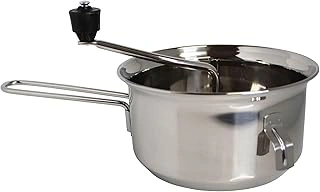
Mirro 50024 Foley Stainless Steel Food Mill, 2-Quart
Homesteaders working through a few bushels of tomatoes each season often need a mill that sits stable on the counter without requiring extra hands to hold it in place. The Mirro 50024 Foley stainless steel food mill offers a 2-quart bowl with a straightforward crank mechanism, designed to handle steady batch processing without the complexity of multiple discs or adjustable settings.
The stainless steel construction resists staining from tomato acids and cleans up without worry about rust or corrosion after repeated canning sessions. At the listed size, the capacity suits countertop work where you're processing tomatoes in manageable waves rather than trying to force an entire harvest through at once. The rotary crank turns smoothly when the bowl isn't overfilled, and the fixed screen size removes seeds and skins in one pass without requiring you to swap components mid-batch.
Priced at $41.64 with a 4.2 out of 5 rating, this mill sits in the accessible range for beginners who want durable equipment but aren't ready to invest in commercial-grade tools. The single-screen design means you won't get the fine purée some European mills produce, but for chunky tomato sauce or passata destined for jars, the texture works well. The mill's footprint and weight provide enough stability for solo operation, though very thick or fibrous tomato varieties may require slower cranking to avoid jamming.
If you're preserving a few bushels each season and want a durable, straightforward mill,check current price and availability.
- ✅ Stainless steel resists tomato staining and corrosion
- ✅ 2-quart capacity handles batch processing without overfilling
- ✅ Stable enough for solo countertop operation
- ✅ Simple crank mechanism with no disc swapping
- ⚠️ Single screen produces chunkier texture than adjustable mills
- ⚠️ May require slower cranking with very fibrous tomato varieties
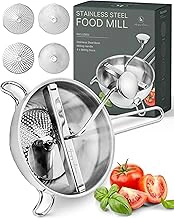
Premium 4-Disc Stainless Steel Food Mill – Ergonomic Rotary Hand Crank for Tomato Sauce, Canning, Applesauce, Baby Food, Mashed Potatoes, Puree & Jams
Homesteaders who preserve tomatoes, apples, and other produce through the season will appreciate the flexibility of this four-disc stainless steel food mill. The included discs offer different hole sizes for varying textures - fine puree for tomato sauce, medium for applesauce, and coarser options for chunky preparations - so you can adjust to whatever you're processing without buying separate tools. The ergonomic rotary crank design reduces hand fatigue during long canning sessions, a practical advantage when you're working through bushels of harvest produce. At $52.99 with a 4.6 out of 5 rating, the price reflects the added versatility of multiple discs in one package.
The stainless steel construction handles acidic tomatoes and repeated use during peak harvest weeks. Switching discs takes seconds, which matters when you're moving from one batch to the next. If you preserve a variety of crops and want one adjustable tool instead of multiple single-purpose mills, this model offers that flexibility without a steep learning curve. The interchangeable discs mean you can fine-tune texture to match your family's preferences for sauce, jam, or baby food throughout the year.
- ✅ Four interchangeable discs for fine to coarse textures
- ✅ Ergonomic crank reduces hand strain during long processing sessions
- ✅ Stainless steel handles acidic produce
- ✅ Adjusts to different recipes without separate tools
- ⚠️ Higher price at $52.99
- ⚠️ More parts to clean and store than single-disc models
When a Food Mill is the Right Choice
- You're making smooth tomato sauce, paste, or puree for canning
- You want to remove all seeds and skins in a single step
- You're processing 10 - 50 pounds of tomatoes in one session
- You prefer not to rely on electricity or worry about power during peak harvest
- You value traditional texture and don't mind a slower, hands-on process
When a Food Processor is the Better Choice
- You're making chunky salsa, relish, or crushed tomato products where seeds and skins add texture
- You need to process tomatoes quickly and already own a fine-mesh strainer
- You're blending tomatoes with other ingredients (onions, peppers, herbs) in one step
- You use the appliance year-round for slicing, shredding, and other kitchen tasks
- You have limited upper-body strength or mobility and prefer electric tools