We may earn a commission when you buy through links on this page, at no extra cost to you. How this works.
Starting your first batch of homemade sauerkraut in a Mason jar can work, but serious fermentation failures - mold blooms, mushy cabbage, or flat flavor - often push homesteaders toward the tool their grandparents trusted: a traditional ceramic fermentation crock with a water-seal rim.
Ceramic crocks solve the two biggest problems beginners face. The water seal creates an airlock that blocks oxygen without trapping carbon dioxide, so wild lactobacilli can work without competition from mold or yeast. Thick ceramic walls also insulate your fermenting cabbage from the temperature swings that slow fermentation in glass jars sitting on a counter near a window or heating vent.
These aren't magic. You still need clean cabbage, the right salt ratio, and a stable spot in your kitchen. But a well-made crock turns guesswork into consistency, especially once you move past single-quart experiments and want to put up five or ten pounds of kraut at a time.
We've compared four traditional ceramic crocks that home fermenters actually use for sauerkraut. Each option differs in capacity, weight configuration, seal design, and included accessories. The right choice depends on how much kraut you ferment per batch, how much counter space you can dedicate, and whether you want a complete starter kit or a standalone vessel you'll pair with your own weights and cloth.
Quick comparison
| Fermentation Crock 1/2 Gallon with Lid, Weights & Pounder - Ceramic Fermenting Kit | Check current price |
| Fermentation Crock 5 Liter / 1.3 Gallon with Lid, Weights & Pounder - Ceramic Kit | Check current price |
| Vencer Traditional Glass Fermenting Jar 5 Liter with Lid, VHF-002 | Check current price |
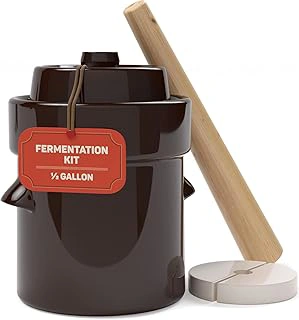
Fermentation Crock 1/2 Gallon with Lid, Weights & Pounder - Ceramic Fermenting Kit
A 1/2-gallon ceramic crock hits the capacity most home fermenters need without crowding the counter or requiring huge batches of cabbage. This kit arrives with a ceramic lid, two half-moon weights, and a wooden pounder, so you can start a batch of sauerkraut the day it shows up. The ceramic body holds enough for four to six quarts of finished kraut, which fits the rhythm of a household that eats fermented vegetables regularly but doesn't want to commit to multi-gallon production runs.
The water-seal channel around the rim keeps air out during fermentation while letting carbon dioxide escape, which is the traditional German design that has worked reliably for generations. You fill the groove with water, set the lid in place, and the seal forms naturally. The two weights rest on top of the vegetables and keep them submerged under brine, preventing surface mold and ensuring even fermentation from top to bottom. The wooden pounder is sturdy enough to bruise cabbage and release juice without cracking under pressure.
At $49.89, the price reflects the complete kit rather than forcing you to buy weights or a tamper separately. The 4.6-star rating suggests most users find the crock easy to use and durable over multiple batches. The half-gallon size also stores more easily than larger crocks when not in use, and it fits on most refrigerator shelves if you want to halt fermentation and keep a batch cold.
The main tradeoff is capacity. If you ferment for a large family or preserve summer cabbage in quantity, you'll outgrow this crock quickly and wish you had started with a 2- or 5-gallon model. The ceramic is heavy, which adds stability during packing but makes the crock harder to move when full. And like all water-seal crocks, you need to check the channel every few days and top off the water as it evaporates, especially in dry climates.
This kit works well if you want a proven design, appreciate the convenience of included accessories, and plan to ferment in moderate batches that match typical household consumption.
- ✅ Includes lid, weights, and pounder in one kit
- ✅ 1/2-gallon capacity suits most households without requiring large batches
- ✅ Water-seal design prevents air exposure and allows gas to escape
- ✅ Ceramic weights keep vegetables submerged under brine
- ✅ Fits on most refrigerator shelves for cold storage
- ⚠️ Limited capacity for families or bulk preservation
- ⚠️ Heavy when full, harder to move or lift
- ⚠️ Water-seal channel requires regular monitoring and topping off
What to Look for in a Ceramic Fermentation Crock
Choosing the right ceramic fermentation crock comes down to four practical factors that directly affect how well your sauerkraut turns out and how easy the process feels.
Capacity matters first. A 5-liter crock holds about three to four pounds of cabbage and fits comfortably on most counters, while 10-liter and larger models suit families or anyone who ferments in bigger batches. Smaller crocks fill faster and finish sooner, but you'll run out quicker if sauerkraut is a kitchen staple.
Water-seal designs use a moat around the rim that you fill with water to create an airlock. Gas escapes, but air and mold spores stay out. This passive seal works without daily attention. Weighted-lid crocks rely on heavy ceramic lids or separate weights to keep the vegetables submerged, but they don't block air as effectively, so you'll need to check more often for surface mold.
Included accessories save time and guesswork. Look for crocks that come with ceramic or glass weights to hold cabbage below the brine, and a wooden pounder or tamper if you don't already own one. Without weights, you'll need to improvise with jars or plates, which rarely fit as neatly.
Glaze quality determines safety and durability. Food-safe, lead-free glazes are standard in reputable crocks, but it's worth confirming. Unglazed interiors can absorb brine and odors over time, and rough or chipped glaze can harbor bacteria that survive between batches.
Ease of cleaning becomes obvious after your first ferment. Wide mouths let you reach the bottom with a sponge, and smooth interior walls wipe clean faster than crocks with decorative ridges or narrow necks. Water-seal channels need occasional scrubbing to prevent residue buildup, so simpler moat designs usually clean faster.
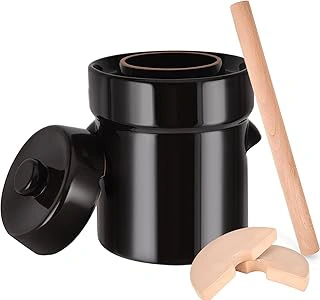
Fermentation Crock 5 Liter / 1.3 Gallon with Lid, Weights & Pounder - Ceramic Kit
Families and homesteaders who ferment in larger quantities will appreciate the 5-liter capacity of this ceramic kit. At approximately the listed size, it holds enough shredded cabbage to produce several weeks' worth of sauerkraut in a single batch, reducing the number of times you need to start a new ferment each season.
The kit includes a fitted lid, ceramic weights, and a pounder, covering the essential tools for traditional water-seal fermentation. The ceramic construction maintains stable temperatures and blocks light, both helpful for consistent results. However, the larger footprint means you'll need dedicated counter or shelf space, and the filled crock becomes heavy enough that moving it requires two hands and care.
Price-per-quart, this 5-liter option costs roughly the listed amount per quart of capacity at $51.88, which compares favorably to buying multiple smaller crocks if you regularly preserve cabbage, cucumbers, or other vegetables. The tradeoff is upfront investment and storage: a half-gallon crock is easier to tuck away between batches, while this size stays visible.
This capacity makes the most sense if you ferment at least once a month, preserve for a household of four or more, or want to minimize the number of active crocks you're monitoring. For occasional fermenters or those experimenting with new recipes in small amounts, a 2- or 3-liter crock offers more flexibility without the commitment of counter space.
- ✅ 5-liter capacity reduces batch frequency for regular fermenters
- ✅ Includes lid, weights, and pounder in one kit
- ✅ Competitive price-per-quart for bulk preserving
- ⚠️ Larger footprint requires dedicated counter or shelf space
- ⚠️ Heavy when filled, less portable than smaller crocks
- ⚠️ Higher upfront cost may not suit occasional use
Quick Comparison: Which Crock Fits Your Needs?
- Choose 1/2 gallon if you ferment one to two quarts at a time or have limited counter space
- Choose 5 liter (1.3 gallon) if you preserve in bulk or ferment multiple times per season
- Pick ceramic for better temperature stability and traditional aesthetics
- Pick glass if you want to watch fermentation progress without lifting the lid
- All four kits include weights and pounders - no need to buy accessories separately
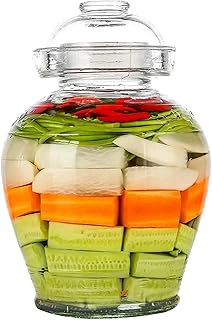
Vencer Traditional Glass Fermenting Jar 5 Liter with Lid, VHF-002
Glass fermentation jars offer one advantage ceramic cannot: you can watch your sauerkraut transform without lifting the lid. The Vencer Traditional Glass Fermenting Jar holds the listed size and uses a water-sealed lid to keep oxygen out while letting carbon dioxide escape, the same principle found in traditional stoneware crocks.
The clear walls let you check brine levels, spot any surface issues, and track color changes as cabbage ferments - useful for first-time fermenters who want reassurance that everything is progressing normally. At the listed size, this jar handles the same batch size as mid-range ceramic crocks, roughly the listed size of shredded cabbage.
Glass weighs less than stoneware, making it easier to move when full. The trade-off is temperature stability: glass responds faster to ambient shifts, so a cool, consistent spot matters more. Breakage is another consideration. Glass can crack if knocked or exposed to sudden temperature changes, while ceramic crocks tolerate rougher handling.
The water-seal design works well when maintained - check the moat every few days and top off as needed. Some users find the glass lid slightly lighter than ceramic, which can allow more evaporation if the seal isn't monitored.
This jar suits anyone who values visibility and doesn't mind paying closer attention to placement and care. If you prefer the thermal mass and durability of ceramic, one of the stoneware options will be a better fit. But for those who want to see fermentation in action without compromising the anaerobic environment, glass delivers that transparency.
- ✅ Clear glass walls let you monitor brine and fermentation progress
- ✅ 5-liter capacity handles standard sauerkraut batches
- ✅ Water-sealed lid maintains anaerobic environment
- ✅ Lighter weight than ceramic crocks
- ⚠️ Glass is more fragile and prone to breakage
- ⚠️ Less temperature stability than ceramic
- ⚠️ Requires careful placement to avoid temperature swings
- ⚠️ Water seal needs regular monitoring
How to Use Your Ceramic Fermentation Crock
Ceramic fermentation crocks simplify the process once you understand the basic steps. Start by shredding your cabbage and tossing it with salt - about three tablespoons per five pounds of cabbage works for most recipes. Massage the mixture for a few minutes until it starts releasing liquid, then pack it firmly into the crock, pressing down to eliminate air pockets and bring the brine to the surface.
Place the ceramic weights on top of the cabbage to keep everything submerged below the brine line. This step matters because exposure to air invites mold rather than the anaerobic fermentation you want. Set the lid in place, then fill the water moat around the rim to create an airlock that lets carbon dioxide escape while keeping oxygen and contaminants out. Check the moat every few days and top it off as the water evaporates.
Ferment at room temperature, ideally between 65 and 75 degrees Fahrenheit. You'll notice bubbling within the first few days and a tangy, pickled smell developing over the next one to four weeks, depending on temperature and your taste preference. Cooler rooms slow fermentation, while warmer spots speed it up. Taste the sauerkraut after two weeks to gauge progress - it should be pleasantly sour without any off odors or slimy texture.
If you see a thin white film on the surface, skim it off; it's harmless kahm yeast, not mold. Dark or fuzzy growth means something went wrong, usually from vegetables poking above the brine or a compromised seal. The water moat and weights work together to prevent these issues, which is why traditional crocks remain reliable for beginners and experienced fermenters alike.
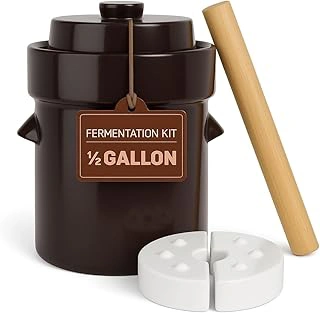
Humble House 1/2 Gallon Brown Ceramic Fermentation Crock Kit with Lid, Weights & Pounder
The Humble House 1/2 Gallon Brown Ceramic Fermentation Crock Kit delivers everything you need to start fermenting sauerkraut at $44.99, making it the most affordable complete package in this guide. With a 4.5/5 rating and a similar half-gallon capacity to higher-priced options, it gives first-time fermenters a solid entry point without leaving out important accessories.
This kit includes the brown ceramic crock, a fitted lid, ceramic weights to keep vegetables submerged, and a wooden pounder to pack down cabbage and help draw out moisture. That combination covers each step of the fermentation process - packing, weighting, and sealing - so you won't need to source extra pieces or improvise with household items.
Compared to the best overall pick, the Humble House crock shares the same half-gallon size and accessory set but comes in at a lower price and carries a slightly lower rating. For someone testing whether traditional ceramic fermentation fits their routine, that tradeoff makes sense. The crock's brown finish is simple and unassuming, and the ceramic construction maintains steady temperatures the same way as pricier alternatives.
The lid and weights work together to create an anaerobic environment, which is necessary for lactic acid bacteria to ferment cabbage into sauerkraut. The included pounder is a practical tool for bruising cabbage leaves and releasing enough brine to cover the shredded vegetables. If you're unsure how often you'll ferment or want to keep your initial investment modest, this kit provides a complete setup without skipping the essentials that matter for consistent results.
- ✅ Lowest price for a complete fermentation kit
- ✅ Includes crock, lid, weights, and wooden pounder
- ✅ Half-gallon capacity suitable for small batches
- ✅ Solid 4.5/5 rating for an entry-level option
- ⚠️ Slightly lower rating than the best overall pick
- ⚠️ Brown finish may not appeal to everyone
Caring for and Cleaning Your Crock Between Batches
Proper cleaning after each batch keeps your ceramic crock ready for the next round of fermentation and prevents off-flavors or contamination. Once you've removed all the sauerkraut, rinse the crock with warm water to clear away any vegetable debris or brine residue. Wash the interior and exterior with warm soapy water and a soft sponge or cloth, then rinse thoroughly to remove all soap. Avoid steel wool or abrasive scrubbing pads, which can scratch the glaze and create tiny crevices where bacteria might hide.
After washing, let the crock air-dry completely before storing it. Turn it upside down on a dish rack or clean towel so moisture doesn't pool inside. The same applies to lids, weights, and any other accessories. Ceramic is porous beneath the glaze, so trapped moisture can lead to musty odors or mold growth during storage, especially in humid climates.
If your crock develops a persistent sauerkraut smell, fill it with a solution of one tablespoon baking soda per quart of warm water and let it sit for a few hours, then rinse and dry. Light staining on unglazed portions or around the rim is normal and won't affect fermentation quality. For stubborn spots, a paste of baking soda and water works without damaging the surface. Never use bleach or harsh chemicals, as ceramic can absorb traces that later migrate into your ferment.
Store your crock in a dry, room-temperature spot away from direct sunlight. Avoid stacking heavy items inside, which can stress the walls or chip the rim. With routine cleaning and careful handling, a quality ceramic crock will support hundreds of fermentation cycles without losing its seal or structural integrity.
Our Final Recommendation
Choosing the right fermentation crock comes down to matching batch size with your kitchen routine and budget. The 1/2 gallon ceramic kit strikes the best balance for most home fermenters - it handles a manageable two to three pounds of cabbage, includes weights and an airlock, and fits comfortably on a counter or pantry shelf without dominating your space. If you make sauerkraut regularly or want to preserve larger harvests, the 5-liter ceramic crock offers the capacity and stable environment that larger batches need to ferment evenly.
Visual learners who want to watch fermentation progress will appreciate the glass jar option, which lets you monitor brine levels and vegetable color without lifting the lid. For those testing the waters or working with a tighter budget, the Humble House crock delivers reliable results at a lower entry price, though it may lack some of the convenience features found in pricier kits.
Any of these four crocks will give you consistent, safe fermentation when you follow basic steps: pack your vegetables firmly, keep them submerged under brine, and maintain a steady room temperature. Pick the size that matches how much sauerkraut you actually eat, choose ceramic if you value tradition and thermal stability, and remember that the crock itself is only part of the process - salt ratio, packing technique, and patience matter just as much. With the right vessel and a little practice, you'll be turning cabbage into tangy, crunchy sauerkraut batch after batch.