We may earn a commission when you buy through links on this page, at no extra cost to you. How this works.
Keeping livestock secure in remote pastures or rotating paddocks means reliable fencing - but running electrical lines across acres of land is expensive, often impractical, and sometimes impossible. Solar-powered electric fence energizers solve that problem by delivering consistent voltage wherever the sun reaches, without trenching or monthly utility bills.
This guide compares four dependable solar energizers chosen for different scales and situations. You'll find a budget-friendly option for small enclosures and rotational grazing, a mid-range charger built for larger areas with moderate vegetation, a heavy-duty unit designed for perimeter fences and taller animals, and a versatile model that balances output with portability. Each recommendation focuses on real-world factors: joule output, fence-line capacity, panel wattage, battery reserve, and how well the system holds voltage under load or during cloudy stretches.
Whether you're protecting a backyard flock, managing rotational cattle grazing, or securing horses on a multi-acre homestead, matching energizer capacity to your fence length, animal type, and vegetation pressure makes the difference between consistent deterrence and frustrating gaps in coverage.
Quick comparison
| Gallagher S200 2.0 Joule Solar Electric Fence Charger | Check current price and availability |
| Gallagher S6 Solar Electric Fence Charger with Lithium Battery | View this energizer on Amazon |
| Zareba ESP15M-Z 15 Mile Solar Low Impedance Electric Fence Charger | See pricing and reviews |
Use the matching tool first
Start with Chicken Coop Space & Feed Calculator if you want to narrow the fit before checking current offers.
Key Specs to Compare Before You Buy
- Joule output - match to your largest, most stubborn animals
- Fence length rating - account for vegetation and wire condition
- Solar panel wattage - ensure it can recharge the battery in your climate
- Battery type and capacity - lithium lasts longer in cold weather
- Low impedance design - critical for weedy or brushy fence lines
- Warranty and service support - Gallagher and Zareba both offer strong backing
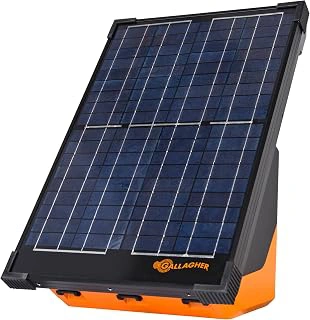
Gallagher S200 2.0 Joule Solar Electric Fence Charger
The Gallagher S200 delivers 2.0 joules of stored energy, making it the most powerful option in this roundup and a strong choice for large pastures, multiple fence lines, or cattle operations that demand consistent voltage even when vegetation or soil conditions pull current from the line. At $969.99, this unit represents a premium investment, but the output justifies the cost when you need to manage multiple acres or more with confidence.
Built-in solar integration means the panel, battery, and charger work as a single unit, eliminating the need to source and wire separate components. The housing is designed for outdoor mounting and resists UV degradation, dust, and moisture exposure common on working homesteads. The energizer maintains output stability across a wide range of fence loads, so you can add or remove sections without dramatic voltage swings.
This power level suits cattle particularly well. Cattle require more deterrent force than goats or sheep due to thicker hides and larger body mass, and the S200 provides enough shock to train even stubborn animals while maintaining safe pulse characteristics. If you're running a rotational grazing system with temporary polywire divisions or managing multiple permanent perimeter lines, the extra joules ensure every strand remains effective.
The tradeoff is straightforward: you're paying for capacity you may not need on smaller parcels or with lighter livestock. A multiple-acre goat enclosure rarely benefits from 2.0 joules, and the price premium over mid-range units becomes harder to justify. Evaluate your current fence length, planned expansion, and livestock type before committing to this tier. If your operation spans multiple acres or more, handles cattle or horses, or plans to grow significantly in the next few years, the S200's output ceiling provides long-term flexibility without requiring an upgrade cycle.
Installation follows standard solar energizer practice: mount the unit on a post or wall with southern exposure, connect ground rods per manufacturer specifications, and attach fence leads. The integrated design simplifies troubleshooting since all components share a common warranty and support path. For large-scale homesteads where fence reliability directly affects animal safety and pasture rotation schedules, the Gallagher S200 removes output as a variable and lets you focus on fence maintenance and grazing strategy instead.
- ✅ 2.0 joules of stored energy for large properties and heavy livestock
- ✅ Integrated solar panel, battery, and charger in one weatherproof unit
- ✅ Stable output across varying fence loads and conditions
- ✅ Well-suited for cattle, horses, and multi-strand permanent fencing
- ⚠️ Premium price at $969.99 makes it cost-prohibitive for small enclosures
- ⚠️ Output capacity exceeds needs of most goat, sheep, or small hobby operations
- ⚠️ Heavier and bulkier than lower-joule units due to integrated components
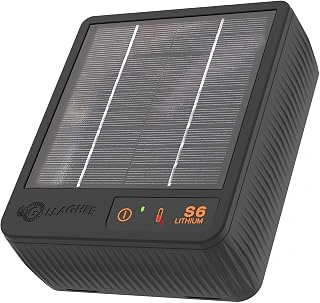
Gallagher S6 Solar Electric Fence Charger with Lithium Battery
The Gallagher S6 Solar Electric Fence Charger with Lithium Battery sits at the lowest price point in this lineup at $129.99, making it a practical entry option for homesteaders working with small flocks, goats, or rotational grazing on short fence runs. The unit combines a compact solar panel with a lithium battery to maintain charge in off-grid settings where you need basic containment without the cost or complexity of higher-output models.
This energizer delivers lower joule output compared to the beefier units above, which limits its effective range and the type of animals it can manage reliably. It works well for smaller paddocks and livestock that are already fence-trained or naturally respectful of barriers - think a handful of sheep, a small goat herd, or portable netting around a chicken tractor. If you're managing larger animals, thick coats, or longer perimeter runs, the reduced pulse strength may not provide consistent deterrence, especially when vegetation loads the fence or weather conditions interfere.
The lithium battery offers an advantage over traditional lead-acid designs: it holds charge longer in cold weather and weighs less, which helps when you're repositioning the unit for rotational grazing. Setup is straightforward - mount the panel where it gets direct sun, connect to your fence, and monitor performance as you dial in the right balance between animal pressure and fence maintenance. Because the output is modest, keeping the fence line clear of weeds and using quality insulators becomes more important to avoid voltage drop.
This charger makes sense when budget is tight, your livestock count is low, and your grazing setup is compact. It's a reasonable way to test solar fencing on your property before committing to a larger system, and it pairs well with portable netting or temporary cross-fencing inside an existing perimeter. Just recognize the limits: this isn't the unit for predator pressure, large herds, or long boundary fences where a stronger pulse is necessary to maintain respect and safety.
- ✅ Lowest-cost option in the group at $129.99
- ✅ Lithium battery holds charge better in cold weather and weighs less
- ✅ Compact and easy to reposition for rotational grazing
- ✅ Practical for small flocks, goats, and short fence runs
- ⚠️ Lower joule output limits effective range and animal types
- ⚠️ Not suitable for larger herds, long perimeters, or predator deterrence
- ⚠️ Requires clean fence lines and quality insulators to maintain voltage
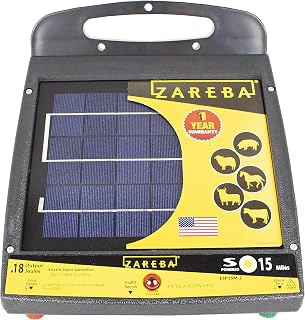
Zareba ESP15M-Z 15 Mile Solar Low Impedance Electric Fence Charger
The Zareba ESP15M-Z occupies the sweet spot between budget chargers and premium units, delivering 15-mile range at $336.49. Its low-impedance design handles weedy fence lines better than entry-level models, making it a practical choice for homesteads where vegetation control isn't always perfect.
This charger includes an integrated solar panel that keeps the internal battery topped off in most climates. The low-impedance circuit maintains voltage even when grass or brush touches the wire, so you won't lose effectiveness during the growing season. That design difference becomes important on larger properties where frequent trimming isn't realistic.
With a 4.6 out of 5 rating, users typically report consistent performance on mixed livestock setups - cattle, goats, and horses - across moderate acreage. The 15-mile rating assumes ideal conditions; expect around multiple miles of effective range on real-world pasture with some vegetation load and multiple wire strands.
Compared to the budget Gallagher S10, this unit offers nearly double the output energy and better performance in less-than-ideal conditions. Against the Gallagher S100, it trades some raw power and advanced diagnostics for a lower price point. For medium-sized homesteads that need more than a budget charger but don't require the top-tier output, the Zareba balances capability and cost without the feature set you'd find on professional ranch equipment.
Installation is straightforward: mount the unit where it gets six hours of sun daily, connect to your fence and ground system, and flip the switch. The built-in panel simplifies setup compared to systems requiring separate solar components.
If your property sits between 5 and multiple acres with moderate vegetation and you want reliable containment without the expense of a premium model, the ESP15M-Z delivers functional middle-ground performance.
- ✅ Low-impedance circuit handles weedy fence lines effectively
- ✅ Integrated solar panel simplifies installation
- ✅ 15-mile range suitable for medium-sized homesteads
- ✅ Mid-tier price balances cost and capability
- ⚠️ Lacks advanced diagnostics found on premium models
- ⚠️ Real-world range typically 8 - 10 miles with vegetation load
- ⚠️ Lower output energy than top-tier ranch chargers
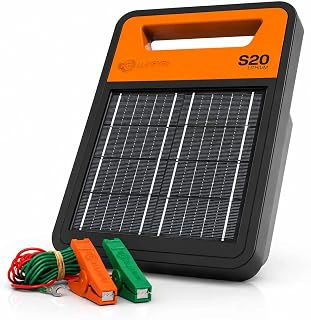
Gallagher S20 0.2 Joule Solar Electric Fence Charger with Lithium Battery
The Gallagher S20 sits between entry-level and heavy-duty chargers, delivering 0.2 joules through a lithium battery that extends autonomy between sunny days. Priced at $289.99, it occupies the middle ground for homesteaders managing mixed livestock across small to medium acreage who need more punch than the S6 without the cost or complexity of the S200.
Output energy at 0.2 joules pushes voltage through longer fence runs and handles animals with thicker coats or more stubborn temperaments. Sheep, goats, and young cattle respond consistently to this charge level, especially when perimeter lines exceed a mile or vegetation contact increases resistance. The lithium battery holds charge longer than lead-acid alternatives during cloudy stretches, reducing the risk of fence failure when livestock pressure peaks.
This model fits scenarios where the S6's multiple joules leave gaps in deterrence but the S200's multiple joules and multiple+ price exceed practical need. A homestead rotating sheep through four paddocks or managing goats near brush lines will notice improved fence performance without over-investing in capacity. Lithium chemistry also tolerates deeper discharge cycles, so the charger recovers faster when sunlight returns after storms.
Installation mirrors other Gallagher solar units: mount the panel facing south, connect the battery, and run a single hot wire to the fence terminal. The compact housing suits post-mounting near pasture corners, and the built-in voltage indicator confirms output without a separate tester. Grounding requirements remain the same - three six-foot rods spaced ten feet apart in moist soil deliver reliable current return.
Choose the S20 when your fence exceeds one mile, livestock include mixed species with varying sensitivity, or winter cloud cover routinely lasts three to five days. If your operation stays under half a mile with compliant animals, the S6 saves multiple. If you're fencing large cattle herds or managing high-weed zones beyond two miles, the S200's ten-fold energy increase justifies the jump. The S20 earns its place by balancing output, battery endurance, and cost for the majority of small-scale livestock setups that outgrow starter chargers but don't yet demand commercial power.
Check availability and specsWhy Solar-Powered Electric Fence Energizers Make Sense for Homesteaders
Solar-powered electric fence energizers eliminate the two biggest frustrations of traditional chargers: running power lines to remote pastures and paying monthly utility costs for fence operation. Instead of trenching cable hundreds of feet or relying on spotty extension cords, a solar unit mounts directly on a fence post and draws energy from the sun. For homesteaders managing paddocks far from buildings or rotating livestock across acreage, that independence changes how you plan grazing zones.
These energizers store daytime solar energy in built-in batteries, then deliver pulses around the clock. A fully charged unit typically runs three to five days without sunlight, which covers most cloudy stretches in regions with moderate sun exposure. The portability also means you can relocate the charger when you shift fence lines or expand pasture, no electrician required.
Solar energizers work best in areas that receive at least four hours of direct sun daily during the growing season. In consistently overcast climates or dense forest shade, battery performance suffers and pulse strength may drop below effective levels for larger livestock. Battery health depends on regular maintenance: keeping terminals clean, replacing cells every three to five years, and ensuring the panel stays clear of dust or snow. These units also carry a higher upfront cost than plug-in models, though the absence of electrical installation and ongoing power bills usually closes that gap within two seasons.
Grid independence protects your fence during outages, which matters when storms knock out power but livestock still need containment. For off-grid homesteads or properties without nearby electrical service, solar energizers often represent the only practical option short of running a generator. The tradeoff is paying attention to battery charge levels and sun exposure rather than simply plugging into a wall socket.
How to Choose the Right Solar Fence Energizer for Your Homestead
Matching the right solar energizer to your homestead starts with understanding three core factors: the animals you're managing, the fence environment, and how many cloudy days your system needs to survive on battery alone.
Joule output determines shock strength. Cattle and horses typically need 0.5 to 1.0 joule for reliable containment, while sheep and goats respond well to 0.25 to 0.5 joule. Smaller animals like poultry can be managed with as little as 0.15 joule. Higher joule ratings also help when vegetation touches the fence and drains voltage - a common challenge in pastures that aren't trimmed weekly.
Fence length matters, but it's not just about total wire distance. Heavy weed contact, multiple wire strands, and grounding conditions all reduce effective range. A 2-joule unit rated for ten miles of clean fence may only cover three to four miles in overgrown conditions. If your perimeter exceeds the energizer's working range, animals will find weak spots.
Battery capacity and panel wattage determine how many consecutive overcast days the system can handle before voltage drops. A 0.15-joule unit with a small 5-watt panel and basic lead-acid battery might run three to five days without sun. A 2-joule energizer with a 10-watt panel and deep-cycle battery can often last a week or more. Check your local weather patterns - coastal fog zones and northern winters demand more reserve capacity than sunny climates.
Budget creates real tradeoffs. Entry-level units cost less up front but may require more frequent fence maintenance to stay effective. Mid-range energizers handle moderate vegetation and offer longer battery run time. Heavy-duty models cost more but reduce labor and deliver consistent performance across varied terrain and weather. Choose the lowest joule rating that fits your animals and conditions, then size battery and panel capacity for your typical cloudy stretches.
Installation and Maintenance Tips for Solar Fence Energizers
Proper installation and regular maintenance extend the life of your solar fence energizer and keep it running reliably through every season. Start by choosing a mounting location that receives direct sunlight for most of the day - south-facing positions work best in the northern hemisphere. Avoid shaded areas under trees or near buildings, since even partial shade can significantly reduce charging efficiency. Mount the unit close enough to your fence line to minimize voltage loss through lead-out wire, but far enough from dense vegetation that it stays accessible for maintenance.
Grounding determines how well your energizer completes the circuit. Drive at least three grounding rods, each six feet long, into moist soil and space them ten feet apart. Connect them with galvanized wire and test the ground system with a voltmeter after installation. Poor grounding is the most common cause of weak shock output, especially in dry or sandy soil.
Angle your solar panel toward the sun at roughly the same degree as your latitude. In winter, tilting the panel more steeply helps capture lower sun angles, while a flatter angle works better in summer. Check the panel surface every few weeks and wipe off dust, pollen, or bird droppings that block light. Inspect battery terminals for corrosion and tighten any loose connections twice a year. Most sealed lead-acid or lithium batteries last three to five years, so monitor voltage during cloudy stretches to catch declining capacity early.
Walk your fence line monthly to clear weeds or branches touching the wire, since heavy vegetation drains power and weakens the pulse. Confirm that insulators remain intact and that wire connections are tight. Keeping vegetation trimmed and the solar panel clean ensures consistent performance without the need for frequent troubleshooting.
Common Pitfalls and How to Avoid Them
Many homesteaders run into trouble with solar fence energizers not because the equipment fails, but because of a few common setup mistakes that drain performance. Undersizing the joule output is one of the most frequent errors - choosing a 0.15-joule unit for a large cattle pasture when you actually need 1.0 joule or more. Cattle have thick hides and need a strong, memorable shock to respect the fence, so match your energizer's power to the size and temperament of your livestock rather than picking the cheapest option.
Poor grounding ranks as another major issue. A solar energizer relies on a solid ground system - usually three six-foot grounding rods spaced ten feet apart and driven into moist soil - to complete the circuit. Dry, sandy, or rocky ground reduces conductivity, weakening the shock and letting animals push through. If your soil drains quickly, add extra rods or wet the area around them during dry spells to maintain good contact.
Shade and debris around the solar panel will starve the battery. Even partial shading from a tree branch or barn overhang cuts charging efficiency, and dust or bird droppings on the panel surface block sunlight. Mount the panel in a south-facing spot with full sun exposure for most of the day, and wipe it clean every few weeks. Most solar energizers include a battery condition indicator - check it regularly and swap or recharge the battery before it drops too low, especially heading into winter when shorter days reduce solar input.
Ignoring vegetation on the fence line is another common drain. Tall grass, weeds, or sagging wire touching the ground all create continuous shorts that bleed voltage and flatten the battery faster. Walk your fence weekly, clear growth, and keep the lowest strand at least six inches off the soil. These small adjustments will keep your energizer running strong and your livestock safely contained.
Frequently Asked Questions
Can solar fence energizers work in cloudy climates? Yes, modern units store energy in internal batteries that power the fence when sunlight is limited. Most chargers include solar panels sized to recharge even on overcast days, though consistent cloud cover will reduce total runtime. If your area experiences long stretches without sun, look for models with larger battery capacity or plan to supplement with periodic manual charging during winter months.
How long does the battery last without sunlight? Battery runtime depends on both capacity and fence load. A typical 0.1-joule energizer with a 6-volt battery can run three to five days in complete darkness if the fence is in good condition. Larger joule units and longer fence lines drain the battery faster. Weeds touching the wire or poor grounding also increase power consumption and shorten the interval between recharges.
Do I need a separate grounding rod? Every electric fence system requires proper grounding to complete the circuit when an animal touches the wire. Most solar energizers need at least one galvanized grounding rod driven into moist soil. Heavy clay or dry sandy ground may require additional rods spaced ten feet apart. Poor grounding is the most common reason for weak shocks, so test your ground system with a volt meter and add rods if voltage drops below 3,000 volts under load.
What animals need higher joule output? Smaller livestock such as chickens and goats respond well to energizers delivering 0.1 to 0.15 joules. Cattle and horses typically require 0.5 joules or more, especially on longer fence runs or when training animals to respect the boundary. Predator deterrent fences around poultry areas perform better with at least 0.25 joules to deliver a memorable shock through thick fur. Match the energizer's output rating to both the size of the animals and the total wire length you plan to electrify.
Final Thoughts: Matching Your Energizer to Your Livestock and Land
Choosing the right solar-powered electric fence energizer starts with two numbers: how many acres you need to cover and what kind of animals you're containing. The four energizers in this guide span a wide range of power and capacity, so matching your livestock type and fence layout to the correct model will give you years of reliable, low-maintenance protection.
For small flocks of chickens, goats, or sheep on up to five acres of light vegetation, the S6 delivers just enough punch to establish a psychological barrier without requiring mains power or frequent battery swaps. If you're managing cattle, horses, or predator-prone perimeters across 10 to 30 acres with moderate brush, the S200 steps up the stored energy and output voltage to maintain a strong deterrent even after cloudy stretches. Homesteads with heavy weed pressure or mixed stock across 20 to 50 acres will appreciate the extra joule rating and larger panel of a mid-range model, while operations running 60-plus acres of rotational grazing or perimeter fence in rough terrain should look to the highest-capacity unit that can push voltage reliably down miles of wire.
Once you've narrowed by animal type and acreage, compare panel wattage, battery reserve, and whether the energizer includes a built-in panel or requires a separate mount. Larger panels charge faster in winter light, and bigger batteries carry you through longer cloudy spells. Ground quality matters just as much as output: even the most powerful energizer will underperform on poor earth connections, so budget time to drive at least three six-foot ground rods in moist soil.
Solar fence energizers have proven themselves across thousands of off-grid homesteads and ranches. They eliminate monthly electric bills, reduce the risk of outages during storms, and require minimal upkeep beyond an annual panel wipe and terminal check. Pick the model that aligns with your land and livestock, install a solid ground system, and you'll have a set-it-and-forget-it perimeter that keeps animals in and predators out season after season.