We may earn a commission when you buy through links on this page, at no extra cost to you. How this works.
If you're growing broccoli, kale, cabbage, or other brassicas in your garden, you already know they're pest magnets. Cabbage worms, aphids, and flea beetles love these plants just as much as you do. The tender leaves and fast growth make them an irresistible target.
The good news: you don't need harsh chemicals to win this battle. Organic pest control works when you choose the right product for the right problem. Whether you're dealing with caterpillars chewing through your kale or aphids clustering on your broccoli, there's a safe solution that protects your harvest and the environment.
Below, you'll find five proven organic pest control methods. Each one addresses specific pests while keeping your garden and family safe.
Quick comparison
| Monterey BT Bacillus Thuringiensis for Organic Worm and Caterpillar Control, 16 oz | Check Price |
| Earth's Ally 3-in-1 Plant Spray for Pests, Fungus & Spider Mites | Check Price |
| Natria Neem Oil Spray for Plant Pest and Disease Control | Check Price |
Use the matching tool first
Start with Chicken Coop Space & Feed Calculator if you want to narrow the fit before checking current offers.
What to Look For in an Organic Pest Control Product
Not all pest control products labeled 'natural' or 'organic' are created equal. When shopping for brassica protection, check for OMRI certification or similar organic standards. These products meet strict guidelines for organic gardening.
Think about the pest you're fighting. Caterpillars need different solutions than aphids or beetles. Some products work on contact, while others need to be ingested by the pest. Timing matters too—preventative treatments work differently than rescue sprays for active infestations.
Safety is paramount when you're growing food. Look for products that break down quickly, won't harm pollinators when used correctly, and don't leave concerning residues on your harvest. The best organic controls target specific pests while leaving beneficial insects alone.
The Top 5 Organic Solutions for Protecting Brassicas
These five organic pest control methods represent different approaches to protecting your cabbage family crops. Some target specific pests like cabbage worms, while others offer broader protection or work as physical barriers.
Each method has strengths and limitations. You might use one product all season, or combine several approaches depending on what pests show up. The key is matching the solution to your situation—what works perfectly for one gardener might not fit another's needs.
How to Choose the Right Organic Pest Control for Your Needs
Start by identifying the pest causing damage. Caterpillars need different treatment than aphids or flea beetles. Check leaf undersides and stems in early morning when pests are most active.
Consider your gardening style and schedule. If you're able to scout plants daily, contact sprays give you precise control. If you need set-it-and-forget-it protection, preventative treatments or physical barriers make more sense.
Think about harvest timing too. Some products rinse off easily and allow same-day harvest, while others require waiting periods. Read labels carefully and plan applications around when you expect to harvest. Many gardeners combine approaches—using row covers early, switching to targeted sprays mid-season, and finishing with gentle options like insecticidal soap as harvest approaches.
Tips for Safe Application to Protect Bees and Beneficial Insects
Timing your applications protects pollinators and beneficial insects. Spray early morning or evening when bees are less active. Never spray plants in bloom, even though brassicas are typically harvested before flowering.
Target your applications carefully. Spot-treat problem areas rather than blanket-spraying entire beds when possible. This preserves beneficial insect populations that help control pests naturally.
Watch the weather before treating. Rain within 24 hours of application washes away most organic sprays, wasting product and money. Wind spreads spray drift to unintended areas. Calm, dry conditions give products time to dry on leaves where they work best. Keep spray records so you know what was applied when—this helps you track what works and ensures you observe proper pre-harvest intervals.
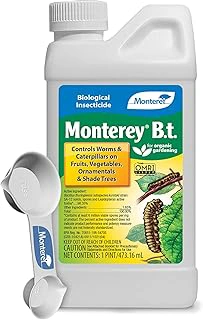
Monterey BT Bacillus Thuringiensis for Organic Worm and Caterpillar Control, 16 oz
This biological control specifically targets caterpillars and worms that chew through brassica leaves. The active ingredient is a naturally occurring bacteria that only affects caterpillars when they ingest it, making it one of the safest options for organic gardens.
Application is straightforward: mix with water and spray on leaves where you see damage. The bacteria need to be eaten to work, so thorough coverage matters. Imagine you spot small holes appearing in your cabbage leaves each morning—a few applications of this product will stop the problem at its source without harming beneficial insects or leaving residues you'd worry about at harvest time.
Reapplication after rain is necessary since the bacteria wash off. It works best on young caterpillars, so scout your plants regularly and spray at the first sign of damage rather than waiting for a major infestation.
- ✅ Highly effective against cabbage worms and loopers
- ✅ Safe for beneficial insects and pollinators
- ✅ OMRI listed for organic gardening
- ✅ No harmful residues on edible plants
- ⚠️ Only works on caterpillar pests
- ⚠️ Requires reapplication after rain
- ⚠️ Must be ingested to work, so complete coverage needed
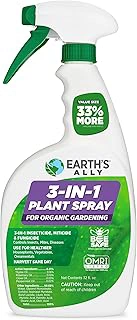
Earth's Ally 3-in-1 Plant Spray for Pests, Fungus & Spider Mites
This ready-to-use spray tackles multiple problems at once: soft-bodied insects, fungal issues, and mites. The formula uses plant-derived ingredients that work on contact, making it a versatile tool when you're dealing with mixed pest pressure on your brassicas.
The three-in-one approach saves time and shelf space. If your kale patch is dealing with both aphids and early signs of powdery mildew, you can address both issues with one product. The spray bottle comes ready to use—no mixing required, which beginners often appreciate.
Direct contact is essential for this product to work, so spray early morning or evening when pests are active. It breaks down quickly in sunlight, which means it's gentle on the environment but also means you'll need to reapply more frequently than some other options, especially during heavy infestations.
- ✅ Ready-to-use formula, no mixing needed
- ✅ Controls pests and fungal problems together
- ✅ Plant-based ingredients
- ✅ Works on multiple pest types
- ⚠️ Requires direct contact with pests
- ⚠️ Breaks down quickly in sunlight
- ⚠️ May need frequent reapplication
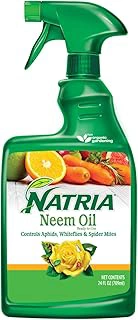
Natria Neem Oil Spray for Plant Pest and Disease Control
Neem oil offers both pest control and disease prevention, working through multiple mechanisms. It disrupts insect feeding and reproduction while also helping prevent fungal problems that can plague brassicas in humid conditions.
The preventative approach works well when integrated into your regular garden routine. Apply every 7-14 days during the growing season to create an inhospitable environment for pests before they become established. Picture your Brussels sprouts thriving through fall because you started neem applications early and maintained consistent coverage against aphids and flea beetles.
This product works slower than contact killers, so it's better for prevention than rescuing heavily infested plants. The oil can cause leaf burn in temperatures above 90°F, so time applications for cooler parts of the day. Some gardeners notice a mild odor that fades as the spray dries.
- ✅ Works on pests and fungal diseases
- ✅ Disrupts pest life cycles
- ✅ Good preventative treatment
- ✅ Widely available
- ⚠️ Can burn leaves in high heat
- ⚠️ Slower acting than contact killers
- ⚠️ Mild odor when first applied
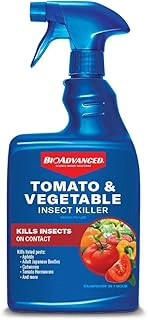
BioAdvanced Tomato & Vegetable Pest Control
This systemic option provides extended protection by being absorbed into the plant tissue. Once applied, it offers protection from the inside out for up to three months, defending against a broad spectrum of pests including aphids, beetles, and worms.
The long-lasting effect means fewer applications through the season. If you have a busy schedule or travel frequently, this approach provides continuous protection without constant reapplication. Imagine planting your cabbage transplants in spring and knowing they're protected through their vulnerable early weeks even when you can't inspect daily.
Because it's systemic, the product needs time to be absorbed before it works. Apply it early in the season or at transplanting for best results. Always observe the pre-harvest interval stated on the label to ensure the product has enough time to break down before you harvest your brassicas.
- ✅ Long-lasting protection up to 3 months
- ✅ Fewer applications needed
- ✅ Works on multiple pest types
- ✅ Convenient for busy schedules
- ⚠️ Requires waiting period before harvest
- ⚠️ Systemic action may not suit all organic preferences
- ⚠️ Less flexible for spot treatment