We may earn a commission when you buy through links on this page, at no extra cost to you. How this works.
Homesteaders, preppers, and bulk buyers face a common frustration: flour develops off flavors, beans attract pantry moths, and rice clumps from humidity before you can use half the bag. A mason jar vacuum sealer attachment pulls air and moisture out of the jar, creating an oxygen-poor environment that keeps dry goods fresh for months or even years longer than conventional storage.
Vacuum sealing stops oxidation that turns whole-grain flours rancid, blocks the tiny gaps where weevils and moths slip through jar threads, and prevents moisture from turning crisp oats into stale mush. For anyone buying fifty-pound sacks of staples or putting up a season's harvest, these attachments turn ordinary canning jars into reliable long-term pantry containers.
This guide covers four types of attachments that fit different workflows and budgets. Manual pump kits require no electricity and work anywhere, making them ideal for off-grid setups or occasional sealing. Cordless electric sealers speed up batch processing when you're repackaging twenty jars of rice at once. FoodSaver-compatible hose kits integrate with the chamber sealer you may already own for freezer bags. Budget-friendly all-in-one options combine the pump and lid hardware in a single low-cost package for newcomers testing the method.
Each approach creates the same vacuum inside the jar, but the tools differ in speed, portability, initial cost, and how much counter space or electrical access they demand. Choosing the right attachment means matching the tool to the volume you seal, the power sources available in your pantry or basement, and whether you value one-hand convenience or the lowest entry price.
Quick comparison
| Mason Jar Vacuum Sealer Kit with Manual Pump for Wide & Regular Mouth Jars | Check current price |
| FORJARS Jar Vacuum Sealer Accessory Set for Mason Jars, Cordless Pump, Plastic Lids | View kit details |
| Mason Jar Canning Sealer Kit with Hoses for FoodSaver, Wide & Regular Mouth Jars | Check fit details |
What to Look for in a Mason Jar Vacuum Sealer Attachment
- Wide and regular mouth compatibility - confirm the kit includes both sizes or matches your jar collection
- Standalone or accessory - decide if you need a complete kit or an attachment for an existing vacuum sealer
- Manual or electric - manual pumps cost less and need no power; electric models save time and effort
- Seal reliability - look for ratings above 4.0 and reviews mentioning consistent vacuum hold
- Included extras - some kits come with reusable plastic lids, extra gaskets, or storage bags
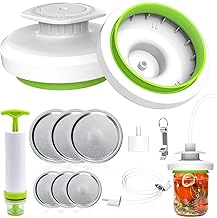
Mason Jar Vacuum Sealer Kit with Manual Pump for Wide & Regular Mouth Jars
Manual vacuum sealing offers complete independence from electricity and machines, and this kit delivers both wide-mouth and regular-mouth attachments for $17.99. The hand pump creates suction by pushing and pulling a simple piston mechanism, letting you seal dry goods - flour, rice, beans, oats - wherever you store them. Rated 4.4 out of 5, the kit earns praise for portability and simplicity.
Each attachment threads onto standard Ball or Kerr mason jar lids. Place the attachment over the flat lid (band removed), pump the handle until resistance increases, then twist the valve to lock the vacuum. The seal forms in seconds, and you'll feel the lid pull tight once air evacuates. Because no cord or battery is involved, you can seal jars in a pantry, root cellar, or barn without hunting for an outlet.
The tradeoff is effort. Sealing a dozen quart jars in one session demands repetitive pumping, and your forearm will notice. A single jar takes roughly the listed amount pumps depending on headspace and altitude. If you're preserving hundreds of pounds of grain each season, the manual work adds up quickly compared to electric or countertop vacuum sealers that cycle automatically.
This kit suits homesteaders who value gear that never needs charging, travelers who pack dry goods in the camper, and anyone testing vacuum sealing before investing in a motorized system. The included pair of attachments means you won't need separate purchases for wide and regular sizes, and the compact pump stores easily in a drawer or pantry bin. For off-grid or budget-conscious setups where reliability matters more than speed, manual pumping keeps your dry goods fresh without adding another appliance to the counter.
- ✅ Includes both wide and regular mouth attachments in one kit
- ✅ No electricity, batteries, or vacuum sealer machine required
- ✅ Compact and portable for use anywhere
- ✅ $17.99 price point
- ⚠️ Requires manual pumping effort - 15 to 25 pumps per jar
- ⚠️ Slower for sealing large batches compared to electric options
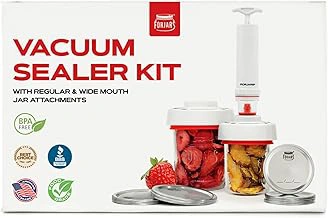
FORJARS Jar Vacuum Sealer Accessory Set for Mason Jars, Cordless Pump, Plastic Lids
Sealing dozens of jars by hand gets old fast, especially during harvest season when you're processing bushels of dried beans or flour. The FORJARS cordless electric pump reduces the repetitive pumping motion entirely, making it the fastest option for homesteaders who seal large batches on a regular basis.
This accessory set includes a rechargeable vacuum pump and plastic lids designed to fit standard mason jars. The cordless design means you can work anywhere in the kitchen without hunting for an outlet, and the electric motor pulls air out of each jar in seconds rather than the multiple pumps required by manual models. For anyone with arthritis, tendonitis, or reduced hand strength, that difference matters every single time you seal a jar.
At $29.95, the FORJARS set costs more upfront than manual pumps, but the tradeoff becomes worthwhile when you're sealing ten or twenty jars of rice, oats, or dried fruit in one afternoon. Rated 4.6 out of 5, users appreciate the consistent seal and the fact that the rechargeable battery holds enough charge to handle multiple sealing sessions before needing a top-up.
The plastic lids included with the pump are lighter than traditional metal bands and reduce the risk of rusting in humid storage areas. They also make it easier to identify which jars are vacuum-sealed at a glance, since the flat plastic tops look distinct from standard canning lids.
This setup works best for homesteaders who already have a rhythm for putting up dry goods and want to cut the physical effort from their routine. If you seal fewer than a dozen jars per month or prefer the simplicity of a tool with no battery to charge, a manual pump will serve you just as well for less money. But for frequent use or anyone who finds hand-pumping uncomfortable, the FORJARS cordless pump turns a tedious task into a quick one.
- ✅ Cordless rechargeable design works anywhere in the kitchen
- ✅ Eliminates manual pumping effort, ideal for large batches
- ✅ Includes plastic lids that fit standard mason jars
- ✅ Rated 4.6 out of 5 for consistent sealing performance
- ✅ Helpful for users with limited hand strength or joint discomfort
- ⚠️ Higher upfront cost at $29.95 compared to manual pumps
- ⚠️ Requires periodic recharging between sealing sessions
- ⚠️ More complex than a simple hand pump with no battery dependency
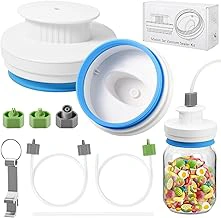
Mason Jar Canning Sealer Kit with Hoses for FoodSaver, Wide & Regular Mouth Jars
If you already own a FoodSaver or similar vacuum sealer with a hose port, this Mason Jar Canning Sealer Kit offers the most affordable way to add jar-sealing capability. Priced at $9.99 and rated 4.5 out of 5, the kit includes wide and regular mouth jar attachments plus the hose needed to connect them to your existing machine.
The two-lid design covers both standard and wide-mouth Ball and Kerr jars, so you can seal quart jars of flour or pint jars of dried beans without buying separate accessories. The hose attaches to the accessory port on your vacuum sealer, and the attachment sits on top of the jar lid during the sealing cycle.
The tradeoff is clear: this kit cannot work on its own. You need a compatible vacuum sealer machine with an accessory hose port, typically found on mid-range and higher FoodSaver models or similar brands. If you're starting from scratch and don't already own a vacuum sealer, a standalone manual or cordless option will cost less overall than buying both a machine and this accessory.
For homesteaders who already seal bags of meat or produce and want to extend that system to dry goods in jars, this kit delivers the functionality at the lowest price point. The hose connection provides consistent suction, and the dual-mouth compatibility means you won't need to sort your jars by size before sealing day.
This accessory works only if you already own a compatible FoodSaver or similar vacuum sealer with a hose port. If you don't have that equipment, consider one of the standalone manual or cordless sealers reviewed in this guide.
- ✅ Lowest price at $9.99 for existing FoodSaver owners
- ✅ Includes both wide and regular mouth jar attachments
- ✅ Works with mid-range and higher FoodSaver models with hose ports
- ⚠️ Requires an existing vacuum sealer machine with accessory port
- ⚠️ Not a standalone solution
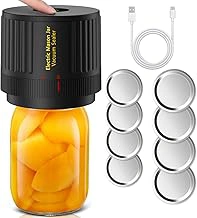
Electric Cordless Vacuum Sealer Kit for Wide & Regular Mouth Mason Jars, Black
The cordless electric vacuum sealer kit sits at $22.99 and fits both wide-mouth and regular-mouth mason jars without a separate bulky machine. A rechargeable battery powers the pump, so you can seal jars anywhere in your pantry or root cellar without hunting for an outlet. The 4.5-star rating reflects solid performance for most homestead storage tasks.
This black unit operates with a single button press. Place the lid loosely on your jar, set the sealer on top, and press start. In about multiple seconds, air evacuates and the vacuum seal engages. The automatic shut-off helps reduce the chance of over-extraction, which helps preserve the integrity of lighter dry goods like oats or flour. Battery life handles roughly the listed amount jars per charge, enough for a typical pantry restock session.
Wide and regular mouth compatibility reduces the need for separate attachments. The kit includes both gasket sizes in the package. Switching between jar types takes seconds - swap the internal gasket and continue sealing. This flexibility matters when storing a mix of bulk beans in wide-mouth quarts and smaller spice batches in regular pint jars.
Compared to the FORJARS option at a slightly lower price, this kit delivers similar extraction speed and battery endurance. The main difference comes down to brand availability and customer service responsiveness. For homesteaders who value a single, mid-priced tool that balances convenience and cost, this sealer covers most long-term dry goods storage needs without requiring a countertop appliance or manual pumping. Charge it overnight, and it stays ready for spontaneous harvest-season canning or bulk-buy transfers.
- ✅ Works with both wide-mouth and regular-mouth mason jars using included gaskets
- ✅ Rechargeable battery removes the need for a power outlet during sealing
- ✅ Automatic shut-off prevents over-extraction and protects delicate dry goods
- ✅ Handles 30 to 40 jars per charge for typical pantry batches
- ⚠️ Battery must be recharged between large sealing sessions
- ⚠️ Similar performance to slightly cheaper alternatives like FORJARS
How We Selected the Best Attachments
Choosing the right mason jar vacuum sealer attachment depends on whether you already own a vacuum sealer machine or need a standalone solution. We focused on compatibility with both wide-mouth and regular-mouth jars, since most homesteaders store dry goods in a mix of sizes. Seal reliability matters when you're preserving flour, beans, or rice for months at a time, so we looked for attachments that create consistent vacuum pressure without requiring multiple attempts.
Ease of use was a priority for beginners who may be new to vacuum sealing. Manual pump kits require no electricity and work anywhere, while cordless electric models speed up the process but add cost. FoodSaver-compatible accessory attachments plug into existing machines, which is convenient if you already vacuum seal other foods, but they won't work without the base unit.
Price ranges from under fifteen dollars for basic manual pumps to around fifty dollars for cordless electric sealers. We separated standalone systems - which include everything you need - from accessory attachments that require a FoodSaver or compatible machine. If you don't own a vacuum sealer yet, a standalone kit or cordless model will get you started without additional equipment.
Tips for Long-Term Dry Goods Storage with Your Sealer
Vacuum sealing mason jars slows oxidation and keeps pests out, but it works best when paired with a few basic storage habits that address moisture, light, and the chemistry of dry goods over time.
Oxygen absorbers are worth using inside jars of grains, beans, and rice before you seal. These small packets pull residual oxygen out of the headspace, which helps prevent rancidity in foods with natural oils and stops insect eggs from hatching. Place the absorber on top of the food, close the lid, and vacuum seal immediately so the packet activates inside the sealed environment.
Label every jar with the contents and the date you sealed it. Flour and oats may look identical six months later, and knowing when you packed something helps you rotate stock and use older jars first. A piece of masking tape and a permanent marker work as well as any pre-printed label.
Store sealed jars in a cool, dark spot where temperature stays stable. Pantry shelves away from the stove, a basement closet, or an interior cabinet all work well. Heat and light degrade nutrients and flavor faster than vacuum alone can offset, so location matters as much as the seal itself.
Check your seals once a month for the first three months, especially if you're new to vacuum sealing or trying a new attachment. Press the center of each lid; it should stay firm and concave. If a lid pops or feels loose, the vacuum has been lost - usually because of a small food particle on the rim or a lid that wasn't seated evenly. Simply wipe the rim, reseat the lid, and seal again.
Vacuum sealing extends shelf life measurably, but it doesn't replace the fundamentals of dry storage. Jars still need to be kept dry, away from temperature swings, and opened only when you're ready to use the contents. Treat the vacuum seal as one tool in a broader system, and your pantry staples will stay fresh far longer than they would in their original bags.
Frequently Asked Questions
Many beginners wonder if standard canning lids work with vacuum sealer attachments. They don't - vacuum sealing requires reusable plastic lids or sealer-compatible metal lids with a flat gasket surface that creates an airtight seal when air is removed. Traditional two-piece canning lids are designed for heat processing, not vacuum extraction.
Vacuum-sealed dry goods stored in mason jars typically last one to two years longer than unsealed storage, though exact shelf life depends on the product type, moisture content at sealing, and where you store the jars. Beans and rice tend to hold quality longer than flour or ground spices. Keep sealed jars in a cool, dark space for best results.
Oxygen absorbers are a smart addition for grains, flour, and beans. While the vacuum removes most air, small amounts of oxygen can remain in the jar and within the food itself. An oxygen absorber packet captures that residual oxygen, reducing oxidation and extending freshness further.
These attachments are not suitable for vacuum sealing liquids in jars. The pump or sealer pulls air through the lid, and liquids will be drawn into the hose or valve, damaging the device and preventing a proper seal. Stick to dry goods like pasta, dehydrated vegetables, coffee beans, and baking mixes.