We may earn a commission when you buy through links on this page, at no extra cost to you. How this works.
Manual grain mills give homesteaders the ability to grind fresh flour without relying on electricity or commercial processing. When you mill whole grains into flour minutes before baking, you preserve volatile oils, vitamins, and enzymes that oxidize quickly once the kernel is broken. Store-bought flour often sits for weeks or months after milling, losing flavor and nutrition along the way.
A hand-crank mill also means independence. Grid outages, power interruptions, or off-grid living arrangements won't stop you from turning wheat berries, rye, or spelt into usable flour. For homesteaders focused on food security and self-reliance, that reliability is worth the effort of grinding by hand.
Choosing the right mill depends on how much flour you grind each week, the types of grain you work with, and whether you prefer cast-iron burrs or stone. Cast-iron mills often produce finer, more consistent flour at a faster rate, while stone burrs handle oily seeds and softer grains without clogging. Durability also varies widely: some models use stamped parts that wear quickly under heavy use, while others feature machined components built to last decades.
This guide compares five manual mills that work offline, examining burr material, grind consistency, ease of adjustment, clamp stability, and how comfortably each one handles a twenty-pound weekly grind routine. The goal is to help you choose a mill that matches your volume, grain variety, and workspace without overspending on features you won't use.
Quick comparison
| Kitchen Crop Hand Crank Grain Mill with Stainless Steel Burrs | Check current price |
| Corona Manual Cast Iron Grain Mill with Hand Crank | Check current price |
| Handmade Stone Grain Mill with Red Oak Frame | Check current price |
Use the matching tool first
Start with Chicken Coop Space & Feed Calculator if you want to narrow the fit before checking current offers.
Tips for Using and Maintaining Your Manual Grain Mill
- Run a handful of rice through new mills to clear manufacturing dust before first use
- Start with a coarser setting and adjust finer gradually to avoid jamming
- Clamp or mount the mill securely to prevent shifting during cranking
- Clean burrs with a dry brush after each use; avoid water on stone burrs
- Store cast iron mills in a dry place and apply light food-grade oil to prevent rust
- Check bolts and screws monthly if you mill frequently
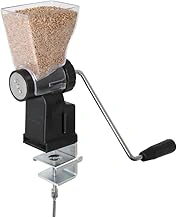
Kitchen Crop Hand Crank Grain Mill with Stainless Steel Burrs
The Kitchen Crop Hand Crank Grain Mill offers a practical balance of build quality and everyday versatility for homestead bakers who grind flour regularly. Stainless steel burrs resist rust and clean up more easily than cast iron, making this mill a reliable choice when you're milling wheat, spelt, or oats several times a week. At $75.99, it sits comfortably between budget cast-iron models and premium stone-burr grinders, giving you durable metal burrs without the jump to a much higher price.
The hand-crank design works entirely offline, so you can grind fresh flour whether the power is on or not. Stainless steel burrs handle a wide range of grains and adjust from coarse to fine, though you'll notice that very fine flour takes more time and effort than coarser grinds. The mill clamps to a countertop or table edge, and the crank provides steady leverage once you find a comfortable rhythm.
This model suits bakers who want consistent grind quality without spending extra for stone burrs or worrying about rust in humid climates. If you mill small batches daily or bake bread a few times a week, the combination of stainless burrs, mid-range cost, and straightforward operation makes this a dependable all-around option.
- ✅ Stainless steel burrs resist rust and clean easily
- ✅ Mid-range price at $75.99
- ✅ Hand-crank operation works entirely offline
- ✅ Adjustable grind from coarse to fine
- ⚠️ Very fine flour requires more cranking effort
- ⚠️ Clamp-style mount needs a sturdy table edge
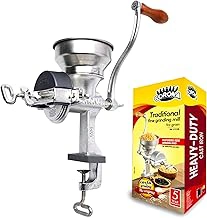
Corona Manual Cast Iron Grain Mill with Hand Crank
The Corona Manual Cast Iron Grain Mill offers an affordable starting point for homesteaders who want to experiment with fresh-ground flour without a steep upfront investment. At $49.99, this hand-crank mill uses cast iron burrs and a time-tested design that has been reliable for decades. The construction feels solid, and the clamp mount attaches to most table edges or countertops, making it easy to set up and use in any kitchen.
Cast iron burrs handle wheat, corn, and other grains, though the output tends toward a coarser texture compared to stone or steel-plate mills. You can adjust the grind by tightening or loosening the burr plates, but getting a true fine flour requires patience and sometimes multiple passes. The hand crank demands steady effort, especially with harder grains, so this mill works best for small batches rather than weekly baking for a large family.
Maintenance matters with cast iron. The burrs can develop surface rust if exposed to moisture or stored in a damp space, so wipe the mill dry after each use and apply a light coat of food-grade mineral oil if you plan to store it for a while. The simplicity of the design means few parts to break, and replacement burrs are available if wear becomes an issue over time.
This mill suits beginners testing the appeal of home milling, homesteaders on a tight budget, or anyone who grinds grain only occasionally. If you plan to produce fine flour regularly or process large volumes, the coarser grind and heavier cranking effort may become limiting. For occasional use and lower cost, the Corona delivers a functional tool that requires only elbow grease and basic upkeep.
Check current price if you're starting out and want to keep costs low.
- ✅ Lowest price point among manual grain mills
- ✅ Solid cast iron construction
- ✅ Simple clamp-on design fits most tables
- ✅ Proven design with decades of use
- ✅ Replacement burrs available
- ⚠️ Produces coarser flour than stone or steel mills
- ⚠️ Requires more effort to crank with harder grains
- ⚠️ Cast iron can rust without proper drying and maintenance
- ⚠️ Not ideal for large batches or frequent milling
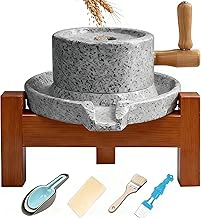
Handmade Stone Grain Mill with Red Oak Frame
When fine flour texture and heirloom craftsmanship matter more than budget, this handmade stone grain mill stands apart. Stone burrs grind cooler than metal, which helps preserve more of the grain's natural oils and flavor - a difference serious bakers notice in bread and pastry. The red oak frame brings both structural stability and a level of finish rarely seen in homestead tools, making this mill as much a kitchen fixture as a functional grinder.
At $150.44, this is the most expensive option in the lineup, but the investment reflects the materials and build quality. Stone burrs typically outlast steel plates and require less frequent adjustment, while the handcrafted hardwood frame can handle decades of regular use without flexing or cracking. The 5.0 rating suggests owners value the grind consistency and durability enough to justify the premium.
This mill suits bakers who grind multiple times per week, want the smoothest possible pastry flour, or simply prefer tools built to last a lifetime. If you mill occasionally or prioritize portability over finish quality, a lighter cast-iron model will serve you better. But for those ready to treat fresh milling as a permanent part of the kitchen routine, stone burrs and solid oak deliver results that stamped steel cannot match.
Check current price if fine flour and lasting quality are priorities.
- ✅ Stone burrs grind cooler and preserve grain oils better than metal
- ✅ Handmade red oak frame offers exceptional durability and aesthetics
- ✅ 5.0 rating reflects high owner satisfaction
- ✅ Stone burrs require less frequent adjustment over time
- ⚠️ Highest price in the comparison at $150.44
- ⚠️ Heavier and less portable than cast-iron models
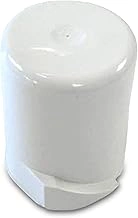
Wonder Mill Grain Mill Cyclo Cup
The Wonder Mill Grain Mill Cyclo Cup is an accessory designed to make small-batch grinding more compact and convenient. Priced at $13.99, this cup attachment fits hand-crank grain mills and turns them into space-saving setups when counter room is tight. It holds a modest volume of grain, so you'll refill more often during longer milling sessions, but the tradeoff is portability - this piece travels easily and tucks into a drawer or cabinet when not in use.
Homesteaders who grind only a cup or two of flour at a time, or who mill in a camper, RV, or rotation between kitchens, will appreciate the reduced footprint. The cup keeps feed grain close to the mill hopper without requiring a full-sized bin or funnel system. Because it's a small accessory rather than a standalone mill, your output speed and grind consistency still depend on the hand mill it pairs with, but the Cyclo Cup simplifies setup and cleanup for quick jobs.
This is not a solution for grinding five pounds of wheat in one session or for users who need continuous large-volume milling. It shines when you want to mill fresh flour on demand without dedicating permanent counter space or when you need a lightweight, packable option for off-grid travel. If you already own a compatible hand mill and storage or mobility limits your grinding routine, the Cyclo Cup removes one more barrier to milling your own flour wherever you are.
- ✅ Very affordable at $13.99
- ✅ Compact, portable design for travel or limited storage
- ✅ Simplifies small-batch milling setup and cleanup
- ⚠️ Small capacity requires frequent refills for larger batches
- ⚠️ Accessory only - requires compatible hand mill
- ⚠️ Not practical for continuous high-volume grinding
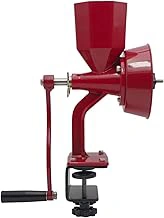
WONDERMILL Junior Deluxe Hand Crank Grain Mill with Stone & Steel Burrs
The WONDERMILL Junior Deluxe ships with both stone and steel burr sets, giving homesteaders one mill for different grinding tasks. Stone burrs suit soft wheat and pastry flour; steel handles harder grains, oil-rich seeds, and nut butters without absorbing oils or losing edge retention. Swapping burrs takes a few minutes, and the hopper and adjustment dial remain compatible with either set.
At $329.95, this sits at the premium end of manual mills, but the dual-burr system reduces the need to buy a second dedicated unit later. The die-cast metal housing and clamp base offer stability under load, and the crank arm provides enough leverage for steady grinding without excessive fatigue. Flour texture adjusts from coarse meal to fine pastry consistency, though ultra-fine powder still requires patient, slow cranking with stone burrs.
This mill makes sense for homesteaders who process varied grains - wheat berries one day, oat groats or sunflower seeds the next - and prefer a single tool that adapts rather than a specialized fleet. If you grind only one grain type regularly or work within a tighter budget, simpler single-burr designs will meet your needs without the extra cost. For those who value flexibility and plan to experiment with sprouted grains, legumes, or homemade nut butters, the WONDERMILL Junior Deluxe justifies the investment through sheer range of use.
- ✅ Includes both stone and steel burr sets for different grain types and tasks
- ✅ Stone burrs suit pastry flour; steel handles hard grains and nut butters
- ✅ Die-cast housing and clamp base provide stable grinding platform
- ✅ Adjusts from coarse meal to fine flour
- ⚠️ $329.95 price point is the highest among manual grain mills
- ⚠️ Burr swaps add a step when changing grain types
- ⚠️ Ultra-fine flour requires slow, patient cranking
What to Look for When Choosing a Manual Grain Mill
Burr material shapes how your mill grinds and how long it lasts. Stone burrs - usually corundum or granite - run cooler and preserve more nutrients in low-speed grinding, but they're heavier and can chip if a pebble slips through. Stainless steel burrs handle any grain, tolerate occasional debris better, and weigh less, though they may generate slightly more heat at high speed. If you mill soft wheat and corn daily, stone works well; if you grind everything from spelt to rice and want lighter cleanup, steel is the safer bet.
Grind adjustment range determines whether you can produce both coarse cracked grain for porridge and fine pastry flour from the same mill. Look for continuous, tool-free adjustment - some budget models offer only two or three fixed settings, which limits versatility. A wide range also lets you dial in the texture for different recipes without multiple passes.
Build quality and durability matter when you're cranking hundreds of grams by hand. Cast iron or machined aluminum frames outlast plastic housings, and sealed bearings reduce wobble over time. Check whether the hopper, burr chamber, and crank handle are replaceable; a mill that lets you swap worn parts can run for decades.
Ease of cranking depends on gear ratio, burr diameter, and bearing smoothness. Larger burrs and lower gear ratios make each turn easier but require more rotations per cup of flour. If you're milling for a family, a model with a 4:1 or 5:1 ratio and a long handle reduces fatigue. Smaller, high-ratio mills crank faster but demand more effort, which becomes tiring during big batches.
Capacity and clamp style affect workflow. A tall hopper holds more grain, so you refill less often, but adds weight and height. Table-clamp models stay portable and store flat; bolt-mount or countertop bases offer more stability for heavy milling sessions. Match the mount to your counter thickness and whether you plan to leave the mill out or pack it away.
Price reflects materials and precision, not just brand. Entry-level cast iron mills start around forty dollars and handle weekly baking; mid-range stainless models with fine adjustment run sixty to one hundred; premium stone-burr mills with machined frames and lifetime parts support cost two hundred or more. Decide how much flour you'll grind each month, then choose the least expensive mill that meets your burr preference, adjustment needs, and durability expectations.
Comparing Burr Materials: Stone vs. Stainless Steel
The burr material inside your mill determines how the grain is crushed, the heat generated during grinding, and how easy maintenance will be over time. Most homestead mills use either stone burrs or stainless steel burrs, and each brings distinct advantages depending on what you grind most often.
Stone burrs grind at a cooler temperature because they generate less friction, which helps preserve more of the grain's natural oils and nutrients. They excel at producing very fine flour with a soft, silky texture that works well for bread, pastry, and cake baking. Stone also handles dry grains like wheat, spelt, and rye with minimal dust. The trade-off is that stone burrs can clog or become damaged when grinding oily seeds such as flax or attempting to make nut butters, and they require more careful cleaning to prevent flavor transfer between different grains.
Stainless steel burrs are more versatile and durable. They can handle oily grains, dried corn, and even small amounts of nuts without concern for clogging or cracking. Steel burrs are easier to clean - most can be wiped down or rinsed without worrying about moisture absorption - and they hold up well to frequent use and accidental debris like small stones. The downside is that steel generates slightly more heat during extended grinding sessions, which may affect very delicate grains, and achieving a superfine pastry flour texture can take more passes or finer adjustment.
If you plan to grind mostly wheat for bread and want the finest possible flour in a single pass, stone burrs are the better fit. If your homestead diet includes cornmeal, oat flour, and occasional flaxseed, or if you value low-maintenance equipment that tolerates mistakes, stainless steel offers more flexibility and longevity.
How Much Flour Can You Expect to Grind by Hand?
Manual grain mills typically grind between one and three cups of flour in ten minutes, depending on the burr material, grain hardness, and how fast you can sustain a comfortable cranking rhythm. A cast-iron burr mill working through soft wheat might deliver two cups in eight minutes with steady effort, while a steel-burr model grinding dense spelt or corn can slow to one cup per ten minutes as resistance climbs.
Arm fatigue becomes the limiting factor long before the mill itself gives out. Most people find that fifteen minutes of continuous cranking is the practical ceiling for a single session, which translates to roughly two to four cups of flour - enough for a double batch of pancakes or one large loaf of bread. Planning around these limits means milling fresh flour the morning you bake rather than grinding a week's supply at once, unless you split the work across multiple people or sessions.
Coarser grinds move faster because the burrs bite through grain with less resistance, so cracked wheat for porridge or polenta-grade cornmeal can double your output compared to fine pastry flour. Stone burr mills generally require more force than steel burrs at ultra-fine settings but maintain a smoother, more predictable resistance curve as you crank. If your weekly routine includes two or three baking days, milling four cups per session keeps the task manageable without turning it into an endurance event.
Batch size also hinges on grain moisture and how aggressively you tighten the burr gap. Drier grains flow through the hopper cleanly and grind faster, while higher-moisture wheat can clump and slow the process. Adjusting expectations to match your physical stamina and the mill's mechanical leverage makes hand-grinding a sustainable kitchen habit rather than a occasional novelty.
Which Grains Work Best in Manual Mills?
Hard wheat berries, spelt, and rye grind cleanly in nearly any manual mill because they're dry, moderately hard, and release minimal oil during milling. Soft wheat and barley also work well, though soft wheat sometimes clumps if ambient humidity is high. Oats can be milled for flour, but their fibrous hulls produce a coarser result even at fine settings, so expect texture similar to oat bran unless you sift afterward.
Oily seeds like flax, sesame, and sunflower require steel burrs. Stone burrs clog when oils coat the grinding surfaces, which reduces performance and makes cleaning difficult. If your mill has composite or stone burrs, reserve it for low-oil grains and use a separate grinder for oilseeds.
Corn mills predictably in most manual burrs, but popcorn kernels are harder than dent corn and may require slower cranking to avoid stress. Rice is glassy and brittle; it grinds fine in steel burrs but can chip softer stone, so check your manufacturer's guidance before milling rice regularly. Quinoa, millet, and buckwheat are small and moderately hard, milling without issue in all burr types as long as settings start coarse to avoid jamming.
Never grind wet, soaked, or sprouted grains. Moisture creates paste that binds burrs, and sprouted grains introduce sugars that harden into residue difficult to remove. If you want to mill sprouted grain, dehydrate it completely first. Coffee beans, though dry, are extremely oily and should never touch grain-mill burrs unless the manufacturer explicitly lists coffee as compatible.
Matching grain to burr type - stone for dry cereal grains, steel for harder or oily tasks - extends mill life and keeps performance consistent. When in doubt, consult your mill's manual or start with a small test batch at a coarse setting.
Frequently Asked Questions About Manual Grain Mills
Switching to a hand-crank grain mill raises plenty of practical questions, especially if you've only used store-bought flour or electric appliances. Below are answers to the most common concerns homesteaders ask before making the leap.
Can I grind oats and other grains besides wheat?
Most manual mills handle soft grains like oats, barley, and rye without issue. Oats grind into flour or flakes depending on your burr setting, though they produce more chaff than wheat. Hard grains such as corn and dry beans work in mills with steel burrs, but avoid oily seeds like flax or sunflower unless your mill explicitly supports them - oil can gum up the grinding surfaces and reduce performance over time.
How long do burrs or grinding plates last?
Steel burrs typically last decades with regular use, especially when you avoid rocks or debris in your grain. Stone burrs can wear more slowly if dressed occasionally, but expect a lifespan measured in years rather than months. Cast-iron plates may show surface pitting after heavy use, yet most remain functional unless cracked. Replacing burrs is straightforward on modular designs and rarely needed on quality mills within the first ten years.
Do I need to sift the flour after grinding?
That depends on your recipe and burr setting. Fine settings on steel or stone mills produce flour that needs no sifting for most bread and pancake batches. Coarser settings leave larger bran pieces, which some bakers sift out for pastry or cake flour. Cast-iron mills with wider tolerance may benefit from a quick sift if you want uniform texture, but many homestead recipes work fine with whole-grain flour straight from the hopper.
Is hand-grinding really worth the effort compared to store flour?
Hand-milling takes more time and muscle than opening a bag, but fresh flour offers flavor and nutrition that degrade within days of commercial milling. If you bake weekly, value off-grid capability, or want control over grain variety and freshness, the effort pays off in taste and shelf stability of whole kernels. For occasional bakers or those without storage space for bulk grain, the trade-off may feel less compelling.
Can kids help crank the mill?
Children old enough to turn a steady crank - usually around age eight or nine - can take shifts on lighter mills with smooth gearing. Clamp-style mills stay secure on a counter edge, and slower cranking at coarser settings reduces resistance. Supervise to keep fingers clear of the hopper and burr housing, and avoid asking young helpers to grind hard corn or large batches that require sustained force. Sharing the task makes milling faster and turns flour production into a hands-on learning activity.
Choosing the Right Mill for Your Homestead
Matching a manual grain mill to your homestead setup comes down to three core tradeoffs: budget versus grind quality, portability versus capacity, and ease of use versus grain versatility.
If you grind wheat for weekly bread baking and have counter space to spare, a larger cast-iron or steel-burr model will handle higher volume with less effort per batch. For occasional grinding or small-batch experimentation with different grains, a compact mill with adjustable settings gives you flexibility without monopolizing shelf space.
Budget matters, but so does durability. Cast-iron mills cost less upfront and work well for soft wheat; stone-burr mills command a premium but deliver cooler, finer flour and handle oily seeds without clogging. Steel burrs sit in the middle, balancing speed and longevity.
Consider how often you'll actually use the mill. Daily bakers benefit from smooth cranking action and wide hopper capacity. Weekend bakers can tolerate slower grind speeds if it means a lighter, easier-to-store unit.
Storage and mounting also shape the decision. Clamp-on mills free up counter space but require a sturdy table edge. Freestanding models need dedicated shelf room but move between kitchens or outdoor setups more easily.
Any manual mill on this list will produce fresh flour and reduce your reliance on store-bought grain products. The right choice is the one that fits your baking rhythm, available space, and the types of grain you plan to grind most often.