We may earn a commission when you buy through links on this page, at no extra cost to you. How this works.
Anyone who rotates livestock through pasture or reconfigures paddocks knows the reality: pulling T-posts by hand is slow, hard on your back, and often leaves you wrestling with posts stuck deep in clay or rocky soil. A reliable T-post puller turns that struggle into a manageable task, letting you move fence lines quickly without straining yourself or damaging the posts.
For homesteaders running rotational grazing systems or adjusting electric netting setups, the right puller matters. A flimsy tool bends under load or slips off the post mid-pull. A good one grips securely, multiplies your leverage, and handles uneven ground without requiring perfect footing. The difference shows up in how fast you finish the job and whether you can reuse your posts season after season.
In this guide, we're comparing five heavy-duty T-post pullers across different price points and design approaches. Some use simple leverage arms, others add gripping jaws or foot platforms for extra force. Each has tradeoffs in portability, durability, and how much effort you'll spend per post. We'll walk through what makes each tool useful so you can match the right design to your soil conditions, fence scale, and budget.
Quick comparison
| VEVOR 32 in Heavy-Duty T-Post Puller with Lifting Chain | Check current price |
| 36 in Heavy-Duty T-Post Puller for Fence Posts | Check current price |
| Upgraded Fence Post Puller Tool, Heavy-Duty Removal Remover with 304 Steel Chain & Cable – Works with Any Jack/Lever to Extract 4x4, Metal, or Concrete-Set Posts for Farm, Residential & DIY Use | Check current price |
How We Chose These T-Post Pullers
Choosing a T-post puller that actually works when you need it most means looking past marketing claims and focusing on mechanical advantage, material durability, and real-world usability. We evaluated these five tools based on leverage design - how efficiently each converts your effort into pulling force - and construction quality, including steel gauge, weld integrity, and handle materials that resist bending under load.
User ratings and feedback from homesteaders, ranchers, and weekend fence movers helped us identify which designs consistently perform in clay, rocky soil, and dry hardpan without requiring excessive strength or technique. We also considered price range to include options for both occasional users and those pulling dozens of posts weekly.
Every puller on this list can handle standard 5- to 7-foot T-posts driven 18 to 24 inches deep, which covers the majority of pasture and garden fence applications. We prioritized tools that beginners can operate safely without a steep learning curve, yet deliver enough mechanical advantage to extract posts that have been in the ground for years. Soil conditions vary widely - sandy loam releases posts easily, while compacted clay and caliche demand tools with superior leverage and grip - so we noted which designs excel in specific scenarios and which offer the most versatility across different ground types.
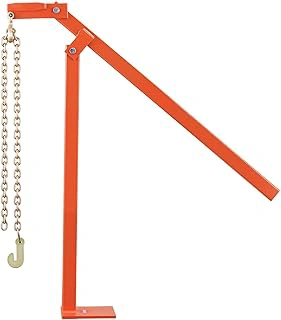
VEVOR 32 in Heavy-Duty T-Post Puller with Lifting Chain
The VEVOR 32 in Heavy-Duty T-Post Puller with Lifting Chain strikes a practical balance between reach and control, making it a solid choice for homesteaders who rotate pasture fences or rebuild paddocks each season. At $48.90, it sits in a comfortable middle ground where you gain real leverage without paying for features you may not need.
The 32-inch handle length gives you enough mechanical advantage to pull posts from compacted soil without requiring excessive body weight or awkward positioning. Shorter pullers force you to crouch or lean harder; longer ones can feel unwieldy in tight spaces along a fence line. This length works well when you're standing upright and can use your natural posture to apply steady pressure.
The lifting chain attachment adds a layer of stability that simpler hook designs lack. When the chain wraps around the post, it distributes force more evenly and reduces the chance of the tool slipping mid-pull, especially when dealing with older posts that may have surface rust or minor bends. You spend less time repositioning and more time making progress down the fence row.
With a 4.9 out of 5 rating, users report consistent performance across different soil types - clay, loam, and moderately rocky ground. The tool handles the routine work of moving posts set the listed size deep without drama. It's not designed for commercial operations pulling hundreds of posts weekly, but for homestead-scale projects - expanding a goat pen, shifting a chicken tractor lane, or reconfiguring rotational grazing - it holds up season after season.
The construction feels appropriate for the price. The steel is thick enough to resist bending under normal pulling forces, and welds appear solid at stress points. You won't worry about failure mid-task, but you also won't mistake this for industrial equipment. Keep it dry between uses, and it will serve you well through years of fence adjustments.
If you need a dependable t-post puller that covers most homestead scenarios without overthinking the purchase, this VEVOR model delivers reliable leverage and a user-friendly chain system at a fair price.
Check current price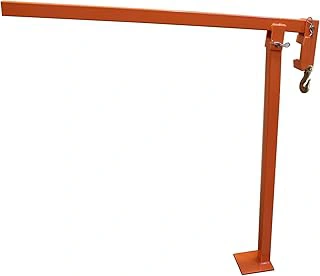
36 in Heavy-Duty T-Post Puller for Fence Posts
Clay and compacted soil require more leverage than standard-length pullers can deliver. This 36-inch model extends your mechanical advantage, letting you extract posts driven deep into hard ground without the repeated jerking that wears you out and risks bending the post.
At $55.99, you're paying roughly fifteen dollars more than compact alternatives, but the extra handle length translates directly into easier pulls when soil conditions fight back. The 4.6 out of 5 rating reflects consistent performance across varied terrain, though the added length does make storage and transport slightly less convenient if you're moving between small paddocks.
The longer handle matters most when you're repositioning perimeter fencing in clay, caliche, or rocky ground where posts seat firmly after a season. If your soil drains well and stays loose, or if you're working in tight spaces near gates and corners, a shorter puller will feel more maneuverable. For homesteads where hard-packed soil is the norm rather than the exception, the extra reach reduces fatigue over a day spent relocating fence lines.
Worth the extra length if you're dealing with clay or rocky ground and plan to move posts more than once or twice a year.
- ✅ 36-inch length provides greater leverage in compacted soil
- ✅ Reduces fatigue when pulling multiple posts in hard ground
- ✅ Solid 4.6/5 rating indicates reliable performance
- ⚠️ Less maneuverable in tight spaces than shorter models
- ⚠️ Bulkier for storage and transport between paddocks
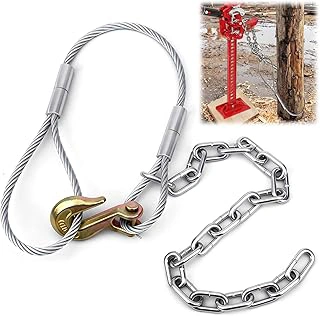
Upgraded Fence Post Puller Tool, Heavy-Duty Removal Remover with 304 Steel Chain & Cable – Works with Any Jack/Lever to Extract 4x4, Metal, or Concrete-Set Posts for Farm, Residential & DIY Use
If you already own a farm jack or bottle jack, this attachment-style puller lets you turn that equipment into a post-removal tool without buying a complete second system. Priced at $37.99, it pairs a 304 stainless steel chain and cable with a design that clamps to t-posts, 4×4 wooden posts, and even concrete-set posts, making it one of the more flexible options when you need to handle multiple fence types on the same property.
The tool carries a 5.0 rating, and its appeal is straightforward: you supply the jack, and the puller supplies the grip. The chain wraps around the post, and the cable connects to your jack's lifting mechanism. Because you control the jack, you can adjust leverage and speed to match soil conditions - slow and steady in clay, quicker in sand. That flexibility is useful when posts vary in depth or stubbornness.
The trade-off is the extra step. You need a compatible jack on hand, and setup takes a minute or two longer than grabbing an all-in-one tool. If you're pulling a long fence line, that adds up. But for homesteaders who already use a farm jack for other tasks - vehicle recovery, equipment lifting, gate repair - this approach avoids redundancy and keeps your tool shed lighter.
The stainless steel chain resists rust better than plain steel, a real advantage if the puller lives in a barn or truck bed through wet seasons. The tool handles both round metal posts and square wooden posts without requiring adapter pieces, so you're not hunting for fittings mid-project. For mixed fencing - say, t-posts in the paddock and treated 4×4s around the garden - that versatility pays off.
Great if you already have a farm jack and want one tool for multiple post types. If you're starting from scratch and need to pull only t-posts, a dedicated puller with built-in leverage might be simpler. But for budget-conscious setups where a jack is already part of the inventory, this attachment turns a single piece of equipment into a multi-purpose removal system.
- ✅ Works with farm jacks or bottle jacks you may already own
- ✅ 304 stainless steel chain resists rust in outdoor storage
- ✅ Handles t-posts, wooden 4×4 posts, and concrete-set posts
- ✅ Budget-friendly at $37.99
- ✅ Perfect 5.0 rating
- ⚠️ Requires a separate jack, not included
- ⚠️ Setup takes longer than all-in-one pullers
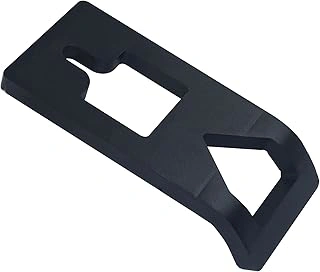
Heavy-Duty Steel T-Post Puller Plate Tool
At $19.99, this simple steel plate design offers a low-risk way to test whether rotational grazing will work on your property before committing to a more expensive tool. The plate-style puller works by threading the post through the slot and using the plate itself as a fulcrum against the ground - no long lever arm to multiply your force. That means you'll rely more on upper-body strength and leverage from your stance, which works fine in sandy or loamy soil but becomes a workout in clay or compacted ground.
The 4.7/5 rating reflects what this tool does well: it pulls posts without bending them, fits easily in a bucket or behind the truck seat, and handles light-duty fence moves where you're repositioning a dozen posts once or twice a season. If you're only shifting a paddock boundary on flat pasture with cooperative soil, the plate design gets the job done without the weight or bulk of a full-length lever model.
Where it struggles is repetitive use or challenging conditions. Posts driven deep into rocky soil or set for multiple seasons will require more effort than a lever-style puller, and you'll feel it in your back and shoulders after the fifth or sixth post. The compact design also means less mechanical advantage - you're trading convenience for pulling power. If you know you'll be moving fence weekly or working hard clay, budget for a lever model from the start. But for occasional moves, softer soil, or testing rotational grazing before you invest in permanent infrastructure, this plate tool handles the basics without demanding a big upfront cost.
- ✅ Entry-level price at $19.99 makes it easy to try rotational grazing
- ✅ Compact plate design stores easily in a truck or toolbox
- ✅ Works well in sandy or loamy soil with minimal effort
- ✅ Pulls posts without bending when used within its limits
- ⚠️ Plate design offers less mechanical advantage than lever models
- ⚠️ Requires more upper-body strength in clay or compacted soil
- ⚠️ Not ideal for repetitive use or posts set deep for multiple seasons
- ⚠️ Limited pulling power compared to full-length lever tools
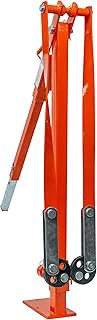
PostJak 36 in Heavy-Duty Manual Post Puller – Cement Stake Puller – T-Post & Sign Post Removal Tool – Fence Post Remover with Telescoping Handle for Extra Leverage
The PostJak 36 in Heavy-Duty Manual Post Puller carries a $298.00 price tag, which places it well above budget models but reflects its commercial-grade construction and telescoping handle design. This tool extends the principle of leverage further than fixed-handle pullers, letting you generate more force without relying solely on upper-body strength. The telescoping feature also means you can adjust working height to match different post types and soil conditions, which matters when you're pulling dozens of posts across varied terrain.
One standout feature is the cement stake capability. Many T-post pullers struggle with posts set in concrete or hard-packed clay, but the PostJak's reinforced jaw and extended leverage handle those tougher extraction jobs. If you manage a large homestead with a mix of temporary pasture fencing and permanent infrastructure, this versatility saves you from needing multiple specialized tools.
The perfect 5.0 rating reflects consistent performance, though the small review pool means you should weigh this alongside the price. For context, $298.00 is roughly the cost of hiring help for a half-day of fence work in many rural areas. If you pull posts several times each season - rotational grazing setups, temporary paddocks, or annual fence repairs - the tool pays for itself by eliminating repeat labor costs and reducing the physical strain that can lead to back or shoulder issues over time.
The tradeoff is straightforward: this is not a casual-use purchase. If you move fence lines once or twice a year, a simpler jack-style puller will handle the job at a fraction of the cost. But for homesteaders managing multiple+ acres with regular pasture rotation or dealing with old cemented posts from previous owners, the PostJak's combination of leverage, durability, and cement-stake capability makes it a practical long-term investment rather than an extravagance.
- ✅ Telescoping handle provides adjustable leverage for varied post types
- ✅ Handles cement stakes and posts set in hard-packed soil
- ✅ Reduces physical strain during high-volume post removal
- ⚠️ $298.00 price makes it a significant upfront investment
- ⚠️ Overkill for homesteads with infrequent fence work
What to Look for in a Heavy-Duty T-Post Puller
Choosing a t-post puller that matches your fence-line terrain and workload makes the difference between a quick afternoon and a frustrating battle with stubborn posts. Lever length controls how much force you can apply without straining - longer handles multiply your lifting power, but they also add weight and require more clearance around the post. For dense clay or rocky ground, a 48-inch lever arm often provides the mechanical advantage needed to break suction and pivot posts free without excessive effort.
Chain designs grip the post at multiple points and adjust to various diameters, including damaged or rusted posts that have lost their original profile. Plate-style clamps lock onto clean posts quickly but may slip on corroded studs or if the lifting angle shifts mid-pull. If you rotate pastures frequently or work alone, a chain system offers more forgiveness when posts sit at odd angles or have bent flanges.
Handle comfort becomes critical during long days moving fence sections. Rubberized grips reduce hand fatigue and improve control in wet conditions, while bare steel handles can cause blisters after the first dozen posts. Weight and portability trade off directly with durability - an all-steel puller built from half-inch plate will outlast lighter options but adds pounds when you're walking fence lines. For occasional use or shorter runs, a mid-weight tool around eight to ten pounds balances strength and ease of transport.
Build materials determine longevity in weather exposure. Powder-coated or galvanized steel resists rust when tools are stored outdoors or used in dewy morning conditions, while raw steel requires oil and indoor storage to prevent corrosion. Welded joints should show clean, full-penetration beads without gaps - weak welds fail under load and leave you with a bent lever or cracked clamp. Inspect pivot points and chain attachment hardware for thick construction and smooth movement before committing to a puller that will see years of seasonal use.
Matching Your T-Post Puller to Your Situation
- Light duty (under 20 posts per season): Plate-style puller is often enough
- Regular rotation (weekly or monthly moves): Invest in a lever-action model
- Clay or rocky soil: Choose 36-inch length for better leverage
- Multiple post types (wood, metal, concrete): Get a jack-compatible attachment
- Large acreage (100+ posts): Consider professional-grade with telescoping handle
- Physical limitations: Prioritize mechanical advantage over manual strength
Frequently Asked Questions About T-Post Pullers
Can you pull T-posts by hand without a tool? Technically yes, but expect slow progress and serious strain on your back and grip. Posts driven deeper than 18 inches or sitting in clay soil often refuse to budge without leverage, and twisting them by hand risks injury when they suddenly break free.
Do you need different pullers for different post sizes? Most heavy-duty models handle standard 5- to 6-foot T-posts without adjustment. If you work with taller posts or U-posts, check the jaw opening and handle length - some designs max out around 6.5 feet of post height, while others adjust to grip wider profiles.
How does a lever-action puller actually work? You clamp the jaws onto the post near ground level, then push or pull the handle to multiply your effort through mechanical advantage. The fulcrum near the base converts a small input force into enough lifting power to overcome soil friction and suction, letting you walk the post out in stages rather than yanking it all at once.
What if a post is set in concrete or compacted gravel? Standard pullers struggle when the anchor extends below the frost line or when concrete has cured around the base. In those cases, you may need to dig around the footing first or switch to a farm jack with a chain setup, though that introduces tipping hazards and takes more time.
How much effort do these tools actually save? A good lever puller can reduce the force you apply by a factor of ten or more, turning a 200-pound pull into a manageable 20-pound push on the handle. The exact ratio depends on handle length and jaw placement, but even compact models cut the work enough that one person can handle posts that would otherwise require two people and a truck.
Making Fence Work Less of a Battle
Choosing the right t-post puller turns fence rotation from a dreaded afternoon into a task you can handle without calling for backup. The right match depends on how many posts you pull in a season, the soil you're working with, and whether you need portability or maximum leverage. A compact lever puller suits occasional moves and tight spaces, while a floor-mounted jack handles volume work without wearing you down.
The upfront cost of a solid puller pays back quickly in saved time and reduced strain on your back and shoulders. Pulling a dozen posts by hand with a pry bar might take an hour and leave you sore; the same job with a good puller often finishes in fifteen minutes with far less effort. For homesteaders who rotate pastures regularly or adjust fence lines as herds grow, that difference compounds across the season.
Match the tool to your actual workload rather than buying more capacity than you need or settling for something that will struggle halfway through the job. If you pull thirty posts twice a year, a mid-range lever model will serve you well. If you're moving hundreds of posts or working clay and rock, invest in a jack with enough lifting height and stability to handle the toughest pulls without frustration.