We may earn a commission when you buy through links on this page, at no extra cost to you. How this works.
This guide is for homesteaders weighing whether a pressure canner is a smart addition to your food preservation toolkit. If you want to safely preserve low-acid foods like meat, beans, corn, or broth, a pressure canner is the only home method that reaches the temperatures necessary to kill harmful bacteria.
Water bath canning works beautifully for high-acid foods like tomatoes, pickles, and jams, but it can't reach the heat needed for vegetables, stocks, or meat. That's where pressure canning steps in. You'll learn what sets it apart, when the investment makes sense, and which canners align with different homestead needs and budgets.
Expect honest talk about cost, storage, and the learning curve, plus verified product options to help you choose confidently.
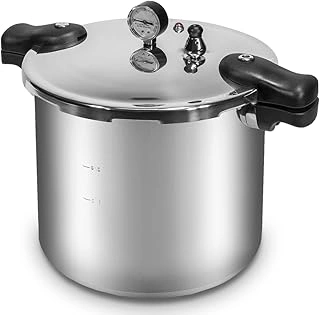
Barton 22-Quart Pressure Canner and Cooker
This model offers a practical entry point for homesteaders working with a tighter budget. At twenty-two quarts, it accommodates seven quart jars or smaller batches of pints, which works well for families processing modest harvests or testing the waters with pressure canning.
The gauge helps you monitor pressure, and the straightforward design means fewer parts to troubleshoot. Imagine you've just harvested your first serious crop of green beans. You can load this canner, follow a tested recipe, and preserve enough for winter without feeling overwhelmed by size or complexity.
It also functions as a pressure cooker, so if canning season is light, you can use it for faster meal prep. The aluminum construction keeps weight manageable, though you'll want to handle it carefully to avoid dents.
This canner suits someone who wants to start pressure canning without a large upfront expense, or a homesteader with a smaller household who doesn't need to process dozens of jars at once.
- ✅ Affordable entry-level price
- ✅ Dual purpose as pressure cooker
- ✅ Manageable size for beginners
- ⚠️ Smaller capacity limits batch size
- ⚠️ Aluminum requires gentle handling
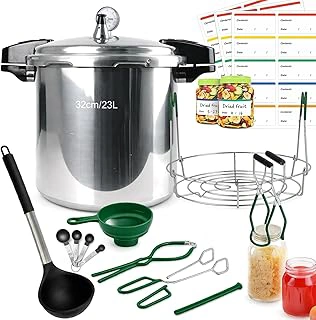
24 Quart Aluminum Pressure Canner with Gauge & 9-Piece Canning Starter Kit
This option bundles everything you need to start canning in one package. The twenty-four-quart capacity lets you process up to seven quart jars or more pints, and the included nine-piece kit means you won't need to hunt down jar lifters, funnels, or other essentials separately.
For a new homesteader who doesn't already own canning tools, this setup removes guesswork. Picture yourself after a big harvest day: you open the box, set up the canner, and have every tool ready to go. No extra shopping trips.
The gauge provides clear pressure readings, and the aluminum body keeps the overall weight reasonable. The bundled accessories add real value if you're outfitting your kitchen from scratch.
This canner fits homesteaders who want a complete starter system and appreciate the convenience of a kit. It's also a solid match for anyone processing medium batches and who values having the right tools on hand from day one.
- ✅ Complete starter kit included
- ✅ Good capacity for medium batches
- ✅ No need to buy accessories separately
- ⚠️ Higher upfront cost than basic models
- ⚠️ Kit tools may duplicate what experienced canners already own
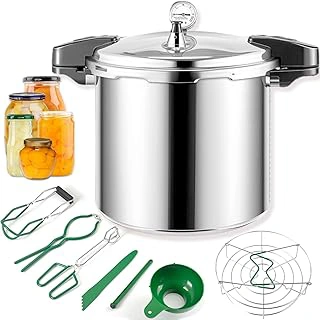
KILOGORGE 24qt Pressure Canner and Cooker with Gauge
This twenty-four-quart model delivers solid capacity at a competitive price. It handles the same seven-quart-jar load as similar-sized canners, making it suitable for homesteaders who regularly put up vegetables, beans, or meat in larger batches.
The dial gauge gives you clear pressure feedback, and the aluminum construction keeps the unit light enough to move without strain. Say you're processing a bushel of corn: you can fill the canner, monitor pressure easily, and work through multiple loads in a day without fighting a heavy pot.
It doubles as a pressure cooker, so you get utility beyond canning season. The straightforward design means fewer bells and whistles, which some homesteaders prefer for reliability and ease of maintenance.
This canner makes sense if you need mid-range capacity, want a versatile tool that works for both canning and cooking, and prefer a simple, no-fuss setup that won't break the bank.
- ✅ Good batch capacity for the price
- ✅ Dual-purpose design
- ✅ Lightweight aluminum build
- ⚠️ No bundled accessories
- ⚠️ Mid-tier features without standout extras
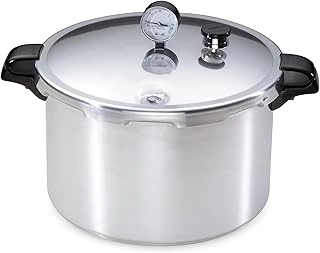
Presto 01755 16-Quart Aluminum Canner Pressure Cooker
This sixteen-quart option is smaller by design, but it brings proven reliability and a strong reputation. It handles seven pint jars or four quart jars, which works well for compact kitchens, smaller households, or homesteaders who prefer frequent small batches over marathon canning sessions.
The gauge is easy to read, and the build quality reflects decades of refinement. Imagine you're new to pressure canning and want to start cautiously: a smaller load feels less intimidating, and the lighter weight makes handling simpler while you build confidence.
It also serves as a pressure cooker, so you get year-round use. The smaller footprint means easier storage, which matters if your homestead kitchen is tight on space.
Choose this canner if you value a trusted brand, don't need to process large batches, or want a more manageable size that still delivers safe, effective pressure canning for low-acid foods.
- ✅ Trusted brand with strong reputation
- ✅ Compact size for small kitchens
- ✅ Easier to handle and store
- ⚠️ Limited capacity for larger batches
- ⚠️ Not ideal for families processing bulk harvests
What is a Pressure Canner and How Does It Differ From a Water Bath Canner?
A pressure canner is a heavy-duty pot with a locking lid that builds steam under pressure. This raises the internal temperature above boiling, typically to around 240°F, which is essential for killing spores of Clostridium botulinum in low-acid foods.
Water bath canners, by contrast, keep jars submerged in boiling water at 212°F. That's enough for high-acid foods where the acidity itself prevents bacterial growth. But for vegetables, meats, soups, and beans, you need the higher heat only pressure provides.
Pressure canners come with either a dial gauge or a weighted gauge to monitor pressure. Both work well when maintained properly. The key difference is that pressure canning demands attention to timing, venting, and cooling steps that water bath canning does not.
The Critical Importance of Pressure Canning for Low-Acid Foods
Low-acid foods have a pH above 4.6, which means they don't naturally inhibit bacterial growth. Without the high heat of pressure canning, you risk botulism, a serious and potentially fatal illness.
If you want to put up green beans, carrots, corn, potatoes, meat, poultry, or homemade stock, pressure canning is your only safe home option. Water bath canning simply cannot reach the required temperature.
This isn't about preference or shortcuts. It's food safety. The good news is that once you understand the process, pressure canning becomes routine. You follow tested recipes, monitor your gauge, and process for the recommended time. Done correctly, you get shelf-stable food that lasts for years.
Key Benefits of Owning a Pressure Canner on the Homestead
A pressure canner dramatically expands what you can preserve. You can turn garden harvests into shelf-stable meals, process bulk meat purchases, and save money by buying dry beans and canning them yourself.
It gives you control over ingredients. No mystery additives, no need to rely on store-bought canned goods with questionable sourcing. You know exactly what goes into each jar.
Batch processing saves time. Once you have a rhythm, you can can a full load of jars in one session. A homesteader with a large garden or livestock will find this efficiency invaluable.
Shelf-stable storage frees up freezer space and offers backup if power goes out. Canned food doesn't need refrigeration, which matters in rural settings where outages happen more often.
Potential Downsides: Cost, Storage, and Learning Curve
Pressure canners require upfront investment. Expect to spend between roughly one hundred and two hundred dollars, depending on capacity and included accessories. That's more than a basic water bath setup.
They take up space. A large canner isn't something you tuck in a drawer. If your kitchen or pantry is tight, storage becomes a consideration.
The learning curve is real. You need to understand venting, pressure control, cooling protocols, and altitude adjustments. Mistakes can lead to under-processed food or damaged jars. Most beginners feel cautious the first few batches, and that's normal.
Maintenance matters. Gaskets wear out, gauges need periodic testing, and vents must stay clear. It's not complicated, but it's not zero-maintenance either.
When is a Pressure Canner a Smart Investment for Your Homestead?
Buy a pressure canner if you grow or raise food in quantities that exceed what your freezer can hold. If you harvest bushels of green beans, put up venison, or want to preserve homemade bone broth, pressure canning pays for itself quickly.
It's also a smart buy if you live off-grid or in an area with unreliable power. Canned food stays good without electricity.
If you're just starting out and your garden is small, you might wait. Water bath canning handles jams, pickles, and tomatoes, which cover a lot of beginner territory. Add a pressure canner when you're ready to tackle low-acid foods or when you have surplus meat or vegetables to preserve.
Consider your cooking habits, too. If you eat a lot of soups, stews, and beans, home-canned versions save prep time and taste better than anything from a store shelf.
Final Verdict: Is a Pressure Canner Worth It for You?
If you grow, hunt, or buy low-acid foods in volume and want to preserve them safely at home, a pressure canner is worth every penny. It unlocks food preservation options that water bath canning simply cannot provide.
The upfront cost and learning curve are real, but so are the long-term benefits: control over ingredients, reduced reliance on store-bought goods, freed-up freezer space, and the satisfaction of stocking your pantry with food you preserved yourself.
Start with a size that matches your current harvest and household needs. You can always scale up later. Choose a model with clear gauge markings, follow tested recipes from reliable sources, and take your time mastering the basics.
A pressure canner isn't essential for every homesteader, but for those ready to preserve meat, vegetables, and beans, it quickly becomes one of the most valuable tools in the kitchen.