We may earn a commission when you buy through links on this page, at no extra cost to you. How this works.
Maintaining healthy fruit trees and berry bushes depends on clean, precise cuts that help plants heal quickly and resist infection. Ragged or crushed stems create entry points for pathogens and slow recovery, especially in high-production orchard and berry plantings where disease can spread fast. A quality bypass pruner makes the difference: the scissor action of two sharp blades slices through living wood cleanly, while anvil-style pruners tend to crush softer growth.
Forged bypass shears stand out because the blades are shaped from a single piece of heat-treated steel rather than stamped from sheet metal. This process creates a denser, stronger edge that holds sharpness longer and handles repeated cuts through green canes, live branches, and fibrous berry wood without flexing or chipping. For homesteaders who prune dozens of fruit trees or rows of raspberries and blueberries each season, that durability translates to fewer sharpening sessions and more consistent performance over years of use.
This guide compares four forged bypass pruning shears built for orchard and berry maintenance. We evaluate each model on cutting capacity, hand fit and comfort during extended use, build quality, and overall value. Every pruner here uses forged blades and a bypass cutting mechanism, but they differ in handle ergonomics, maximum branch diameter, lock design, and price. By the end, you'll understand which shear fits your hand size, pruning volume, and budget - whether you're managing a small backyard orchard or several acres of mixed fruit.
Quick comparison
| AUDCALIGHT 4-Pack Bypass Pruning Shears with Titanium Steel Blade | Check current price and availability |
| Felco Hand Pruner Replacement Blade (2/3) for F2, F4 & F11 Models | View replacement blade options |
| Gonicc 8" Professional Sharp Bypass Pruning Shears (GPPS-1002) | See latest pricing and reviews |
Use the matching tool first
Start with Beginner Organic Garden Setup Checklist if you want to narrow the fit before checking current offers.
What to Look for in Orchard Pruning Shears
- Cutting capacity of at least ¾ inch for mature fruit wood
- Comfortable grip that fits your hand size without strain
- Replaceable blades to extend tool lifespan
- Locking mechanism that's easy to open with one hand
- Weight balanced between blade and handle for less fatigue
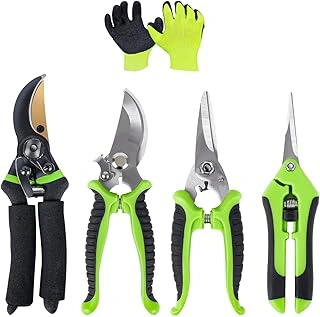
AUDCALIGHT 4-Pack Bypass Pruning Shears with Titanium Steel Blade
Homesteads where several people share pruning chores often run into a familiar problem: one pair of shears moves between tasks, gets left in the orchard, or needs cleaning while someone else waits to trim. The AUDCALIGHT 4-Pack Bypass Pruning Shears delivers four pairs with titanium steel blades for $33.50, giving families and co-op growers enough tools to keep multiple beds and rows moving without delays.
Each pair uses a titanium steel blade designed to hold an edge through repeated cuts on berry canes and young fruit-tree growth. The four-pack format means you can station one pair near the blueberry patch, another in the toolshed for apple work, a third as a spare during heavy spring cleanup, and a fourth as a true backup when blades need resharpening or handles wear. That redundancy matters during short pruning windows when weather and plant dormancy don't wait.
The 4.3 rating reflects solid performance for everyday orchard maintenance, though buyers should understand this is a volume play rather than a premium single-tool investment. Blade geometry favors clean cuts on stems up to about half an inch; thicker wood may require more hand pressure or a dedicated lopper. Comfort varies by hand size, so test the grip during your first session and assign pairs to the people who find them easiest to control.
This pack works best when you manage a larger homestead with multiple pruning zones, run a teaching garden where students need their own tools, or simply want to avoid the frustration of hunting for shears every weekend. Solo gardeners with light pruning needs may find better value in a single forged pair, but households juggling raspberries, grapes, and dwarf fruit trees will appreciate the flexibility of keeping shears where the work happens.
- ✅ Four pairs for the price of one premium tool
- ✅ Titanium steel blades maintain edge through repeated use
- ✅ Eliminates tool-sharing delays across larger homesteads
- ✅ Allows strategic placement in multiple pruning zones
- ⚠️ Individual build may not match single high-end forged shears
- ⚠️ Grip comfort varies by hand size
- ⚠️ Best suited to stems under half an inch
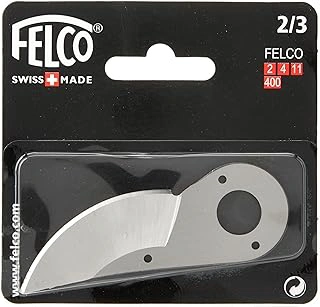
Felco Hand Pruner Replacement Blade (2/3) for F2, F4 & F11 Models
If you own a Felco F2, F4, or F11 pruner, keeping a replacement blade on hand extends the life of a tool that can serve you for decades. This Swiss-made blade maintains the cutting geometry and hardened steel edge Felco is known for, and at around $24, replacing the blade instead of the entire pruner saves you roughly the listed amount depending on which model you own.
The 4.8 rating reflects the fit precision and edge retention users expect from Felco parts. The blade seats securely on all three compatible models - F2, F4, and F11 - and maintains the same clean bypass cut through green wood up to three-quarters of an inch. For orchard and berry work, where you may prune hundreds of cuts in a day, having a fresh blade ready means you can swap it out mid-season rather than pushing a dull edge or retiring the tool entirely.
Installation takes about five minutes with the included nut and bolt. The hardened steel holds an edge through multiple sharpenings, so you're not just buying one season of use. Homesteaders who sharpen their own tools will find this blade responds well to a whetstone or diamond file, and the forged construction resists chipping even when you accidentally nick a wire trellis or catch a tougher stem than expected.
This replacement path makes the most sense if you already own one of the three compatible Felco models or if you're buying your first Felco and want the option to maintain it indefinitely. The blade fits only these specific models, so verify your pruner's model number before ordering. For growers committed to tools they can repair rather than replace, this blade turns a good pruner into a long-term investment.
- ✅ Extends tool life at a fraction of the cost of a new pruner
- ✅ Maintains Swiss precision and edge geometry across F2, F4, and F11 models
- ✅ Hardened steel holds an edge through multiple sharpenings
- ✅ Simple five-minute installation with included hardware
- ⚠️ Fits only Felco F2, F4, and F11 - verify model compatibility before ordering
- ⚠️ Requires basic tool maintenance knowledge for best results
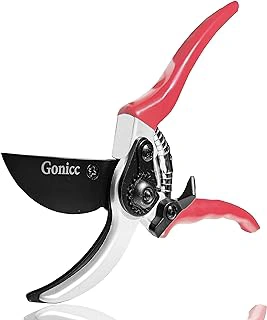
Gonicc 8" Professional Sharp Bypass Pruning Shears (GPPS-1002)
The Gonicc GPPS-1002 sits at $13.96, earning its place as the most approachable entry in this lineup for homesteaders starting an orchard or working a handful of berry bushes. With a 4.6 out of 5 rating, this eight-inch bypass pruner delivers clean cuts without asking you to stretch your budget.
The factory edge arrives sharp enough to slice through green canes and thin hardwood branches in one motion. That eight-inch frame gives you a bit more reach than compact models, useful when you're thinning crowded raspberry rows or deadheading blueberry stems without leaning into thorns. The forged blade holds its edge reasonably well through a season of regular pruning, though you'll want to touch it up with a whetstone before heavy spring work.
At this price, the fit and finish won't match the precision of costlier forged shears. The pivot may feel slightly looser, and the handles lack rubberized cushioning found on premium models. If you're managing a small homestead orchard or a few berry patches, these trade-offs rarely interfere with the task at hand. The cutting action stays clean, and the tool holds up through typical seasonal use.
Beginners benefit from the forgiving learning curve: the bypass design is intuitive, and the lower investment reduces hesitation when you're still building confidence with pruning technique. For established growers working tight budgets or stocking multiple pairs for a larger operation, the Gonicc offers solid value without sacrificing the clean cuts that protect plant health. This is a capable tool that gets the work done without ceremony.
- ✅ $13.96 price makes forged bypass pruning accessible
- ✅ Sharp factory edge cuts green canes and thin hardwood cleanly
- ✅ 8-inch length provides useful reach in berry bushes
- ✅ 4.6/5 rating reflects reliable performance for the cost
- ⚠️ Fit and finish less refined than premium models
- ⚠️ Handles lack rubberized cushioning
- ⚠️ Pivot may feel slightly looser than higher-priced shears
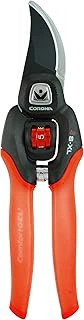
Corona Clipper BP 4214D Flex Dial Bypass Pruner, 3/4 Inch
Homesteaders who prune mature fruit trees and thick berry canes often find that standard pruners need frequent adjustment or lack the power to handle dense wood cleanly. The Corona Clipper BP 4214D addresses both issues with a Flex Dial mechanism that lets you fine-tune blade tension on the fly, paired with a ¾-inch cutting capacity that works through larger branches without forcing the cut.
The Flex Dial sits at the pivot and offers multiple tension settings, so you can dial in tighter blade contact for cleaner slices through green growth or loosen it slightly when moving through drier, fibrous wood. This adjustability reduces hand fatigue during long pruning sessions and keeps the tool effective as the blade wears over seasons. The forged steel blades hold an edge well, and the ¾-inch capacity means you can take on secondary scaffold branches and older berry canes that smaller pruners struggle with.
At $31.25, the BP 4214D costs more than entry-level models, but the construction reflects that investment: the handles are reinforced, the pivot assembly feels solid under load, and the 4.7 rating suggests consistent field performance. For homesteaders managing larger orchards or tackling heavy annual pruning cycles on established fruit trees, the combination of adjustable tension and higher cutting capacity translates to fewer tool switches and more efficient work.
The trade-off is weight and bulk. This pruner is noticeably heavier than compact bypass shears, so extended overhead work - like thinning high cherry limbs - can tire your wrist faster. The larger frame also makes it less nimble for detail work on young grafts or tight berry clusters. If your pruning involves a mix of light shaping and heavy structural cuts, you may want a lighter pair for fine tasks and reserve the BP 4214D for the demanding work.
The adjustable dial and ¾-inch capacity make this the right pick for sustained, heavy-duty orchard maintenance where cutting power and tool longevity matter more than portability.
- ✅ Flex Dial adjusts blade tension for different wood types and reduces hand fatigue
- ✅ ¾-inch cutting capacity handles mature branches and thick berry canes
- ✅ Forged steel blades and reinforced pivot deliver long-term durability
- ⚠️ Heavier frame tires the wrist during extended overhead pruning
- ⚠️ Less maneuverable for detail work on young grafts or tight clusters
Bypass vs. Anvil: Why Bypass Matters for Living Wood
Bypass pruners work like scissors: two sharp blades slide past each other to slice through wood cleanly. Anvil pruners use a single blade that presses down onto a flat surface, crushing the branch as it cuts. That difference matters when you're working with fruit trees, berry canes, and other live growth.
Living wood heals best when the cut is smooth and the cambium layer stays intact. A bypass cut leaves a clean wound that seals quickly, reducing the chance that fungal spores or bacteria enter the plant. An anvil cut crushes tissue around the cut site, leaving ragged edges and damaged cells that take longer to heal and invite infection.
For orchard and berry maintenance, bypass models are the clear choice. Apple, pear, and stone-fruit trees need precise cuts during dormant pruning and summer thinning. Raspberry, this product, and blueberry canes are equally vulnerable to disease when cuts are rough. Anvil pruners still have a place - they excel at dead wood and dry branches - but bypass shears deliver the kind of cut that keeps your plants healthy season after season.
When you're choosing forged bypass shears, you're already starting with better edge retention and blade strength than stamped alternatives. That forged construction holds a sharp edge longer, so every cut stays clean even after hundreds of branches.
Forged vs. Stamped: What the Construction Difference Means for You
Forged pruning shear blades are shaped under heat and high pressure, creating a denser, more uniform grain structure in the steel. Stamped blades, by contrast, are cut from flat sheet metal and sharpened without the same hardening process. The result is a thicker, more robust blade that resists bending when you push through dense wood or older canes.
This construction difference matters when you're working through overgrown berry bushes or hardwood orchard growth. A forged blade will hold its edge through more cuts before needing resharpening, and it won't flex or twist when you encounter resistance mid-cut. Stamped blades may serve lighter pruning tasks well, but they dull faster and can deform under sustained pressure, especially on branches near their rated capacity.
The trade-off is weight and cost. Forged shears are heavier in the hand and typically carry a higher price, reflecting the additional manufacturing steps. For growers who prune regularly or manage large plots, that upfront investment pays off in fewer blade replacements and more reliable performance season after season. If your pruning is occasional and confined to soft new growth, the stamped option may be adequate, but anyone maintaining mature fruiting plants will notice the durability gap quickly.
How to Care for and Sharpen Your Pruning Shears
Cleaning your pruning shears after each session prevents sap buildup and corrosion that dull blades and stiffen the pivot. Wipe both sides of the blade with a damp cloth, then use rubbing alcohol or a mild citrus cleaner to dissolve sticky residue from pruning cuts. Dry thoroughly to avoid rust, especially along the cutting edge and inside the pivot joint.
Apply a few drops of lightweight machine oil or camellia oil to the pivot point and work the handles open and closed several times to distribute the lubricant. This keeps the action smooth and protects internal surfaces from moisture. A thin film of oil on the blade itself adds extra rust resistance during storage.
Sharpen the beveled edge of the bypass blade when you notice ragged cuts or increased effort on green stems. Secure the shears in a vise or hold them firmly, then draw a fine-grit whetstone or diamond file along the factory bevel in smooth, one-direction strokes from the base toward the tip. Maintain the original angle - usually around 20 degrees - and avoid sharpening the flat side, which should remain flush against the lower blade. Test the edge on a piece of paper; a sharp blade slices cleanly without tearing.
Check tension at the pivot bolt once or twice each season and tighten gently if you feel looseness during cuts. Forged shears hold adjustment well, but vibration and heavy use can work fasteners loose over time. Store your shears in a dry spot, ideally with blade covers or a protective sheath, and they will stay sharp and reliable season after season.
Making the Right Cut for Your Homestead
Choosing between these four forged bypass pruning shears comes down to matching the tool to your homestead's workload and your own hand. If multiple people tend your orchard or berry rows, the Okatsune 103 offers a comfortable, replaceable design that accommodates different grip sizes and stays sharp through shared use. For growers building a long-term pruning kit who value serviceability and precision, the Felco F-2 remains the benchmark - parts are always available, and the cut quality stays consistent year after year.
Budget-conscious homesteaders starting out will find the ARS VS-8Z delivers forged-blade performance without the premium price, though you may replace it sooner than a Felco. When you face thicker canes, older wood, or dense raspberry tangles, the Bahco P121-19-F brings the extra jaw opening and handle leverage that lighter shears can't match.
Consider your orchard size and how often you prune. Smaller plots with annual berry maintenance rarely justify the Felco investment, while commercial-scale homesteads benefit from the durability and repair ecosystem. Hand comfort matters more than most growers expect - if a model feels awkward during a fifteen-minute session, it will slow you down over hours of seasonal work. Try the grip if possible, or start with a mid-range option and upgrade once you know your preferences.
Any of these forged bypass shears will cut cleaner and last longer than stamped alternatives, reducing stem crushing and the frustration of bent blades mid-season. Match the tool to your workload, and your orchard will show the difference in healthier cuts and faster healing.